


Traveling to Antigua with dogs requires careful planning and strict adherence to import regulations.
Yes, you can bring your dog to Antigua, but expect a multi-step process involving import permits, health certificates, rabies titer testing (for dogs from certain countries), and government inspection upon arrival.
Start preparing at least 90-120 days before your planned travel date to ensure you meet all deadlines and testing windows.
Quick Facts: Bringing Dogs to Antigua
$800-$1,500 USD
90-120 days minimum
Moderate to Complex
No (if compliant)
Antigua’s veterinary import process is managed by the Veterinary & Livestock Division of the Ministry of Agriculture, Fisheries and Barbuda Affairs.
Unlike some Caribbean destinations that mandate quarantine for all pets, Antigua allows compliant dogs to skip quarantine entirely, but the paperwork must be perfect. Non-compliant pets face confiscation, refusal of entry, or quarantine until issues are resolved.

Antigua Dog Import Requirements Overview

The Veterinary & Livestock Division oversees all pet imports into Antigua and Barbuda.
You’ll need to obtain a Veterinary Import License before your dog can enter the country. The Division reviews your dog’s medical history, vaccination records, microchip certification, and rabies antibody titer results (if applicable) before issuing the license.
Contact the Division at least 2-3 weeks before your planned travel date. Email documents to vld@ab.gov.ag or vld.ab.gov.ag@gmail.com, or fax to (268) 460-1759. Phone inquiries can be directed to (268) 460-1759, 462-6104, 562-7592, or 562-1814. The office is located at Friars Hill Road, St. John’s, Antigua (P.O. Box 1282).
Breed Restrictions and Eligibility
Antigua bans the import of Pitbull breeds and Pitbull mixes. If your dog resembles a Pitbull in appearance, you must provide official kennel club certification proving the dog is not a Pitbull or Pitbull mix. This is non-negotiable. Dogs that cannot be certified will be refused entry.
No other breed restrictions apply. All dog sizes are permitted, from Chihuahuas to Great Danes, provided they meet health and documentation requirements.
The Division does not specify a minimum age requirement for imported dogs, but puppies must be old enough to receive rabies vaccination (typically 12-16 weeks depending on origin country regulations).
Cats are also permitted under similar import procedures. Other species such as birds, reptiles, or exotic pets are not addressed in available documentation. Contact the Division directly if you’re traveling with non-dog, non-cat pets.
Pre-Travel Health Requirements
Your dog must be healthy and free from contagious diseases at the time of travel. A licensed veterinarian in your country of origin must examine your dog and issue a health certificate confirming fitness for travel. This certificate must be endorsed by a government veterinary authority (in the United States, this is the USDA-APHIS Veterinary Services).
The health certificate must include your dog’s microchip number, vaccination history, parasite treatment records, and a statement that the dog is free from diseases communicable to humans and other animals. The certificate is valid for 7 days from the date of issue to your date of entry into Antigua. Schedule your final vet appointment accordingly.
Required Vaccinations and Timeline
Rabies vaccination is mandatory. Your dog must be vaccinated against rabies within one year prior to import. The vaccine cannot be expired at the time of entry. If your dog’s rabies vaccine is older than one year, get a booster and wait the appropriate period before travel.
Core Vaccination Requirements
- Rabies: Must be current within one year of entry
- DHPP: Distemper, hepatitis, parvovirus, parainfluenza (standard practice)
- Additional vaccines: As recommended by your veterinarian based on your dog’s age and health status
For dogs traveling from countries classified as rabies-infected (including the United States, Canada, and most of Europe), Antigua requires rabies antibody titer testing. The FAVN (Fluorescent Antibody Virus Neutralization) test must be performed at an OIE-approved laboratory. Results must show antibody levels of at least 0.5 IU/ml, the internationally accepted standard for rabies immunity.
The titer test must be conducted after rabies vaccination. Standard practice requires waiting at least 30 days post-vaccination before drawing blood for the titer. Factor this into your timeline. Submit titer results to the Division when applying for your import permit.
Microchip Requirements
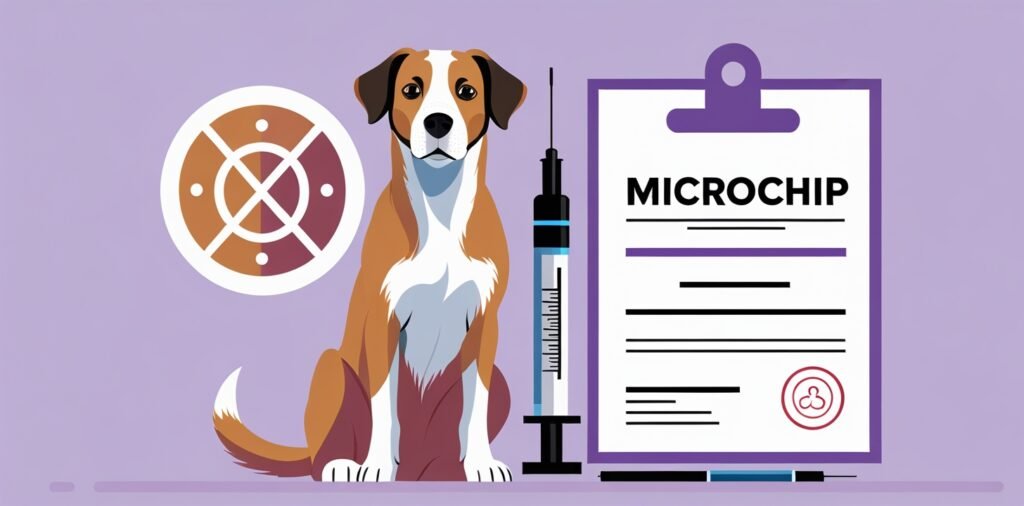
All dogs must be microchipped with an ISO-compliant 15-digit microchip (ISO 11784/11785 standard). If your dog already has a non-ISO microchip implanted, Antigua will accept it, but any new microchips must meet ISO standards. The microchip number must be recorded on all import documents, vaccination records, and the health certificate.
Parasite Treatments and Testing
Your dog must be treated for internal and external parasites before travel. The health certificate should document treatments for ticks, fleas, and intestinal worms. Specific products and timing are not mandated, but your veterinarian should follow standard protocols for international pet travel.
Dogs from certain regions may require testing for Ehrlichia and Lyme disease. These tick-borne diseases are concerns in the Caribbean. Include test results in your medical history submission to the Division. If your dog tests positive for either condition, consult with the Division about treatment requirements before travel.
Import Permits and Documentation

The Veterinary Import License is your dog’s official permission to enter Antigua. Without it, your dog will not clear customs. The permit is issued by the Veterinary & Livestock Division after they review your dog’s complete medical documentation.
Application Process Step-by-Step
- Contact the Division at least 2-3 weeks before travel (longer if you need a rabies titer). Request the current import requirements and application procedures. Confirm the correct email addresses and fax numbers.
- Gather all required documents: microchip certification, current rabies vaccination certificate, rabies FAVN titer results (if applicable), complete medical and vaccination history, and any breed certification (if your dog could be mistaken for a Pitbull).
- Fax or email all documents to the Division. Use both email addresses (vld@ab.gov.ag and vld.ab.gov.ag@gmail.com) to ensure receipt. Follow up by phone after 2-3 business days to confirm they received your submission.
- Wait for Division review. Processing time varies but typically takes 5-10 business days. They may request additional information or clarification. Respond promptly to avoid delays.
- Once approved, the Division issues your Veterinary Import License. This document must accompany your dog during travel. Print multiple copies and keep them with your other travel documents.
- Notify the Division of your exact arrival date and time at least 48 hours before your flight. A Veterinary Inspector must be present to clear your dog through customs. Failure to provide advance notice may result in delays or refusal of entry.
Required Documentation Checklist
Complete Document Checklist for Antigua Entry
- Veterinary Import License issued by Antigua’s Veterinary & Livestock Division
- Government-endorsed health certificate (issued within 7 days of entry)
- Rabies vaccination certificate (valid within one year)
- Rabies FAVN titer test results (if from a rabies-infected country)
- Microchip certification and implantation records
- Complete vaccination history (DHPP and other core vaccines)
- Parasite treatment records (internal and external)
- Ehrlichia and Lyme disease test results (if applicable)
- Kennel club breed certification (if dog resembles a Pitbull)
- Proof of 48-hour advance arrival notification to the Division
Keep all documents in a waterproof folder or envelope. Have both physical copies and digital backups on your phone or tablet. If documents are in a language other than English, provide certified translations.
Health Certificate and USDA Endorsement Process
For dogs traveling from the United States, the health certificate must be endorsed by USDA-APHIS Veterinary Services. This is a two-step process. First, your accredited veterinarian completes the health certificate after examining your dog. Second, you submit the certificate to your state’s USDA-APHIS office for official endorsement.
Schedule your veterinary exam within 10 days of travel, but no more than 7 days before your entry date into Antigua. This tight window requires precise timing. If your flight is delayed or rescheduled, you may need a new health certificate.
USDA endorsement typically takes 1-3 business days, but can take longer during peak travel seasons or if there are errors on the certificate. Submit your certificate to USDA as soon as possible after your vet appointment. Many USDA offices accept certificates by mail, but some require in-person submission. Check your local office’s procedures well in advance.
The USDA-endorsed health certificate is valid for 30 days from the date of endorsement for international travel, but Antigua requires the certificate to be issued within 7 days of entry. The 7-day window starts from your vet’s examination date, not the USDA endorsement date.
Quarantine Requirements and Compliance

Antigua does not mandate automatic quarantine for all imported dogs. If your dog meets all import requirements and has complete, correct documentation, quarantine is not required. Your dog can leave the airport with you immediately after customs clearance and veterinary inspection.
However, non-compliant dogs face serious consequences. If your dog arrives without proper documentation, with expired vaccinations, without the required import permit, or with health issues identified during inspection, Antigua authorities have three options: refuse entry entirely (your dog returns on the next available flight), confiscate the dog, or place the dog in quarantine until compliance issues are resolved.
Quarantine facilities are government-approved but details about specific locations, conditions, visiting policies, and costs are not publicly available. If your dog is quarantined, expect to negotiate directly with the Veterinary & Livestock Division about duration, fees, and release conditions.
Arrival Process and Customs Clearance
Your dog will arrive at V.C. Bird International Airport (ANU) in St. John’s, Antigua’s primary international gateway. The airport has designated facilities for animal arrivals and quarantine inspection areas. When you land, proceed to the customs and immigration area. Do not attempt to collect your dog from baggage claim without first clearing customs.
A Veterinary Inspector from the Division will meet you at the airport (this is why 48-hour advance notification is mandatory). The inspector will review all your documents: import permit, health certificate, vaccination records, titer results, and microchip certification. They will physically examine your dog to confirm health status and verify the microchip number matches your paperwork.
If everything is in order, you’ll pay the Veterinary Inspection Fee of EC$130 (approximately US$50). This fee is separate from any customs import duties. Antigua customs classifies pets as property, so you may owe additional import duty depending on the declared value of your dog. Payment is typically required in cash (Eastern Caribbean Dollars or US Dollars), though some facilities may accept credit cards. Confirm payment methods with the Division when you notify them of your arrival.
After inspection and payment, the inspector stamps your import permit and releases your dog to you. The entire process takes 30-90 minutes if there are no complications. If the inspector identifies any issues with your documentation or your dog’s health, expect delays while they consult with Division supervisors.
Travel Logistics: Airlines and Transport
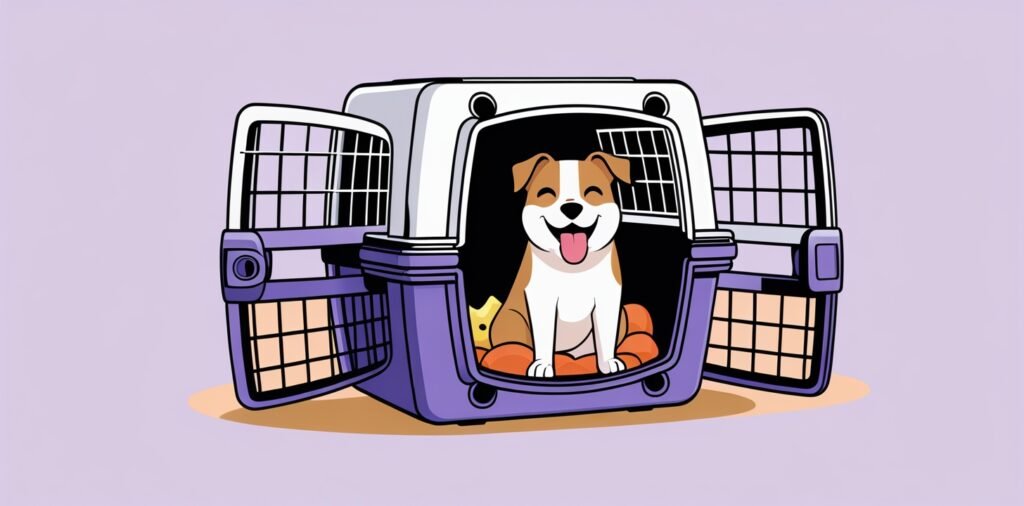
Antigua’s import regulations do not specify whether dogs must travel in cargo or can travel in cabin. This decision is governed by individual airline policies. Most major airlines serving Antigua (American Airlines, Delta, JetBlue, Caribbean Airlines) have specific pet travel programs with size and weight restrictions for cabin travel.
In-Cabin Travel
Best for: Dogs under 15-20 pounds (including carrier)
Pros: Your dog stays with you throughout the flight, less stressful for small dogs, better temperature control
Cons: Size restrictions, limited availability, must fit under the seat
Typical Cost: $100-200 per flight segment
Cargo Travel
Best for: Dogs over 20 pounds
Pros: Accommodates larger dogs, specialized pet handling
Cons: More stressful, temperature restrictions, seasonal suspensions during summer months
Typical Cost: $200-600+ depending on weight and distance
Book your dog’s travel at the same time you book your own ticket. Airlines limit the number of pets per flight, and spots fill quickly during peak travel seasons (December through April in the Caribbean). Confirm your dog’s reservation multiple times before travel, as airline computer systems sometimes drop pet bookings.
Use an IATA-compliant travel crate appropriate for your dog’s size. The crate must allow your dog to stand, turn around, and lie down comfortably. Attach food and water bowls to the crate door. Label the crate clearly with your contact information, your dog’s name, and “Live Animal” stickers on all sides.
V.C. Bird International Airport is the only practical entry point for dogs arriving in Antigua. While Barbuda has a small airport, it does not have veterinary inspection facilities. All pet imports must clear through Antigua’s main airport.
Total Cost Breakdown
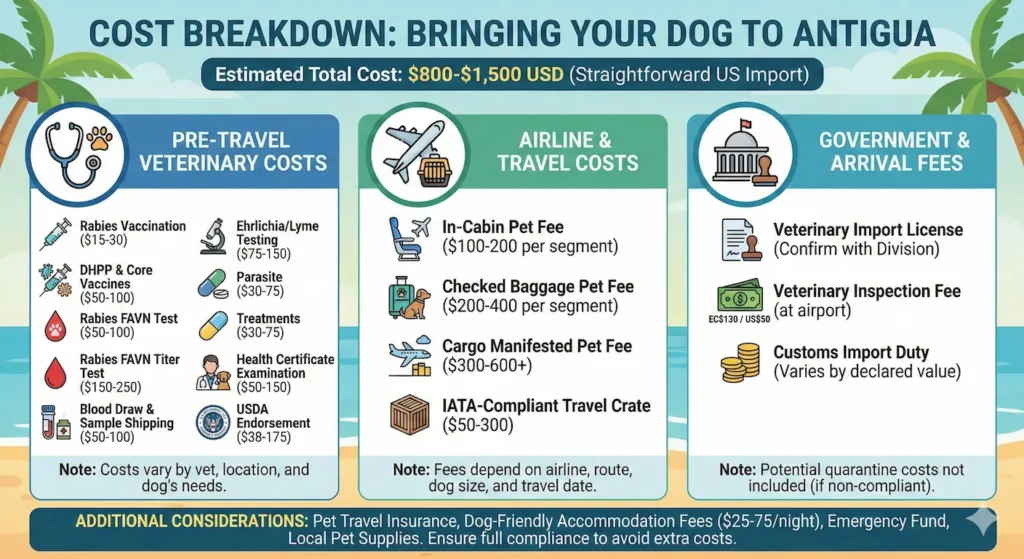
Bringing your dog to Antigua involves multiple expenses. Here’s a detailed breakdown of typical costs:
| Item | Cost (USD) |
|---|---|
| Pre-Travel Veterinary Costs | |
| Microchip implantation (if needed) | $25-50 |
| Rabies vaccination | $15-30 |
| DHPP and other core vaccines | $50-100 |
| Rabies FAVN titer test (lab fees only) | $150-250 |
| Blood draw and sample shipping | $50-100 |
| Ehrlichia/Lyme testing (if required) | $75-150 |
| Parasite treatments | $30-75 |
| Health certificate examination | $50-150 |
| USDA health certificate endorsement | $38-175 |
| Import Permit and Arrival Fees | |
| Veterinary Import License | Confirm with Division |
| Veterinary Inspection Fee at airport | EC$130 / US$50 |
| Customs import duty | Varies by declared value |
| Airline and Crate Costs | |
| In-cabin pet fee (per flight segment) | $100-200 |
| Checked baggage pet fee (per flight segment) | $200-400 |
| Cargo manifested pet fee | $300-600+ |
| IATA-compliant travel crate | $50-300 |
| Total Estimated Range | |
| Straightforward import from United States | $800-$1,500 |
This estimate does not include potential quarantine costs if your dog is non-compliant. Quarantine fees are negotiated case-by-case with the Division and could add hundreds of dollars per day to your total expenses.
Dog-Friendly Accommodations in Antigua
Antigua’s tourism industry is increasingly pet-friendly, but accommodation options vary widely. Many luxury resorts do not accept pets due to health and safety policies. Your best options are vacation rentals, smaller boutique hotels, and guesthouses that cater to families.
When booking accommodation, always confirm the pet policy in writing before making a non-refundable reservation. Ask specific questions: Is there a pet fee? Is it per night or one-time? Are there size or breed restrictions? Are pets allowed in all areas of the property or only certain rooms? What happens if your dog causes damage?
Vacation rental platforms like Airbnb and VRBO have filter options for pet-friendly properties. Search for villas, cottages, or apartments with private outdoor space where your dog can relieve itself without disturbing other guests. Properties near beaches or walking trails are ideal.
Pet fees at Antigua accommodations typically range from $25-75 per night or $100-300 as a one-time cleaning fee. Some properties require a refundable pet deposit of $200-500. Budget for these additional costs when planning your trip.
Dog-Friendly Activities and Beaches in Antigua

Antigua boasts 365 beaches (one for every day of the year, according to local tourism marketing), but not all welcome dogs. Beach access for dogs varies by location, season, and local regulations. Some beaches prohibit dogs entirely to protect nesting sea turtles during breeding season (typically March through October). Other beaches allow dogs year-round but require leashes.
Popular dog-friendly beaches include Darkwood Beach on the southwest coast, Ffryes Beach (also southwest), and certain sections of Jolly Beach. These beaches are less crowded than tourist hotspots like Dickenson Bay and tend to be more tolerant of well-behaved dogs. Always clean up after your dog and keep them leashed unless you’re certain the beach allows off-leash activity.
Beyond beaches, Antigua offers hiking trails, historical sites, and outdoor markets where dogs are generally welcome. The Pillars of Hercules trail, Fig Tree Drive scenic route, and walks through Nelson’s Dockyard in English Harbour are dog-friendly if your dog is leashed and well-behaved. Avoid bringing dogs to crowded events, food markets, or indoor historical buildings.
The Caribbean climate can be harsh on dogs unaccustomed to tropical heat and humidity. Walk your dog early in the morning or late in the evening when temperatures are cooler. Provide constant access to fresh water. Watch for signs of heat exhaustion: excessive panting, drooling, lethargy, or vomiting. Pavement and sand can burn paw pads, so test surfaces with your hand before allowing your dog to walk on them.
[IMAGE: Dog playing on a Caribbean beach with palm trees in background] [INTERNAL LINK: pet travel insurance options]Local Veterinary Services and Pet Supplies
Antigua has several veterinary clinics providing routine care, vaccinations, and emergency services. The largest and most established is the Veterinary Clinic of Antigua located in St. John’s. Other options include private practitioners and mobile vet services that make house calls.
Veterinary care standards in Antigua are generally good for routine services like vaccinations, parasite prevention, and minor illnesses. However, specialized services such as advanced surgery, oncology, or orthopedic procedures may require evacuation to a larger Caribbean island (Puerto Rico, Trinidad) or back to the mainland United States. Consider purchasing pet travel insurance that covers emergency medical evacuation.
Bring an adequate supply of any prescription medications your dog requires. While basic medications like antibiotics and anti-parasitic drugs are available in Antigua, specialized prescriptions may not be. Carry medications in original packaging with prescription labels to avoid customs issues.
Pet supply stores in Antigua stock basic items like dog food, treats, toys, leashes, and grooming supplies. However, selection is limited compared to major pet retailers in North America or Europe. If your dog has specific dietary needs or preferences, bring enough food for your entire stay or be prepared to switch brands. Sudden diet changes can cause digestive upset, so transition gradually if you must change foods.
Flea and tick prevention is essential in Antigua’s tropical climate. Ticks carrying diseases like Ehrlichia are common. Maintain your dog’s regular preventative medication schedule. Heartworm prevention is also critical, as mosquitoes are abundant year-round.
Climate Considerations and Seasonal Planning
Antigua has a tropical maritime climate with warm temperatures year-round. Average highs range from 80-86°F (27-30°C) with high humidity. The dry season runs from December through April, while the wet season spans May through November. Hurricane season officially runs June through November, with peak risk in August and September.
Dogs with thick coats, brachycephalic breeds (short-nosed dogs like Bulldogs, Pugs), or those from cooler climates may struggle with Antigua’s heat. Provide air-conditioned accommodation whenever possible. Limit outdoor activity during the hottest parts of the day (10 AM to 4 PM). Watch for signs of heat stress constantly.
Some airlines suspend pet cargo services during summer months when temperatures exceed safe limits. If you’re traveling with a large dog that must fly cargo, plan your trip during cooler months (December through March) when airlines are more likely to accept pet shipments.
Hurricane season presents additional challenges. If you’re relocating to Antigua with your dog, have an evacuation plan in place. Know which hotels or shelters accept pets during emergencies. Keep your dog’s travel crate, documents, and emergency supplies easily accessible in case you need to evacuate quickly.
Returning Home: Re-Entry Requirements
If you’re visiting Antigua temporarily and plan to return home with your dog, research your home country’s re-entry requirements before you leave. The United States, for example, has specific regulations for dogs returning from foreign countries.
As of 2024, the CDC requires all dogs entering or re-entering the United States to be at least 6 months old, microchipped, and accompanied by a CDC Dog Import Form receipt. Dogs that have been in countries with high risk for dog rabies (which does not include Antigua) face additional requirements including rabies vaccination, rabies titer testing, and health certificates.
Antigua is not classified as a high-risk rabies country by the CDC, which simplifies re-entry to the United States. However, you must still complete the CDC Dog Import Form online and bring the receipt confirmation with you when returning. Failure to complete this form can result in your dog being denied entry or placed in quarantine at your expense.
European Union countries, Canada, Australia, and other destinations have their own re-entry requirements. Research these well in advance of your trip. Some countries require pets to undergo quarantine even when returning home after temporary travel abroad.
Frequently Asked Questions
Can I bring my dog to Antigua without a rabies titer test?
It depends on your country of origin. Dogs traveling from countries classified as rabies-infected (including the United States, Canada, and most of Europe) require rabies FAVN titer testing at an OIE-approved laboratory showing antibody levels of at least 0.5 IU/ml. Dogs from rabies-free countries may not need titer testing, but you must still provide complete vaccination records and meet all other import requirements. Confirm current requirements with the Veterinary & Livestock Division before travel.
How long does the import permit application take?
The Veterinary & Livestock Division typically processes import permit applications within 5-10 business days after receiving complete documentation. However, processing times can vary depending on workload, completeness of your submission, and whether additional information is requested. Apply at least 2-3 weeks before your planned travel date to allow for potential delays or requests for clarification.
What happens if my dog’s health certificate expires before I arrive?
Antigua requires the health certificate to be issued within 7 days of your entry date. If your travel is delayed and your health certificate expires, you will need to obtain a new health certificate from your veterinarian and have it re-endorsed by the government veterinary authority (USDA in the United States). Your dog may be refused entry or quarantined if you arrive with an expired health certificate. Always build buffer time into your travel plans to account for potential delays.
Are there veterinary clinics in Antigua that provide emergency care?
Yes, Antigua has veterinary clinics that offer emergency services, including the Veterinary Clinic of Antigua in St. John’s. However, after-hours emergency care may be limited, and specialized services like advanced surgery or intensive care may not be available. For serious emergencies, medical evacuation to Puerto Rico or back to the mainland United States may be necessary. Consider purchasing pet travel insurance that covers emergency veterinary care and medical evacuation.
Can I bring my dog’s regular food to Antigua?
Yes, you can typically bring commercial dog food in original, sealed packaging. Declare all pet food at customs upon arrival. Homemade or raw food diets may face additional scrutiny or restrictions. If your dog requires a specific prescription diet, bring enough for your entire stay, as specialty foods may not be available locally. Check current import regulations for animal products with the Veterinary & Livestock Division before packing large quantities of food.
Do I need to treat my dog for parasites before traveling to Antigua?
Yes, your dog must be treated for internal and external parasites before travel. The health certificate should document these treatments. Your veterinarian will recommend appropriate products based on your dog’s age, weight, and health status. Common treatments include deworming medications and flea/tick preventatives. Continue parasite prevention during your stay in Antigua, as the tropical climate supports year-round flea, tick, and mosquito populations.
What should I do if my dog gets sick while in Antigua?
Contact a local veterinary clinic immediately. The Veterinary Clinic of Antigua in St. John’s is the largest and most established practice. Have your dog’s medical records readily available, including vaccination history and any medications your dog takes. If your regular veterinarian prescribed ongoing medications, bring contact information so the local vet can consult if needed. For serious emergencies that cannot be handled locally, contact your pet travel insurance provider about medical evacuation options.
Are Pitbulls completely banned from Antigua?
Yes, Pitbull breeds and Pitbull mixes are banned from import into Antigua. If your dog resembles a Pitbull in appearance, you must provide official kennel club certification proving the dog is not a Pitbull or Pitbull mix. Dogs that cannot be certified will be refused entry at the airport. This policy is strictly enforced, so do not attempt to bring a Pitbull or Pitbull mix to Antigua under any circumstances.
Useful Resources
- Veterinary & Livestock Division, Antigua: Email: vld@ab.gov.ag or vld.ab.gov.ag@gmail.com | Phone: (268) 460-1759, 462-6104, 562-7592, 562-1814 | Website: https://agriculture.gov.ag/index.php/live-stock/
- Antigua Customs Department (Animal Importation): https://customs.gov.ag/page/animal-importation