
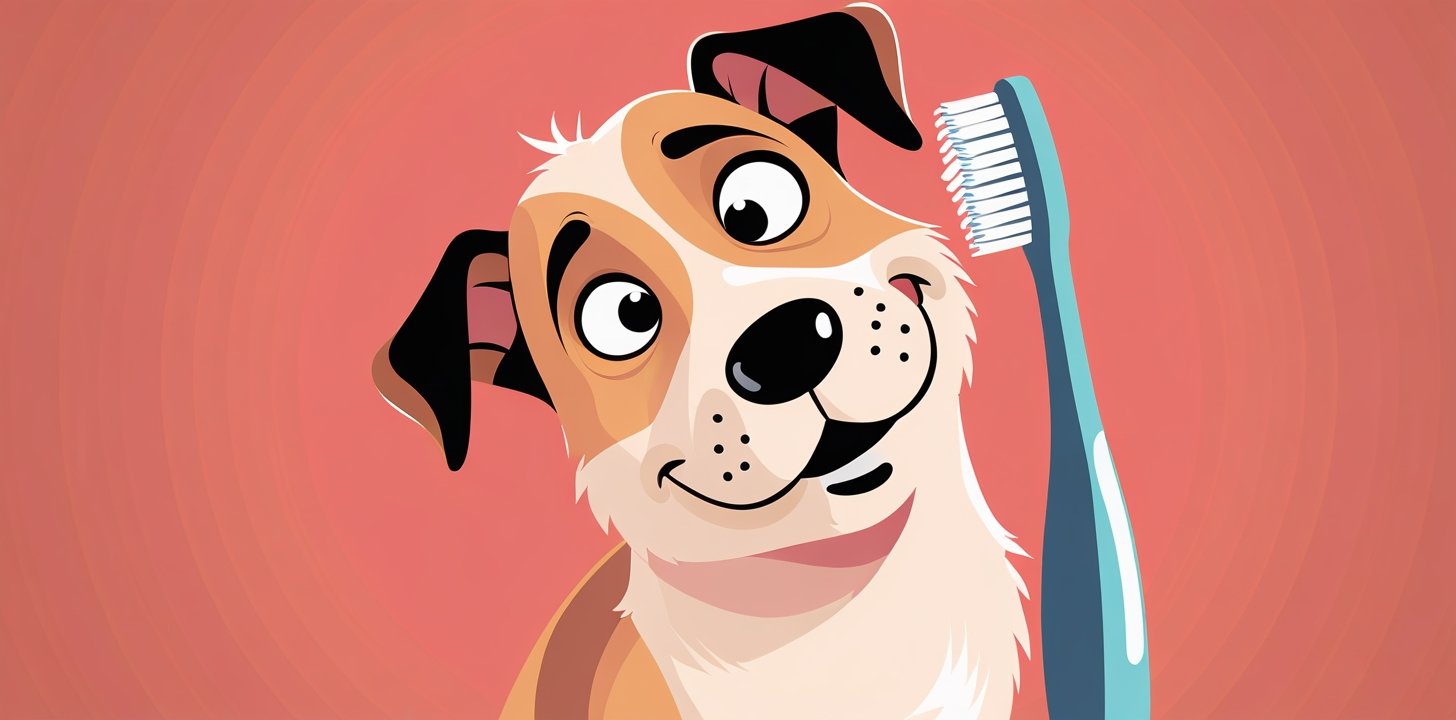
If your dog’s breath could knock you over from across the room, or you’ve noticed yellow-brown buildup on their teeth, you’re likely seeing early to moderate dental disease.
This affects 80% of dogs by age three according to American Veterinary Medical Association data. This isn’t cosmetic. Bacteria-filled plaque connects directly to heart, kidney, and liver problems. Here’s everything you need to protect your dog’s teeth and overall health.
Severity Guide: When to Act
| 🟢 Monitor at Home | Mild bad breath, light yellow tartar on back teeth, occasional pawing at mouth. Maintain daily brushing and watch for progression over 2-4 weeks. |
| 🟡 Call Your Vet (1-2 weeks) | Persistent halitosis, brown tartar buildup, red or swollen gums, difficulty eating hard food, excessive drooling, bleeding when brushing. Schedule dental exam. |
| 🔴 Emergency (Now) | Broken or loose teeth, severe facial swelling (more than 1-2cm), inability to eat or drink for 24+ hours, profuse bleeding from gums, acute pain when touching face. |
Why Dog Dental Care Matters: The Hidden Health Risks

Periodontal disease starts when plaque forms on teeth within hours of eating. Within days, minerals in saliva harden that plaque into tartar. The bacteria trapped underneath inflame gums, creating pockets that deepen over months and years. Eventually, infection destroys the bone holding teeth in place.

Those bacteria enter the bloodstream every time your dog chews, spreading to major organs. The American Veterinary Medical Association confirms that oral bacteria can seed infections throughout the body, increasing risks of heart valve infections, kidney disease, and liver problems.
Research published in Veterinary Record found that 12.5% of dogs seen in primary care have diagnosed dental disease. When veterinarians perform complete oral exams under anesthesia, they find periodontal disease in 44-100% of adult dogs. The gap exists because early stages hide beneath the gumline.
Small breeds pay the highest price. Dogs under 15kg face up to five times the risk of large breeds according to veterinary dental research. Yorkshire Terriers, Chihuahuas, and Toy Poodles have crowded teeth that trap food and bacteria. Pugs and Bulldogs have misaligned jaws that create hard-to-clean gaps. Even Greyhounds show 32% prevalence by one year old, the highest of any breed studied.
Signs Your Dog Has Dental Problems
Dental disease progresses in stages. Catching it early makes the difference between a simple cleaning and multiple tooth extractions. Dogs instinctively hide oral pain, a survival trait from their wild ancestors.
Early Warning Signs
Bad breath is the first red flag most owners notice. Healthy dog mouths shouldn’t smell offensive. That distinctive foul odor comes from bacteria breaking down food particles and producing sulfur compounds. If you can smell your dog’s breath from a foot away, bacteria are already colonizing their teeth.
Light yellow tartar appears along the gumline, especially on the outer surfaces of molars and premolars. It looks like a thin crust of yellow or tan buildup. This is Stage 1 periodontal disease, still reversible with professional cleaning.
Gum changes start subtly. Run your finger along your dog’s gumline. Healthy gums are firm and pink. Early gingivitis makes them puffy and slightly red, especially where they meet the teeth. When you brush, you might notice minor bleeding.
Behavior changes appear as dogs compensate. Your dog might paw at their mouth occasionally, drop food while eating, or prefer one side when chewing. They might suddenly refuse hard treats they used to love.
Red Flag Symptoms Requiring Veterinary Care
Brown or heavy tartar buildup signals Stage 2 or beyond. The tartar has mineralized into a thick, dark brown or gray crust covering significant tooth surface. Bacteria have created pockets between teeth and gums, and bone loss may have started. You can’t reverse this at home.
Swollen, bleeding gums indicate active infection. The gums look angry red, sometimes purple. They bleed easily when touched or during eating. You might see blood on chew toys or in the water bowl. The gum tissue may have started receding, exposing tooth roots.
Difficulty eating becomes obvious. Your dog approaches the food bowl but hesitates. They pick up kibble and drop it. They may turn their head to chew on one side only, or swallow pieces whole to avoid chewing.
Excessive drooling that’s new, especially if tinged pink or brown, means significant oral disease. The drool might smell putrid. Some dogs develop lip-smacking or teeth grinding as they try to manage discomfort.
Visible tooth damage is an emergency. Fractured teeth expose the pulp cavity, causing severe pain and infection risk. Loose teeth that wiggle indicate advanced bone loss. Abscesses appear as swellings on the face below the eye (often from upper fourth premolar infections) or along the jaw.
Cornell University veterinary research shows that by the time owners notice these moderate to severe signs, 85-90% of dogs over age six have established periodontal disease requiring professional intervention.
How to Brush Your Dog’s Teeth
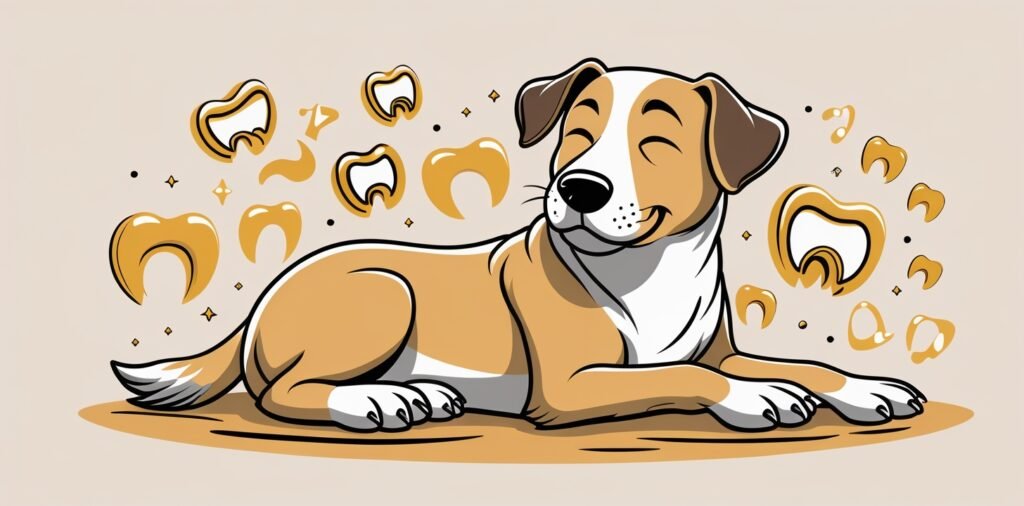
Daily brushing reduces plaque by 20% or more according to American Animal Hospital Association guidelines. Most dog owners never brush their dog’s teeth. If you’re starting from zero, this system works.
The biggest mistake is rushing. Dogs who fight tooth brushing usually had bad first experiences. Build positive associations over days or weeks.
Week 1: Mouth handling only. Spend 30 seconds twice daily just touching your dog’s muzzle and lips while giving treats. Lift the lip to expose teeth for a second, treat, release. Work up to holding the lip up for 5-10 seconds. If your dog pulls away, you’re moving too fast.
Week 2: Introduce the toothpaste. Use only veterinary toothpaste formulated for dogs. Human toothpaste contains xylitol, which causes life-threatening hypoglycemia in dogs, and fluoride, which causes toxicity when swallowed. Let your dog lick the dog toothpaste off your finger. Most are flavored with poultry or malt.
Week 3: Finger brushing. Wrap gauze around your finger, add a pea-sized amount of toothpaste, and gently rub the outer surfaces of a few teeth. Focus on the large premolars and molars in back where tartar accumulates fastest. Work for just 30-60 seconds total. Reward heavily.
Week 4: Actual toothbrush. Use a soft-bristled dog toothbrush or finger brush. Hold the brush at 45 degrees to the gumline where plaque accumulates. Use gentle circular motions. Focus on the outer surfaces of upper molars and premolars. The tongue naturally cleans inner surfaces.
- Position your dog comfortably. Sitting beside them works better than facing them directly.
- Lift the lip on one side and brush the outer surfaces of upper teeth for 15-20 seconds.
- Switch sides and repeat.
- Brush lower teeth if your dog tolerates it, but upper teeth are the priority.
- The entire session should take 1-2 minutes maximum.
- End with a high-value reward every single time.
For resistant dogs: Some dogs never tolerate brushing despite weeks of conditioning. Alternatives include dental wipes (gauze pads pre-soaked with cleaning solution), water additives that reduce bacteria, and VOHC-approved dental chews. These aren’t as effective as brushing but provide real benefits.
Dental Products That Actually Work

The Veterinary Oral Health Council (VOHC) tests products using clean-tooth trials and awards their seal only to products that demonstrably reduce plaque or tartar. Look for that seal.
| Product Type | VOHC Status | Effectiveness | Best For |
|---|---|---|---|
| Enzymatic Toothpaste (Virbac CET, Petsmile) | VOHC Approved | 20-30% plaque reduction with daily use | Dogs who tolerate brushing; essential foundation |
| Greenies Dental Chews | VOHC Approved | 20% plaque reduction, mechanical cleaning | Daily chewers; size appropriately (too small = choking risk) |
| Hill’s Prescription Diet t/d | VOHC Approved | Larger kibble scrubs teeth; reduces tartar 45% | Dogs needing dietary dental support; requires vet prescription |
| Purina Pro Plan Veterinary Diets DH | VOHC Approved | Polyphosphate coating reduces tartar formation | Daily diet replacement for dental disease prevention |
| WHIMZEES Dental Chews | VOHC Approved | 20% average plaque reduction; vegetable-based | Dogs with protein sensitivities; comparable to Greenies |
| Water Additives (most brands) | Few approved | Minimal effect; no mechanical cleaning | Supplement only; not a replacement for brushing |
| Raw Bones | Not tested | Mechanical cleaning but fracture risk | Controversial; never cooked bones (splinter risk) |
| Rope Toys | Not approved | Minimal; can fray and cause blockages | Play only, not dental care |
Independent clean-tooth trials demonstrate that VOHC-approved products reduce plaque by 20% or more, while many marketed “dental” products show no measurable benefit.
Sizing matters critically for dental chews. A chew that’s too small poses a choking hazard because dogs swallow it whole. Too large and your dog can’t effectively chew it. Follow package guidelines: Petite for dogs under 15 lbs, Regular for 25-50 lbs, Large for 50+ lbs. Watch the first few times to ensure your dog chews rather than gulps.
Age-Specific Dental Care Routines
Your dog’s dental needs change dramatically across their lifespan.
Puppies (8 weeks to 6 months): Start gentle mouth handling at 8-12 weeks, before adult teeth emerge. Lift lips, touch gums, look at teeth daily while giving treats. Once adult teeth start coming in around 4-6 months, begin actual brushing with a soft brush and enzymatic paste. Keep sessions under 30 seconds. The goal is habit formation, not perfect technique.
Watch for retained deciduous teeth, especially in small breeds. Baby teeth should fall out as adult teeth emerge. If you see double teeth (baby tooth still present next to adult tooth), contact your vet. Retained teeth create tight spaces that trap food and accelerate periodontal disease.
Adults (1-7 years): Daily brushing becomes your primary defense. The American Animal Hospital Association recommends daily brushing, but their research shows 3-4 times per week still provides significant protection. Combine brushing with a VOHC-approved dental chew daily. Schedule professional cleanings every 1-3 years depending on breed size and home care quality.
Small breeds need their first professional cleaning by age one. Toy Poodles, Yorkshire Terriers, and Chihuahuas accumulate tartar faster due to crowded teeth. Larger breeds with good home care might not need professional cleaning until age 3-4. Your vet should perform an oral exam at every annual checkup to assess need.
Seniors (7+ years): Dental disease accelerates in senior dogs. Increase professional cleanings to every 6-12 months if your dog shows tartar buildup. Many seniors have already lost teeth or have advanced periodontal disease. Focus on preventing further damage and managing pain.
Senior dogs may need softer dental chews if they have tooth loss or jaw arthritis. Switch to dental wipes if brushing becomes too stressful. Water additives become more important as backup.
Modern veterinary anesthesia is safe for most senior dogs when proper pre-anesthetic bloodwork and monitoring occur. Leaving infected teeth untreated causes more harm than anesthesia risk in the vast majority of cases. Discuss your specific dog’s health status with your vet.
When to See Your Veterinarian

Home care prevents disease, but it can’t treat established periodontal disease. You need professional help when bacteria have created pockets below the gumline or when tartar has mineralized onto tooth surfaces.
Schedule a routine dental exam if: Your dog has brown tartar buildup visible on multiple teeth, persistent bad breath despite home brushing, red or swollen gums, or any difficulty eating. These indicate Stage 2 or higher periodontal disease requiring professional cleaning.
Book an urgent appointment (within 24-48 hours) if: Your dog suddenly refuses to eat, shows facial swelling, has profuse drooling with blood, or yelps when you touch their muzzle. These suggest abscess, fracture, or severe infection.
Emergency situations requiring same-day care include: Broken teeth with exposed pulp (you’ll see pink or red in the center of the tooth), facial swelling that appears suddenly and measures more than 1-2cm, inability to close the mouth, or bleeding that doesn’t stop within 5 minutes of gentle pressure.
The American Animal Hospital Association’s 2019 dental guidelines recommend annual oral exams for all adult dogs, with more frequent monitoring for high-risk breeds. Your vet should look at every tooth, probe gum pockets, and check for oral masses. This exam takes 2-3 minutes during a wellness visit.
Professional cleaning frequency guidelines: Small breeds (under 15kg) every 6-12 months starting at age one. Medium breeds (15-30kg) every 12-18 months starting at age 2-3. Large breeds (over 30kg) every 18-36 months starting at age 3-4. Your individual dog might need more or less frequent care based on genetics, diet, and home care quality.
Professional Dental Cleaning: What to Expect
Professional dental cleaning under anesthesia is called COHAT: Complete Oral Health Assessment and Treatment. This isn’t just scraping visible tartar. It’s a comprehensive procedure that addresses disease you can’t see.
Pre-anesthetic workup: Your vet will require bloodwork to assess kidney and liver function before anesthesia. This costs $75-200 depending on the panel. Dogs over age 7 or with health conditions may need additional tests like chest x-rays or ECG.
The procedure involves 12 steps per AAHA guidelines:
- Anesthesia induction and intubation to protect the airway from bacteria and water
- Full oral examination of every tooth, gums, tongue, and oral tissues
- Probing around each tooth to measure pocket depth (normal is under 3mm)
- Full-mouth dental radiographs to assess bone loss and root health below the gumline
- Scaling to remove tartar above and below the gumline using ultrasonic and hand instruments
- Polishing to smooth tooth surfaces and slow future plaque accumulation
- Fluoride treatment to strengthen enamel
- Irrigation to flush debris from gum pockets
- Extraction of diseased teeth that have more than 50% bone loss or exposed roots
- Suturing extraction sites
- Final examination and charting
- Recovery monitoring until your dog is fully awake and stable
The entire process takes 45 minutes to 3 hours depending on disease severity. Your dog goes home the same day in most cases.
Extractions are often necessary when periodontal disease has progressed to Stage 3 or 4. Teeth with more than 50% bone loss are painful and infected. Leaving them causes ongoing bacteremia and organ damage. Each extraction adds 10-20 minutes to the procedure and $50-150 to the cost per tooth. Complex extractions requiring surgical flap techniques cost $200-300 per tooth.
Post-procedure care: Your dog receives pain medication, typically buprenorphine at 0.02mg/kg or carprofen. If extractions occurred, they’ll need soft food for 7-10 days. Some vets prescribe antibiotics like clindamycin at 5.5mg/kg twice daily for 10 days if infection was present. Most dogs return to normal activity within 24 hours.
Cost breakdown: Basic cleaning without extractions runs $300-500 at general practices, $500-800 at specialty practices. Add $100-300 for pre-anesthetic bloodwork. Dental radiographs add $150-300. Each extraction adds $50-300 depending on complexity. Total costs for dogs with moderate to severe disease often reach $1,000-1,500. Severe cases requiring multiple extractions can exceed $2,500.
Anesthesia-free dental cleaning is not recommended. The American Veterinary Dental College and AAHA both oppose anesthesia-free cleaning as inadequate and potentially harmful. These services remove visible tartar but can’t address subgingival disease where the real damage occurs. Without anesthesia, complete examination, probing, and subgingival scaling are impossible. This gives owners false confidence that their dog’s teeth are healthy when disease progresses hidden below the gumline.
Preventing Dental Disease: Long-Term Strategy
Prevention is exponentially cheaper and easier than treatment. A comprehensive prevention strategy combines daily home care, appropriate products, and professional monitoring.
Your daily routine should include: Tooth brushing with enzymatic toothpaste (1-2 minutes) OR dental wipes if your dog won’t tolerate brushing. Give one appropriately-sized VOHC-approved dental chew daily, preferably after the main meal when plaque is forming. Provide chew toys made of rubber or nylon that encourage gnawing without fracture risk.
Weekly tasks: Inspect your dog’s mouth for new tartar, gum redness, or changes. Lift the lips and look at the outer surfaces of all teeth. Check for bad breath by smelling near the muzzle. Document what you see with photos so you can track changes over time.
Monthly evaluation: Assess your prevention program’s effectiveness. Is tartar accumulating despite brushing? Your technique might need adjustment or your dog might need more frequent professional care. Is your dog refusing dental chews? Try a different VOHC-approved brand or size.
Annual professional care: Schedule a dental exam at every wellness visit. Your vet should lift the lips, look at all visible tooth surfaces, and smell the breath. They’ll recommend professional cleaning when indicated. Don’t wait for obvious symptoms.
Diet considerations: Dry kibble provides more mechanical cleaning than wet food, but the difference is modest. Dental diets like Hill’s Prescription Diet t/d have larger kibble sizes and special coatings that reduce tartar by 45% compared to regular kibble. These require veterinary prescription.
Avoid hard objects that can fracture teeth. Veterinary dentists see frequent fractures from ice cubes, hard nylon bones, antlers, and cow hooves. The rule of thumb: if you can’t indent it with your thumbnail, it’s too hard for your dog’s teeth.
Cost of prevention vs. treatment: Daily prevention costs $20-50 per month for toothpaste and dental chews, or $240-600 annually. Professional cleanings every 1-2 years add $300-800. Total prevention cost: $540-1,400 per year. Compare that to treating advanced periodontal disease: $1,500-2,500 for cleaning with multiple extractions, plus potential costs for treating secondary organ damage from chronic bacteremia.
Frequently Asked Questions
How often should I brush my dog’s teeth? Daily brushing is ideal and reduces plaque by 30% according to American Animal Hospital Association research. If daily isn’t realistic, aim for 3-4 times per week, which still provides significant protection. Start slowly and build up frequency as your dog adjusts to the routine.
Can I use human toothpaste on my dog? Never use human toothpaste. It contains xylitol, which causes life-threatening hypoglycemia in dogs, and fluoride at concentrations unsafe when swallowed. Dogs don’t rinse and spit like humans do. Use only veterinary-approved dog toothpaste formulated to be safe if swallowed.
What are the best dental chews for dogs? Look for VOHC-approved products that have passed independent clean-tooth trials. Greenies, Hill’s Prescription Diet t/d, Purina Pro Plan Veterinary Diets DH, and WHIMZEES all carry VOHC approval and reduce plaque by 20% or more. Size the chew appropriately for your dog: too small poses choking risk, too large and they can’t effectively chew it.
How much does professional dog dental cleaning cost? Professional cleanings range from $300-$1,500 depending on location, dog size, and disease severity. Basic cleaning without extractions costs $300-500 at general practices. Add $75-200 for pre-anesthetic bloodwork, $150-300 for dental radiographs, and $50-300 per tooth for extractions. Severe cases requiring multiple extractions can exceed $2,500.
At what age should I start dental care for my puppy? Begin gentle mouth handling and fake brushing around 8-12 weeks old, before adult teeth emerge. Start actual brushing once adult teeth come in around 4-6 months. Keep early sessions under 30 seconds and reward heavily. Small breeds need their first professional cleaning by age one; large breeds can wait until age 3-4 if home care is excellent.
How do I know if my dog needs professional dental cleaning? Brown tartar buildup on multiple teeth, persistent bad breath despite home brushing, red or swollen gums, and difficulty eating all indicate need for veterinary dental exam and likely professional cleaning. These symptoms suggest Stage 2 or higher periodontal disease. Your vet will perform a complete oral exam, probe gum pockets, and take dental radiographs to assess bone loss and determine treatment needs.
The Bottom Line: Dental disease affects 80% of dogs by age three and connects directly to heart, kidney, and liver problems through chronic bacteremia. Daily brushing with enzymatic toothpaste combined with VOHC-approved dental chews prevents most disease. Small breeds need professional cleanings starting at age one, large breeds by age 3-4. Professional cleaning costs $300-1,500 but prevents the $2,000+ costs of treating advanced disease. Bad breath is never normal. It’s the first sign of bacterial overgrowth that will progress to tooth loss and organ damage without intervention.
Take Action Now
If your dog has never had dental care: Schedule a veterinary dental exam within the next two weeks. Your vet will assess current disease stage and recommend appropriate treatment. Start mouth handling today using the gradual introduction method. Order enzymatic dog toothpaste and a soft-bristled brush. Begin with 30-second sessions twice daily just touching the muzzle and lips while giving treats.
If your dog tolerates brushing: Commit to daily brushing, or at minimum 3-4 times per week. Focus on the outer surfaces of upper molars and premolars where tartar accumulates fastest. Add a VOHC-approved dental chew daily. Document your dog’s current dental status with photos so you can track changes.
If your dog won’t tolerate brushing: Try dental wipes as an alternative. Add a VOHC-approved dental chew daily. Consider switching to a dental diet like Hill’s Prescription Diet t/d if your dog is prone to tartar. Schedule professional cleanings more frequently (every 6-12 months instead of every 1-2 years).
For small breed owners: Your dog needs professional cleaning by age one even with excellent home care. Yorkshire Terriers, Chihuahuas, Toy Poodles, Maltese, Pomeranians, Cavalier King Charles Spaniels, Dachshunds, and Shih Tzus accumulate tartar faster and face higher periodontal disease risk. Don’t wait for visible symptoms.
For brachycephalic breed owners: Pugs, Bulldogs, and similar breeds require more frequent dental attention due to misaligned jaws. Schedule professional cleanings every 6-12 months and maintain daily home care.
For senior dog owners: Don’t skip professional cleanings due to anesthesia concerns. Modern veterinary anesthesia is safe for most senior dogs when proper pre-anesthetic testing occurs. Infected teeth cause more harm than anesthesia risk. Discuss your specific dog’s health status with your vet to make an informed decision.
The cost of prevention is $540-1,400 annually. The cost of treating advanced periodontal disease is $1,500-2,500 or more. Start today.
Veterinary Disclaimer: This article provides general information about canine dental care based on current veterinary research and guidelines from the American Veterinary Dental College, American Animal Hospital Association, and Veterinary Oral Health Council. It is not a substitute for professional veterinary advice, diagnosis, or treatment. Every dog’s dental health needs are individual. Always consult your veterinarian before starting any dental care program, especially if your dog has existing health conditions or shows signs of dental disease. Never use human dental products on dogs. If your dog shows signs of dental pain, difficulty eating, or facial swelling, seek immediate veterinary care.