


This review contains affiliate links. We may earn a commission at no extra cost to you. Our opinions remain our own.
Overall Rating: 7.5/10
Quick Verdict: A solid mid-range salmon formula with quality fish proteins and beneficial probiotics, but legume-heavy carbs and manufacturing transparency issues prevent it from reaching premium status.
Best For: Adult dogs of all sizes with grain sensitivities who need fish-based protein for skin and coat health, particularly active dogs who love salmon flavor.
Ingredient Analysis: What’s Really in Pacific Stream
The ingredient panel tells you everything you need to know about a dog food. Taste of the Wild Pacific Stream’s list reveals both strengths and compromises. Let’s cut through the “wild-caught salmon” marketing and examine what’s actually feeding your dog.
(Spoiler alert: if you still get confused by those messy lists on packages, here’s how to actually read dog food labels.)

First Five Ingredients Breakdown
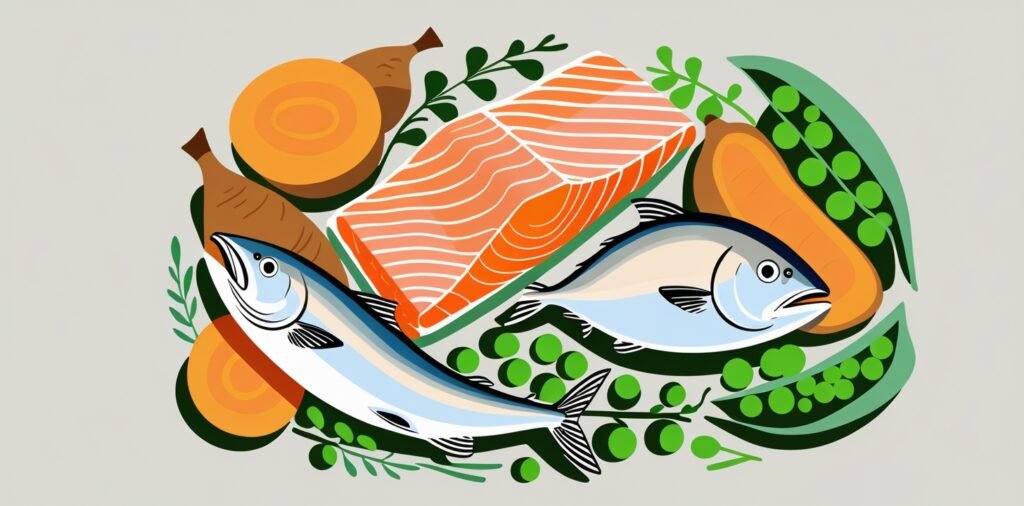
The first five ingredients are: salmon, ocean fish meal, sweet potatoes, peas, and pea flour.
1. Salmon (first ingredient): Whole salmon is a quality protein source, but it’s about 70% water. After cooking, it drops significantly down the ingredient list by weight. This is marketing-friendly positioning more than nutritional dominance.
2. Ocean fish meal (second ingredient): This is where the real protein comes from. Fish meal is salmon and other fish with water and fat removed, creating a concentrated protein source (typically 60-65% protein). The vagueness of “ocean fish meal” is a minor red flag. What other fish? Diamond Pet Foods doesn’t specify.
3. Sweet potatoes (third ingredient): A digestible carbohydrate source that provides fiber, vitamins, and steady energy. This is one of the better grain-free carb options available.
4. Peas (fourth ingredient): Serves triple duty: carbohydrate source, protein booster, and binder. The problem? Legume-heavy grain-free diets have been linked to dilated cardiomyopathy (DCM) in some dogs, though research hasn’t proven causation.
5. Pea flour (fifth ingredient): Having both peas AND pea flour in the top five ingredients means this formula is legume-heavy. For most dogs, this isn’t an issue. But if you own a breed predisposed to DCM (Dobermans, Golden Retrievers, Great Danes), discuss grain-free diets with your vet first.
Complete Ingredient Deep Dive
Salmon meal (seventh ingredient): Another concentrated fish protein. Combined with ocean fish meal, these meals likely provide the bulk of the 25% protein content. The multiple fish sources create a complete amino acid profile beneficial for muscle maintenance and skin health.
The protein quality here is genuinely good. Fish proteins are highly digestible and rich in omega-3 fatty acids. However, the “wild-caught” marketing claim needs context: salmon meal is a processed ingredient that may include farmed fish. Diamond Pet Foods doesn’t specify sourcing transparency on their packaging.
The calculated carbohydrate content sits around 42-44%, which is moderate to high. Active dogs burn through this fine, but sedentary or senior dogs might gain weight on this formula.
Canola oil (sixth ingredient): The primary added fat source, preserved with mixed tocopherols (natural vitamin E). But canola oil is a plant-based omega-6 source. Premium fish formulas typically use salmon oil or other animal fats for better omega-3 ratios.
The guaranteed analysis shows omega-6 at 2.4% minimum and omega-3 at 0.3% minimum, an 8:1 ratio. Fish-based foods should ideally have ratios closer to 5:1 or better for maximum anti-inflammatory benefits.
Beneficial additions: Species-specific probiotics (80 million CFU per pound), chelated minerals for better absorption, added taurine (0.12%, important for heart health), and antioxidant-rich fruits and vegetables like blueberries and raspberries. These provide real digestive and immune support.
Nutritional Profile Breakdown
The guaranteed analysis reveals a formula designed for active adult dogs but with limitations for specific life stages.
| Nutrient | Pacific Stream | AAFCO Adult Minimum |
|---|---|---|
| Crude Protein | 25% | 18% |
| Crude Fat | 15% | 5.5% |
| Crude Fiber | 3-4% | N/A |
| Moisture | 10% | N/A |
| Omega-6 Fatty Acids | 2.4% min | N/A |
| Omega-3 Fatty Acids | 0.3% min | N/A |
| Calories per cup | 408 kcal | N/A |
Protein (25%): Above average but not exceptional for a fish-based formula. This is adequate for active adult dogs but might be excessive for seniors with kidney concerns. The protein is high quality (fish-based), which matters more than the percentage alone.
Fat (15%): Moderate fat content suitable for most activity levels. Not high enough for working dogs or extremely active breeds, but appropriate for typical household pets. The 408 calories per cup means this is a moderately calorie-dense food.
Fiber (3-4%): Low to moderate fiber supports digestive health without causing excessive stool volume. The probiotics complement this for overall gut health.
Important limitation: This formula meets AAFCO nutritional profiles through formulation, not feeding trials. Feeding trials are the gold standard because they prove dogs actually thrive on the food long-term, not just that it meets nutrient minimums on paper.
Who Should (and Shouldn’t) Feed Pacific Stream
Best For:
- Dogs with grain allergies or sensitivities: The grain-free formula eliminates common allergens like wheat, corn, and rice.
- Adult dogs of all sizes: Feeding guides cover 3-175 pounds, making this suitable for Chihuahuas to Great Danes.
- Dogs needing skin and coat support: Fish proteins and omega fatty acids help with dry skin, dull coats, and seasonal allergies.
- Active adult dogs: The protein and calorie content suits dogs with moderate to high activity levels.
- Picky eaters who prefer fish: The smoke-flavored salmon is highly palatable; most dogs find it irresistible.
- Budget-conscious owners seeking quality: At roughly $2 per pound, this delivers better ingredients than grocery store brands without premium pricing.
Skip This If:
- Puppies: This is formulated for adult maintenance. Puppies need higher calcium and phosphorus ratios for proper bone development. Taste of the Wild makes a separate puppy formula.
- Senior dogs with reduced activity: The calorie density and protein levels may cause weight gain in less active seniors. Consider a senior-specific formula.
- Dogs with fish allergies: Salmon can be an allergen for some dogs.
- Breeds predisposed to DCM: If you own a Doberman, Golden Retriever, Great Dane, or other at-risk breed, discuss grain-free diets with your vet before switching. The legume content is a concern.
- Owners who prefer grain-inclusive diets: If you’re specifically avoiding grain-free due to DCM concerns, this isn’t for you.
- Those seeking maximum manufacturing transparency: Diamond Pet Foods has improved since past issues, but they’re not as transparent as some premium brands about sourcing and testing.
Veterinary Consultation Required: Dogs with existing heart conditions, kidney disease, or other health issues should only switch foods under veterinary supervision. Individual nutritional needs vary significantly.
Cost Analysis: Value for Money

Let’s break down what you’re actually spending to feed Pacific Stream, because per-bag prices don’t tell the whole story.
Price per pound: Approximately $1.40-$2.20 depending on bag size and retailer. The 28-pound bag typically offers the best value at around $2.00 per pound ($56 total). Smaller bags run closer to $2.65 per pound.
Daily feeding cost (50-pound adult dog, moderate activity): A 50-pound dog needs about 2.5 cups per day according to feeding guidelines. At 408 calories per cup, that’s 1,020 calories daily. Cost: approximately $1.50-$2.00 per day, or $45-$60 per month.
Money-saving tip: Buy the 28-pound bag to reduce per-pound cost by up to 30%. Store in an airtight container to maintain freshness.
Price Comparison with Competitors
For a 50-pound adult dog:
- Premium grocery brands (Purina Pro Plan): $1.00-$1.50/day
- Mid-range grain-free (Blue Buffalo Wilderness): $1.75-$2.25/day
- Ultra-premium (Orijen Six Fish): $3.50-$4.50/day
Pacific Stream sits squarely in the mid-range category. You’re paying more than grocery store brands but significantly less than ultra-premium options.
The verdict: yes, for most dogs. The multiple fish protein sources, probiotics, and chelated minerals provide better nutrition than similarly priced chicken-based formulas. However, you’re also paying for grain-free marketing that most dogs don’t actually need.
If your dog doesn’t have grain sensitivities, you could get similar or better nutrition from grain-inclusive formulas at $1.00-$1.50 per day. The grain-free premium is real, and you should only pay it if your dog actually benefits.
How It Compares to Alternatives
| Feature | Pacific Stream | Orijen Six Fish | Blue Buffalo Wilderness Salmon | Wellness CORE Ocean |
|---|---|---|---|---|
| Protein | 25% | 38% | 34% | 34% |
| Price/lb | $2.00 | $4.00 | $2.10 | $2.30 |
| Carb Source | Peas, sweet potato | Minimal legumes | Peas, potatoes | Potatoes |
| Probiotics | 80M CFU/lb | No | Yes | Yes |
| Feeding Trials | No | Yes | No | No |
Orijen Six Fish ($4.00/lb)
Orijen uses more whole fish and less legumes, resulting in 38% protein from animal sources versus Pacific Stream’s 25%. Carbohydrates are significantly lower (around 20% vs 42-44%). You’re paying nearly double for higher meat inclusion and more transparent sourcing.
Verdict: Orijen is objectively higher quality, but Pacific Stream offers 70-80% of the nutritional value at 50% of the cost. For most adult dogs, that’s a reasonable trade-off.
Blue Buffalo Wilderness Salmon Recipe ($2.10/lb)
Blue Buffalo includes 34% protein versus 25%, though some comes from pea protein. Similar legume content and comparable carb loads. Nearly identical pricing.
Verdict: Blue Buffalo offers higher protein at the same price point, making it a stronger choice for active dogs. However, Pacific Stream’s probiotics and smoke-flavored salmon may win over picky eaters.
Wellness CORE Ocean Formula ($2.30/lb)
Wellness CORE delivers 34% protein from whitefish, herring, and salmon. Uses potatoes instead of heavy legumes, which some owners prefer given DCM concerns. Slightly higher price.
Verdict: Wellness CORE offers better protein content and less controversial carb sources. If you’re concerned about legumes, spend the extra $0.10-$0.20 per pound for this alternative.
Bottom line: Pacific Stream is competitive but not exceptional in its price range. It wins on palatability and probiotic inclusion but loses on protein content and carbohydrate quality compared to direct competitors.
Manufacturing and Safety Record
Taste of the Wild is made by Diamond Pet Foods, a family-owned company operating six facilities across the United States. Let’s address the elephant in the room: Diamond’s recall history.
The 2012 Salmonella Recall
In May 2012, Diamond voluntarily recalled multiple brands (including Taste of the Wild) due to potential Salmonella contamination at their South Carolina facility. No confirmed contamination was found in Taste of the Wild products specifically, but the precautionary recall affected consumer confidence.
Since 2012: Diamond has had no recalls. They’ve implemented enhanced safety protocols, including pre- and post-production testing and supplier audits. The facilities process USDA-inspected meats and add probiotics post-cooking to preserve viability.
The Transparency Problem
Diamond Pet Foods doesn’t meet WSAVA (World Small Animal Veterinary Association) guidelines for manufacturer transparency.
They claim to employ veterinarians and nutritionists but don’t publicly name them or provide detailed sourcing information.
Compare this to brands like Hill’s or Royal Canin, which publish extensive research, name their nutritionists, and conduct feeding trials. Diamond’s approach is more “trust us, we know what we’re doing” than “here’s our data.”
For some owners, the 14-year clean record since 2012 is proof enough. For others, the lack of third-party certifications (no NASC seal, no published feeding trials) is a dealbreaker.
The Grain-Free and DCM Question
In 2018, the FDA began investigating a potential link between grain-free diets and dilated cardiomyopathy (DCM) in dogs. As of 2024, research hasn’t proven causation, but legume-heavy formulas remain under scrutiny.
Pacific Stream’s heavy pea and lentil content places it in the category of concern. However, fish-based formulas appear less implicated than lamb or exotic protein formulas in reported DCM cases.
Recommendation: If you own a breed predisposed to DCM, consult your vet before feeding any grain-free diet. For most dogs, the risk appears minimal, but we’re still waiting for definitive research.
Real-World Feeding Experience: What to Expect
Based on customer reviews and reported experiences, here’s what typically happens when you switch to Pacific Stream.
Palatability (9/10): Dogs almost universally love the smoke-flavored salmon. Picky eaters who refuse other foods often devour this. The smell is strong (fishy), which dogs love and some owners find off-putting.
Digestibility (7/10): Most dogs transition well with gradual introduction. The probiotics help produce firm stools. However, some dogs experience gas or loose stools, particularly during the first week.
Coat and skin improvements (8/10): Owners consistently report shinier coats and reduced itching within 4-6 weeks. The omega fatty acids and fish proteins deliver visible results for dogs with dry skin or dull coats.
Energy levels (8/10): The calorie density and protein content support active dogs well. Some owners report increased energy, which is positive for working dogs but potentially problematic for already hyperactive pets.
Stool quality (7/10): Generally firm and less voluminous than grain-inclusive diets. The low fiber content means less waste, which is convenient for cleanup.
Transition schedule: Mix 25% Pacific Stream with 75% current food for days 1-3, then 50/50 for days 4-6, then 75/25 for days 7-9, and switch fully on day 10. This reduces digestive upset.
Frequently Asked Questions
Is Taste of the Wild Pacific Stream good for puppies?
No, this formula is designed for adult maintenance and lacks the higher calcium and phosphorus ratios growing puppies need for proper bone development. Taste of the Wild makes a separate Pacific Stream Puppy Formula if you want to stay with the brand.
Does Pacific Stream help with dog allergies?
It can help dogs with grain allergies (wheat, corn, rice) or chicken sensitivities since it’s grain-free and fish-based. However, salmon itself can be an allergen for some dogs. If your dog has never eaten fish protein, introduce gradually and monitor for reactions.
How much does Pacific Stream cost per day to feed?
For a 50-pound adult dog with moderate activity, expect to spend approximately $1.50-$2.00 per day, or $45-$60 per month. Larger dogs cost more; smaller dogs cost less. Buying the 28-pound bag reduces per-pound cost.
Is the salmon really wild-caught?
The marketing emphasizes wild-caught salmon, but the primary protein source is salmon meal, a processed ingredient. Diamond Pet Foods doesn’t specify whether the salmon is wild-caught or farmed on their packaging. This is a transparency gap.
Should I be concerned about Diamond Pet Foods manufacturing?
Diamond had a Salmonella recall in 2012 but has maintained a clean safety record for 14 years since. They’ve improved protocols and conduct regular testing. However, they don’t meet WSAVA transparency standards. Some owners prefer brands with more publicly available data; others are satisfied with the improved track record.
Can I feed Pacific Stream to a senior dog?
You can, but you’ll likely need to reduce portions to prevent weight gain. The 408 calories per cup and 15% fat content may be too rich for less active seniors. Consider a senior-specific formula or reduce portions by 20-25% and monitor weight closely.
So: Is Taste of the Wild Pacific Stream Good for Your Dog?

Taste of the Wild Pacific Stream is a solid mid-range salmon formula that delivers on palatability and basic nutritional quality but falls short of premium status due to legume-heavy carbs and transparency concerns.
Buy this if: Your adult dog has grain sensitivities, loves fish flavor, and you want better ingredients than grocery store brands without paying ultra-premium prices. The probiotics and multiple fish proteins provide genuine benefits for skin, coat, and digestive health.
Skip this if: You own a DCM-prone breed and prefer grain-inclusive diets, need maximum protein for a working dog, or want a manufacturer that meets WSAVA transparency standards. You can find higher protein content at the same price point (Blue Buffalo Wilderness) or better carb sources for slightly more (Wellness CORE).
The 7.5/10 rating reflects a food that does most things right but isn’t exceptional. The fish proteins are quality, the probiotics are beneficial, and most dogs thrive on it. However, the legume content, moderate protein levels, and manufacturing transparency issues prevent a higher score.
For the average adult dog without specific health concerns, Pacific Stream offers good value. It’s not the best food on the market, but it’s far from the worst. If your dog loves salmon and you’re comfortable with grain-free formulas, this is a reasonable choice.
Monitor your pet’s body condition, energy levels, and stool quality. If your dog thrives on Pacific Stream, the formula is working. If you notice issues, don’t hesitate to try alternatives.
Where to buy: Available at Chewy, Amazon, PetSmart, and independent pet retailers. The 28-pound bag typically offers the best per-pound value.
Always consult your veterinarian before making significant dietary changes, especially for dogs with existing health conditions, puppies, or senior dogs. Individual nutritional needs vary based on age, activity level, and health status.

How this guide pays for itself
Some of the links in this guide go to Amazon. If one of them leads you to buy something, Amazon sends The Nomad Paws a small commission. As an Amazon Associate I earn from qualifying purchases.
You pay the same price either way, and a commission never decides what makes the list. It pays for the hours spent reading airline pages, food labels and vet studies, and it keeps the site free to read, with no ads.
Thank you for reading, and happy trails. Read the full affiliate disclosure.