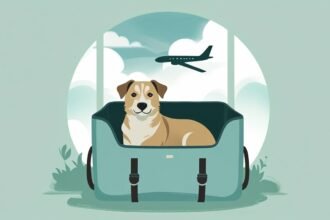

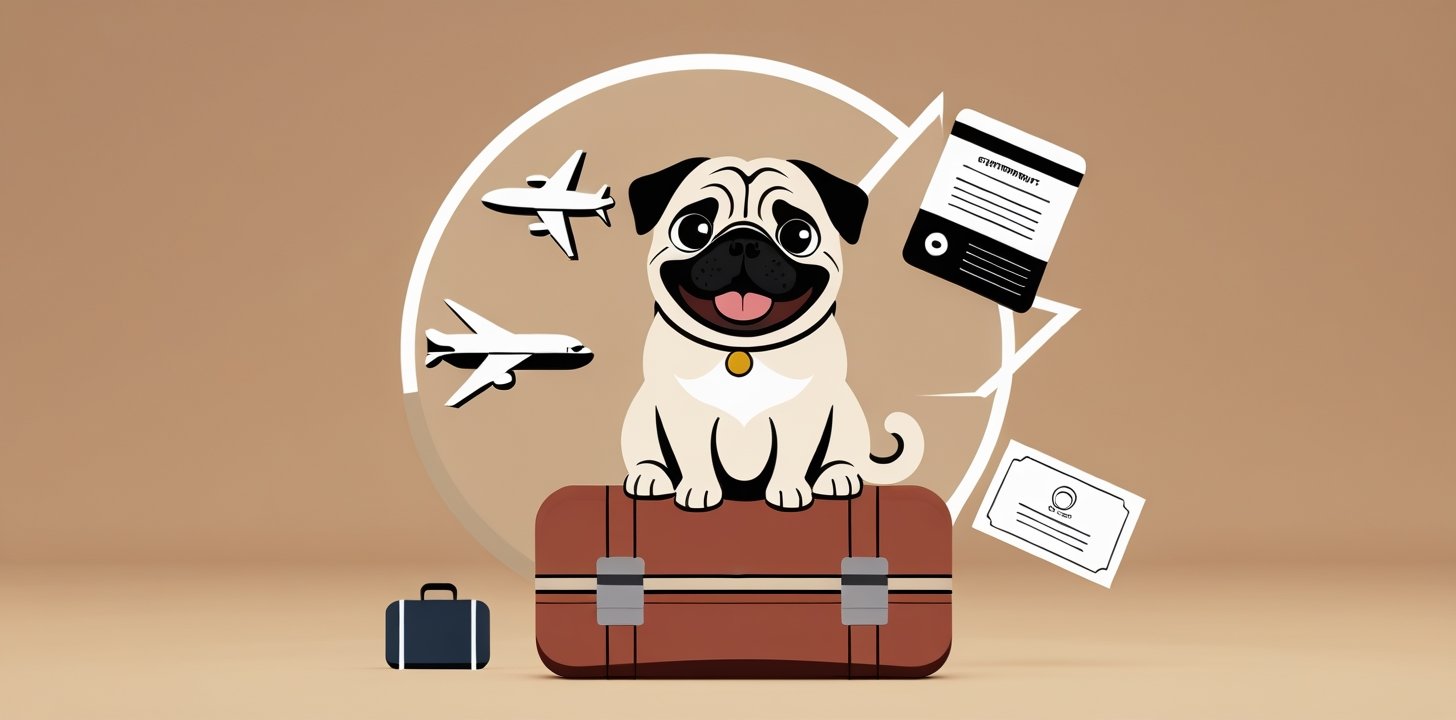
You’ve searched “can pugs fly on planes” because you know your flat-faced companion faces stricter restrictions than other breeds. The answer is yes, but with critical limitations: most airlines allow pugs in cabin if they weigh under 20 pounds including carrier, while cargo is banned by many carriers year-round and by all major airlines when temperatures exceed 75-85°F.
This guide provides the exact booking deadlines, carrier dimensions, temperature restrictions, and airline-by-airline policies you need to get your pug in the air safely. No vague warnings, just the concrete timeline and costs for domestic pug travel.
Why Pugs Face Stricter Airline Restrictions
Pugs are brachycephalic breeds with shortened skulls, narrow nostrils, and elongated soft palates. These anatomical features create Brachycephalic Obstructive Airway Syndrome (BOAS), which worsens at altitude and in heat.
The AVMA’s brachycephalic air transport guidelines document increased respiratory distress risk during flight.
Airlines respond with breed-specific bans. American Airlines prohibits all pugs and pug mixes from checked cargo on their snub-nosed breed restriction list.

Delta and United allow cabin travel but require veterinary fitness-to-fly assessments. International carriers like Lufthansa and British Airways impose seasonal or complete bans.
Temperature embargoes compound restrictions. Most airlines ban pug travel when ground temperatures exceed 75-80°F at origin, destination, or connection points. This effectively blocks summer travel in most U.S. regions from May through September.
8-Week Preparation Timeline for Flying with Your Pug

Pug air travel requires earlier planning than other breeds due to veterinary assessments and limited airline pet slots. Follow this timeline to avoid denied boarding.
8 Weeks Before Departure
Research airline pug policies on carrier websites. Delta allows cabin pugs in carriers measuring maximum 18 inches long x 11 inches wide x 11 inches high. United permits pugs with health certificates issued within 10 days. American Airlines bans pugs from cargo entirely but allows cabin travel.
Book your flight and reserve your pet spot immediately. Delta limits cabin pets to 4 per flight on a first-come basis. Call the airline’s Reservations line after purchasing your ticket to add your pug. Slots fill 2-4 weeks ahead on popular routes.
6 Weeks Before Departure
Schedule an appointment with a USDA-accredited veterinarian. Your pug needs a health examination, current rabies vaccination (administered at least 21-30 days before travel), and a fitness-to-fly assessment specific to brachycephalic breeds. Appointments take 1-2 weeks to secure in most areas.
Confirm your vet can issue APHIS Form 7001 health certificates and submit for USDA endorsement through the Veterinary Export Health Certification System (VEHCS).
4 Weeks Before Departure
Purchase an airline-approved soft-sided carrier that fits under the seat. For Delta and American, maximum dimensions are 18 x 11 x 11 inches. The Sherpa Original Deluxe (17 x 11 x 10.5 inches) and similar carriers meet requirements.
Begin crate training immediately. Practice 30-minute sessions daily for 2-4 weeks. Your pug must remain calm in the carrier for the entire flight duration, which can exceed 5 hours on cross-country routes.
2 Weeks Before Departure (Hard Deadline)
Return to your USDA-accredited veterinarian for the official health certificate examination. The vet issues APHIS Form 7001 confirming your pug is healthy, vaccinated, and fit to fly. This certificate is valid for only 10 days from issuance, per USDA APHIS requirements.
Your veterinarian submits the certificate for USDA endorsement through VEHCS. Processing takes 1-3 business days. The endorsement fee is $38 base plus $5 per additional destination copy. Schedule this appointment no earlier than 12 days before travel and no later than 10 days before.
1 Week Before Departure
Check weather forecasts for your departure city, destination, and any connection points. If temperatures are forecast to exceed 85°F, American Airlines will deny boarding. Delta and United enforce similar 75-80°F thresholds during summer months.
Call the airline to confirm your pet reservation. Verify the pet fee has been charged to your payment method. Delta charges $125 each way for cabin pets on domestic flights (increasing to $150 after April 2025). American charges $150 each way.
24-48 Hours Before Departure
Complete online check-in and call Reservations to confirm your pet is noted in your reservation. Some systems don’t display pet bookings during online check-in, causing confusion at the airport.
Withhold food 4-6 hours before departure to reduce motion sickness risk. Offer water up until departure time.
Day of Travel
Arrive at the airport 2 hours early for domestic flights, 3 hours for international. Check in at the special services counter, not standard kiosks. TSA requires you to remove your pug from the carrier during screening while the carrier goes through the X-ray machine separately.
Your pug must remain in the carrier under the seat in front of you for the entire flight. Airlines prohibit removing pets during taxi, takeoff, landing, or turbulence.
Airline-by-Airline Pug Policies
| Airline | Cabin Fee | Cargo Policy | Carrier Size Limit | Temperature Restrictions |
|---|---|---|---|---|
| Delta | $125 each way ($150 after April 2025) | International only with vet waiver | 18 x 11 x 11 inches | Seasonal embargo 75-80°F |
| American | $150 each way | Banned (all pugs/mixes on snub-nose list) | 19 x 13 x 9 inches | No travel above 85°F or below 45°F |
| United | $125 each way | Seasonal restrictions, vet assessment required | 18 x 11 x 11 inches | Summer embargo varies by route |
| Southwest | $125 each way | No cargo pet program | 18.5 x 13.5 x 9.5 inches | Cabin only, no specific pug restrictions |
Verify current policies before booking. Airlines update pet restrictions seasonally and fees change annually. Check the official pet policy page for your specific carrier.
Complete Cost Breakdown for Domestic Pug Travel
| Expense Category | Specific Costs | Notes |
|---|---|---|
| Airline Cabin Fee | $125-150 each way | Delta $125, American $150, United $125 (verify before booking) |
| Health Certificate Exam | $100-200 | USDA-accredited vet examination and certificate issuance |
| USDA Endorsement | $38-43 | $38 base + $5 per additional destination copy |
| Rabies Vaccination | $20-50 | If booster needed (must be 21-30 days before travel) |
| Airline-Approved Carrier | $50-100 | Sherpa Original Deluxe or equivalent soft-sided carrier |
| Carrier Accessories | $30-50 | No-spill water bottle, pee pads, collapsible bowl |
| Anxiety Medication (Optional) | $50-100 | Vet-prescribed trazodone or similar (sedatives prohibited) |
| Total One-Way | $250-500 | Budget end assumes existing carrier and vaccinations |
| Total Round-Trip | $400-700 | Typical cost for domestic travel with all requirements |
International travel adds $200-400 in additional fees for country-specific health certificates, import permits, and microchipping if not already done. Destinations like Hawaii require additional documentation and may cost $500+ more due to quarantine prevention requirements.
Why Cabin Travel Is Strongly Preferred for Pugs
Cargo holds expose pugs to temperature extremes and reduced oxygen that exacerbate respiratory distress. The DOT’s Air Travel Consumer Reports document higher incident rates for brachycephalic breeds in cargo.
American Airlines bans all pugs from checked baggage and cargo due to heat sensitivity and BOAS risks. Delta allows international cargo with veterinary waivers but strongly discourages it. United restricts cargo to specific temperature windows that eliminate most summer and winter travel dates.
Cabin travel keeps your pug with you in climate-controlled conditions. The weight limit is typically 20 pounds total including carrier. Most adult pugs weigh 14-18 pounds, leaving 2-6 pounds for the carrier. Soft-sided carriers meeting airline dimensions weigh 2-4 pounds.
If your pug exceeds 20 pounds total, you cannot fly on most commercial airlines. Consider ground transportation or specialized pet shipping services like PetRelocation, which cost $2,000+ for cross-country transport.
Temperature Restrictions That Block Pug Travel
Airlines enforce temperature embargoes when ground temperatures at origin, destination, or connection airports fall outside safe ranges. These restrictions apply even for cabin pets on some carriers.
American Airlines prohibits pug travel when temperatures exceed 85°F or drop below 45°F at any point in the journey. The cold weather restriction can be waived with a veterinary acclimation letter for temperatures above 20°F, but heat restrictions are absolute.
Delta and United enforce 75-80°F upper limits during summer months, typically May through September in most U.S. regions. Check 7-day forecasts one week before travel using AccuWeather or Weather.com for all airports in your itinerary.
If forecasts show temperatures exceeding limits, contact the airline immediately. Most offer rebooking without change fees for weather-related pet restrictions, but you must initiate the change before the travel date. Showing up at the airport with your pug when temperatures exceed limits results in denied boarding with no refund of the pet fee.
What Happens If Your Pug Is Denied Boarding
Temperature violations, oversized carriers, expired health certificates, and missing USDA endorsements cause denied boarding. Airlines will not make exceptions.
If denied, you face three options. First, rebook on a later flight when conditions meet requirements. The airline typically waives change fees but you pay any fare difference. Your pet fee transfers to the new flight.
Second, arrange ground transportation. Pet taxi services cost $50-100 per day for cross-country trips. Professional pet shipping services like PetRelocation charge $2,000+ for door-to-door service.
Third, cancel your trip. Airlines refund pet fees for weather-related denials but not for documentation failures. Your ticket refund depends on your fare class.
Backup planning prevents these scenarios. Book morning flights when temperatures are coolest. Avoid connections in Phoenix, Las Vegas, Dallas, and Houston during summer. Carry printed copies of your health certificate, USDA endorsement, and rabies vaccination record.
Health Certificate Requirements Specific to Pugs
Pugs need the same USDA APHIS health certificate as other breeds, but the examination must include a brachycephalic fitness-to-fly assessment. Your USDA-accredited veterinarian completes APHIS Form 7001 within 10 days of departure.
The certificate confirms your pug is free from infectious disease, current on rabies vaccination (administered at least 21-30 days prior), and physically capable of air travel. For pugs, the vet must specifically assess respiratory function, noting any signs of BOAS that could worsen during flight.
After examination, your vet submits the certificate through VEHCS for USDA endorsement. Processing takes 1-3 business days. The endorsed certificate is valid for 10 days from the examination date, not the endorsement date. This means you must travel within 10 days of your vet visit.
Timing is critical. Schedule the health certificate appointment no earlier than 12 days before departure and no later than 10 days before. Earlier appointments result in expired certificates. Later appointments risk processing delays that leave you without valid documentation.
The examination costs $100-200 depending on your veterinarian. USDA endorsement adds $38 base fee plus $5 per additional destination copy. Total documentation costs run $138-243.
Carrier Requirements and Crate Training Timeline
Your pug’s carrier must fit completely under the seat in front of you. Delta and American require maximum dimensions of 18 x 11 x 11 inches. United allows the same. Southwest permits slightly larger carriers at 18.5 x 13.5 x 9.5 inches.
Soft-sided carriers are required for cabin travel. The carrier must have ventilation on at least three sides, a leak-proof bottom, and secure closures. The Sherpa Original Deluxe (17 x 11 x 10.5 inches, $80-100) and Petmate Sky Kennel small size meet all airline requirements.
Label the carrier with “Live Animal” on the top and at least one side. Attach a water bottle and collapsible bowl inside. Do not include toys with small parts that could become choking hazards.
Begin crate training 4 weeks before travel. Start with 10-minute sessions, gradually increasing to 30-60 minutes. Practice during car rides to simulate movement and noise. Your pug must remain calm in the carrier for your entire flight duration, which can exceed 5 hours on cross-country routes.
Feed meals inside the carrier. Place favorite blankets or worn clothing with your scent inside. Never use the carrier for punishment. By departure day, your pug should enter willingly and settle without distress.
Medications and Sedation Rules
Airlines prohibit sedatives for pets during air travel. The AVMA guidelines warn that sedation increases respiratory depression risk in brachycephalic breeds at altitude. Delta, American, and United all ban sedated pets.
Your veterinarian can prescribe non-sedating anxiety medications like trazodone at 5-10 mg per kg body weight. Administer 2 hours before departure. Test the medication on a trial day at home to confirm your pug tolerates it without excessive drowsiness.
For motion sickness, veterinarians may recommend Benadryl at 2 mg per pound of body weight. Again, test before travel day. Some pugs experience paradoxical excitement rather than calming.
Bring medication documentation from your vet. TSA may inspect medications during screening. Keep them in original prescription bottles with your pug’s name and dosage instructions.
Airport Procedures and TSA Screening
Arrive 2 hours early for domestic flights, 3 hours for international. Proceed to the special services or baggage check counter, not standard check-in kiosks. An agent inspects your pug’s carrier, verifies health certificate validity, and confirms your pet reservation.
At TSA security, you must remove your pug from the carrier. Hold your pug securely while the empty carrier goes through the X-ray machine. TSA officers may swab your hands for explosive residue after handling your pet. The process takes 5-10 minutes during busy periods.
After security, your pug must remain in the carrier until boarding. Use airport pet relief areas if your pug needs to eliminate. Major airports like LAX (Terminal 2 and 3), DFW, and ATL have designated relief areas post-security.
Board during your assigned group. Inform the gate agent you’re traveling with a pet. Flight attendants may ask to verify your pug is secured in the carrier before takeoff.
In-Flight Care and Monitoring
Place the carrier under the seat in front of you immediately after boarding. Your pug must remain inside for taxi, takeoff, landing, and any turbulence. Airlines prohibit removing pets during these phases.
During cruise, you may reach into the carrier to comfort your pug but cannot remove them. Monitor for signs of respiratory distress: labored breathing, blue-tinged gums, excessive panting, or collapse. Alert flight attendants immediately if distress occurs.
Offer water through the carrier’s water bottle every 2-3 hours on long flights. Do not feed during flight. The reduced cabin pressure and stress increase vomiting risk.
If your pug eliminates in the carrier, notify flight attendants. They can provide paper towels and disposal bags. Bring extra pee pads in your personal item for cleanup.
Common Mistakes That Cause Denied Boarding
Expired health certificates are the most frequent error. The 10-day validity period is absolute. Airlines verify the examination date on APHIS Form 7001, not the endorsement date. Schedule your vet appointment precisely 10-12 days before departure.
Oversized carriers cause denial even if your pug fits inside. Measure your carrier before purchase. 18 x 11 x 11 inches is the maximum for Delta and American. Soft-sided carriers that compress slightly may pass inspection, but rigid carriers exceeding dimensions will not.
Missing USDA endorsement stamps result in rejection. The health certificate must show the official USDA APHIS endorsement seal. Veterinary signatures alone are insufficient. Confirm your vet submits through VEHCS and provides the endorsed copy.
Temperature violations block travel even with valid documentation. Check 7-day forecasts one week before departure for all airports in your itinerary. If any location exceeds 85°F (American) or 75-80°F (Delta/United), rebook immediately.
Failing to confirm pet reservations 24-48 hours before departure causes confusion at check-in. Call the airline’s Reservations line to verify your pet is noted in your booking and the fee has been charged.
Alternatives If Your Pug Cannot Fly
If your pug exceeds the 20-pound weight limit including carrier, commercial airlines will not accept them in cabin. Cargo is banned by American and restricted by most carriers during temperature extremes.
Ground transportation becomes necessary. Pet taxi services charge $50-100 per day for cross-country trips. Drivers transport your pug in climate-controlled vehicles with regular stops for relief and water.
Professional pet shipping companies like PetRelocation provide door-to-door service for $2,000-4,000 depending on distance. They handle all logistics, health certificates, and ground transport. This option works for pugs that cannot tolerate air travel due to severe BOAS.
For shorter distances under 500 miles, driving with your pug may be more practical and less stressful. Plan stops every 2-3 hours for relief, water, and short walks.
Frequently Asked Questions
Can pugs fly in the airplane cabin with their owners?
Yes, most airlines allow pugs in cabin if they fit under the seat in an approved carrier. Weight limits typically max at 20 pounds including the carrier. Delta, United, American, and Southwest all permit cabin pugs within these parameters. Your pug must remain in the carrier for the entire flight.
Are pugs allowed to fly in cargo during summer?
Most airlines ban pugs from cargo when temperatures exceed 75-80°F due to their brachycephalic respiratory issues and heat sensitivity. American Airlines prohibits all pugs from cargo year-round. Delta allows international cargo with veterinary waivers but enforces seasonal embargoes. Summer travel from May through September is effectively blocked in most U.S. regions.
What airlines allow pugs to fly without restrictions?
No major airlines have completely unrestricted pug policies. Each carrier enforces specific temperature limits, carrier size requirements, and seasonal restrictions. Southwest has the most lenient policies with cabin-only travel and no specific pug bans, but still requires carriers under 18.5 x 13.5 x 9.5 inches and enforces the 20-pound weight limit.
Do pugs need special health certificates to fly?
Pugs need standard health certificates endorsed by USDA APHIS, typically issued within 10 days of travel and including proof of rabies vaccination administered at least 21-30 days prior. The examination must include a brachycephalic fitness-to-fly assessment confirming your pug can tolerate air travel despite BOAS risks.
How much does it cost to fly with a pug domestically?
Domestic pug travel costs range from $250-500 one-way. This includes $125-150 airline cabin fees, $100-200 for health certificate examination and USDA endorsement, and $50-100 for an approved carrier if you don’t already own one. Round-trip costs typically run $400-700 depending on airline and route.