
Stressed about your dog freaking out on the plane? Start preparing 4 weeks before departure with systematic crate training, tested calming aids, and a vet-approved medication plan. The goal isn’t sedation but making the flight manageable and non-traumatic for both of you.
Understanding Dog Flight Anxiety: What Causes It
Your dog isn’t being difficult. They’re reacting to confinement in a strange crate, overwhelming engine noise, pressure changes, and separation from you. According to veterinary behaviorists, this triggers a fight-or-flight response you see as panting, whining, or shaking.
The solution is systematic desensitization. You can’t explain the flight to them, but you can make every component (the crate, the motion, the sounds) feel normal through gradual, positive exposure over 4 weeks.
4-Week Preparation Timeline for a Calm Flight
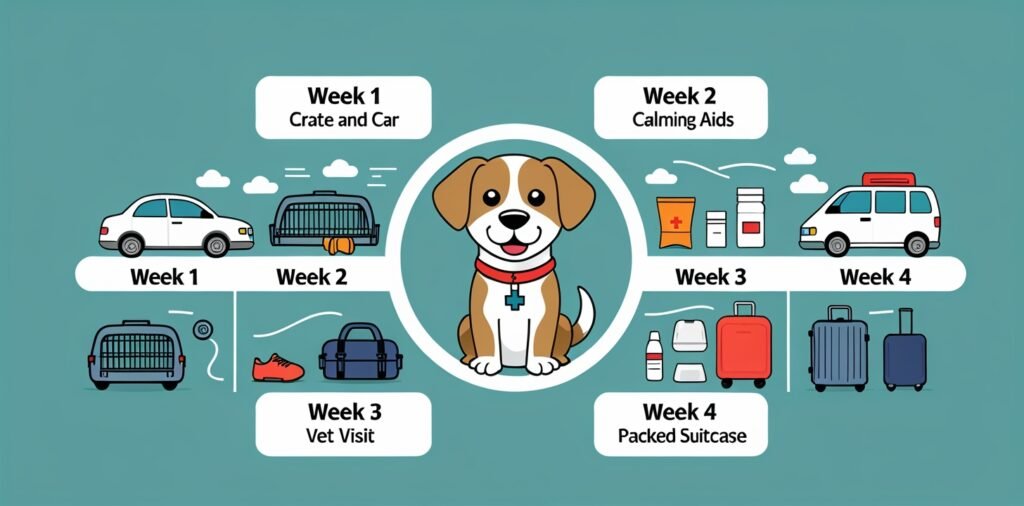
This timeline is your roadmap. Miss a step and you risk a panicked pet at 30,000 feet. Start the clock the day you book your ticket.

Week 1: Crate Desensitization and Short Car Rides
Goal: Make the crate a happy place, not a prison.
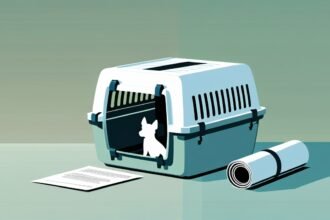
- Days 1-3: Place the travel crate in your living room with the door open. Feed all meals inside it. Toss high-value treats in throughout the day.
- Days 4-7: Start closing the door for short periods. Begin with 5 minutes while you’re in the room, then 15 minutes. Give a stuffed Kong or chew toy to create positive association.
- Weekend Task: Take a 10-minute car ride with your dog in the crate. Keep it positive and end with a walk or play.
Pro Tip: Never use the crate for punishment. This space must equal safety and treats, 100% of the time.
Week 2: Introducing Calming Aids and Practice Sessions
Goal: Test all non-medication tools to see what works for your dog.
- Purchase an anxiety vest like ThunderShirt ($40-$50) and a pheromone spray like Adaptil ($20-$30).
- Practice putting the vest on for increasing periods at home, paired with calm petting or chews.
- Take a 20-minute car ride. Spray the crate with pheromone spray 15 minutes before, put the vest on your dog, and use a white noise app playing airplane sounds at low volume.
- Note your dog’s reaction. Are they settling? Still anxious? This data is crucial for your vet consult.
Week 3: Mock Travel Scenarios and Vet Consultation
Goal: Simulate the full airport experience and get professional guidance.
- Schedule your vet visit ($50-$150 for consultation). Discuss your dog’s anxiety and the upcoming flight. This is when you talk about medication options like trazodone (5mg/kg, 1-2 hours before flight) or gabapentin. The American Veterinary Medical Association (AVMA) advises against traditional sedation, especially for brachycephalic breeds.
- Conduct a mock TSA screening. At home, practice having your dog walk through a “security” (a hallway) while you send the empty carrier through an “X-ray” (a chair). Per TSA requirements, pets must be removed from carriers during screening for in-cabin travel, so your dog must be leashed and comfortable being held.
- Increase crate time to 30-60 minutes with you out of sight, simulating the plane’s cargo hold or under-seat separation.
Week 4: Final Preparations and Travel Day Strategy
Goal: Lock in the plan and execute flawlessly.
- 3 days before: If your vet prescribed medication, administer a trial dose at home. Monitor for effectiveness and side effects for 24 hours.
- 24 hours before: Do a final crate comfort check. Pack familiar items like a small blanket. Withhold food for 4-6 hours before the flight to prevent nausea, but allow small sips of water.
- Day of flight: Arrive at the airport 3 hours early. Go directly to the airline’s pet check-in desk. Administer any final calming treats or medication 30-60 minutes before boarding, based on your tested timing. Request early boarding if available to settle in without the crowd.
Calming Solutions: Costs, Effectiveness, and Safety
Not all solutions are equal. A layered approach combining tools is most effective. Here’s a breakdown of your options with specific costs.
| Solution Type | Cost Range | How It Works | Best For | Key Consideration |
|---|---|---|---|---|
| Anxiety Vest (ThunderShirt) | $40-$50 | Applies gentle, constant pressure to calm the nervous system. | Dogs with general anxiety, fear of noise/motion. | Must be properly fitted. Test for at least 1 week before travel. |
| Pheromone Spray (Adaptil) | $20-$30 | Mimics “comforting” maternal dog pheromones. | Creating a familiar scent environment in crate/carrier. | Spray carrier 15 minutes before use; effects vary by dog. |
| Calming Treats (Melatonin, L-Theanine) | $25-$40 | Natural supplements to promote relaxation without sedation. Typical dose: 0.5mg melatonin per 10 pounds. | Mild to moderate anxiety. Good for practice sessions. | Give 30-60 minutes before stressor. Verify active ingredients with your vet. |
| Benadryl (Diphenhydramine) | $15 per bottle | Antihistamine with mild sedative side effect. Dosage: 1mg per pound of body weight. | Dogs who get mildly drowsy from it. Always consult vet first. | Can cause opposite reaction (hyperactivity) in some dogs. Must do a trial run. |
| Prescription Meds (Trazodone, Gabapentin) | $50-$200 (with vet visit and prescription) | Prescription anxiolytics that reduce anxiety without deep sedation. Trazodone: 5mg/kg, 1-2 hours before flight. | Moderate to severe flight anxiety. | Requires veterinary consultation and prescription. AVMA warns against acepromazine-type sedatives for air travel. |
Total Cost Breakdown for Calming Your Dog
Here’s what you’ll actually spend to prepare your dog for a calm flight, from budget to comprehensive approaches.
| Item | Budget Option | Typical Cost | Premium Option |
|---|---|---|---|
| Vet Consultation | $50 (basic exam) | $100 | $150 (behavioral specialist) |
| Anxiety Vest | $40 (generic brand) | $45 | $50 (ThunderShirt) |
| Pheromone Products | $20 (spray only) | $30 (spray + collar) | $50 (diffuser + spray + collar) |
| Calming Treats | $15 (Benadryl) | $30 (natural supplements) | $40 (premium brand) |
| Prescription Medication | $0 (not needed) | $50 (trazodone) | $100 (multiple prescriptions) |
| Practice Supplies | $10 (treats for training) | $20 (treats + toys) | $30 (full training kit) |
| Total Range | $135 | $275 | $420 |
Note: These costs are separate from airline pet fees. Delta charges $150 each way for in-cabin pets, United charges $125, and American charges $150. Verify current fees before booking.
Breed-Specific Anxiety Considerations
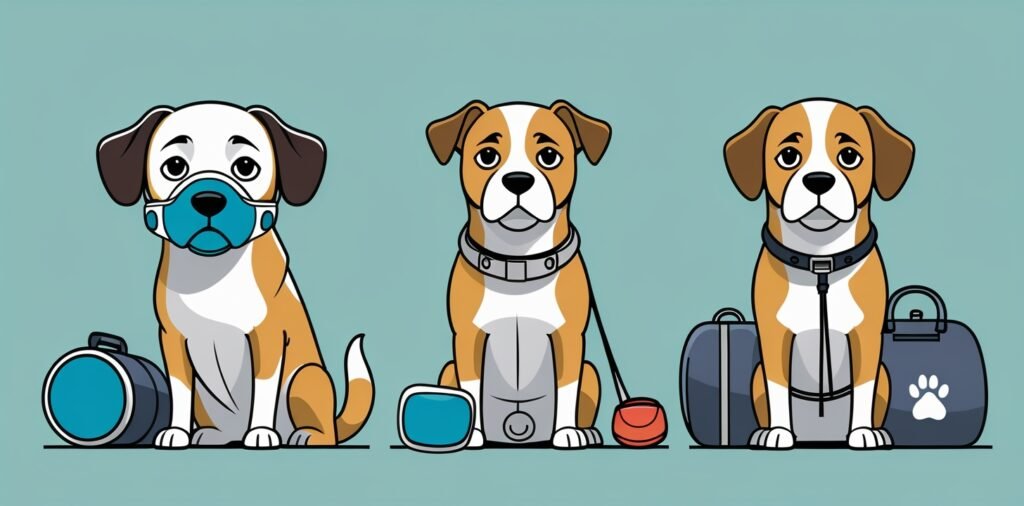
One size does not fit all. Your dog’s breed heavily influences your strategy.
Brachycephalic Breeds (Pugs, Bulldogs, French Bulldogs): This is non-negotiable. Their short airways make breathing difficult at the best of times.
The AVMA and major airlines like Delta strongly warn against sedation and caution about air travel in general. Never sedate a brachycephalic dog for flight. Between 2005-2010, brachycephalic breeds accounted for approximately 50% of air travel pet deaths.
If they must fly, use only natural calming methods (anxiety vest, pheromones), ensure excellent crate ventilation, and book a direct, climate-controlled cabin flight. Many airlines ban them from cargo holds altogether.
- Read also: Can French Bulldogs Fly on Planes?
High-Energy Working Breeds (Border Collies, Australian Shepherds): Their anxiety often stems from pent-up energy. Provide 1-2 hours of vigorous exercise the morning of the flight. A tired dog is a calmer dog. Mental stimulation (puzzle toys) before crating can also help.
Senior Dogs: They may have arthritis or cognitive decline. Ensure extra padding in the crate. Discuss pain management and any interaction between anxiety meds and their regular prescriptions with your vet.
What to Do When Calming Methods Fail Mid-Flight
Even with perfect prep, things can go sideways. Here’s your in-air emergency protocol.
- Stay Calm: Your dog feeds off your energy. Take deep breaths and speak in a low, reassuring tone.
- Assess the Situation: Is it fearful whining or a true emergency (excessive drooling, frantic pawing, prolonged hard panting)?
- Engage Flight Attendant: Quietly alert a crew member. They may allow you to place a covered crate on your lap (if in cabin) or check on a cargo-hold pet if the pilot deems it safe.
- Employ Backup Tactics:
- Cover the crate with a light blanket to block visual stimuli.
- Play white noise loudly on headphones placed near the carrier.
- If in cabin and allowed, slip your fingers into the carrier for gentle contact.
- Post-Flight Recovery: Once landed, find a quiet corner in the airport. Offer water, a potty break, and quiet reassurance. Expect your dog to be extra clingy or sleepy for the next 24 hours, this is normal recovery.
The Bottom Line: Success comes from preparation, not luck. A calm flight is a project you manage over 4 weeks, not a hope you have at the gate. Test everything, consult your vet, and always have a Plan B.
Common Mistakes to Avoid
- Giving medication for the first time on travel day. You have no idea how your dog will react. The trial run 3 days prior is essential.
- Using a brand-new crate at the airport. The crate must be a familiar den, not a scary new box.
- Missing airline deadlines. Most airlines require health certificates issued within 10 days of travel per USDA APHIS guidelines. For international travel, USDA-endorsed certificates are typically valid for 30 days from issuance, but verify with your specific airline before booking.
- Forgetting to verify airline-specific pet policies. Fees, carrier dimensions, and breed restrictions change. Check Delta, American, or United’s official pet policy pages before you book.
- Overlooking temperature embargoes. Many airlines won’t fly pets if ground temperatures exceed 80°F or drop below 20°F. Book early morning or evening flights in extreme seasons.
- Skipping the exercise window. A dog with pent-up energy will be anxious. 2 hours of exercise the morning of travel makes a measurable difference.
Your Calm Flight Checklist
- 4 Weeks Before: Begin daily crate desensitization (15 minutes minimum).
- 3 Weeks Before: Schedule vet consultation for anxiety medication options ($50-$150).
- 2 Weeks Before: Test anxiety vest and calming treats on 20-minute car rides.
- 1 Week Before: Practice mock TSA security screening at home.
- 3 Days Before: Administer a full trial dose of any prescribed medication.
- 24 Hours Before: Final crate comfort check. Withhold food 4-6 hours pre-flight.
- Day of Flight: Arrive 3 hours early for pet check-in. Administer final calming aids 30-60 minutes before boarding.
Frequently Asked Questions
Can I give my dog Benadryl for flying?
Yes, at a dosage of 1mg per pound of body weight (for example, 25mg for a 25-pound dog), given 30-60 minutes before the flight. However, you must consult your vet first for proper dosing and to check for contraindications like glaucoma. Some dogs have a paradoxical reaction and become hyperactive. A trial run is mandatory.
How do I prepare my dog for a first flight?
Start 4 weeks early with gradual crate desensitization (15 minutes daily, building to 60 minutes), practice short car rides in the crate (10-20 minutes), test non-medication calming aids during these practice sessions, and consult your vet about prescription anxiety solutions if needed. The key is slow, positive exposure.
What helps dogs with flight anxiety?
A combination approach works best: an anxiety vest for pressure ($40-$50), pheromone sprays for environmental comfort ($20-$30), vet-approved calming treats or medications ($15-$200), and exhaustive pre-flight crate training. Studies show anxiety vests reduce fear scores in approximately 80% of dogs when introduced gradually.
Are sedatives safe for dogs on planes?
Traditional sedatives like acepromazine are not recommended by the AVMA, especially for brachycephalic breeds due to severe respiratory risks. Consult your vet about safer anti-anxiety medications like gabapentin or trazodone (5mg/kg, 1-2 hours before flight), which reduce panic without heavily suppressing vital functions.
How long before a flight should I give calming treats?
Typically 30-60 minutes before departure. However, you must test this timing during your practice car ride sessions to find the optimal window for your dog, as onset and duration vary by product and individual. For melatonin-based treats, the typical dose is 0.5mg per 10 pounds.