
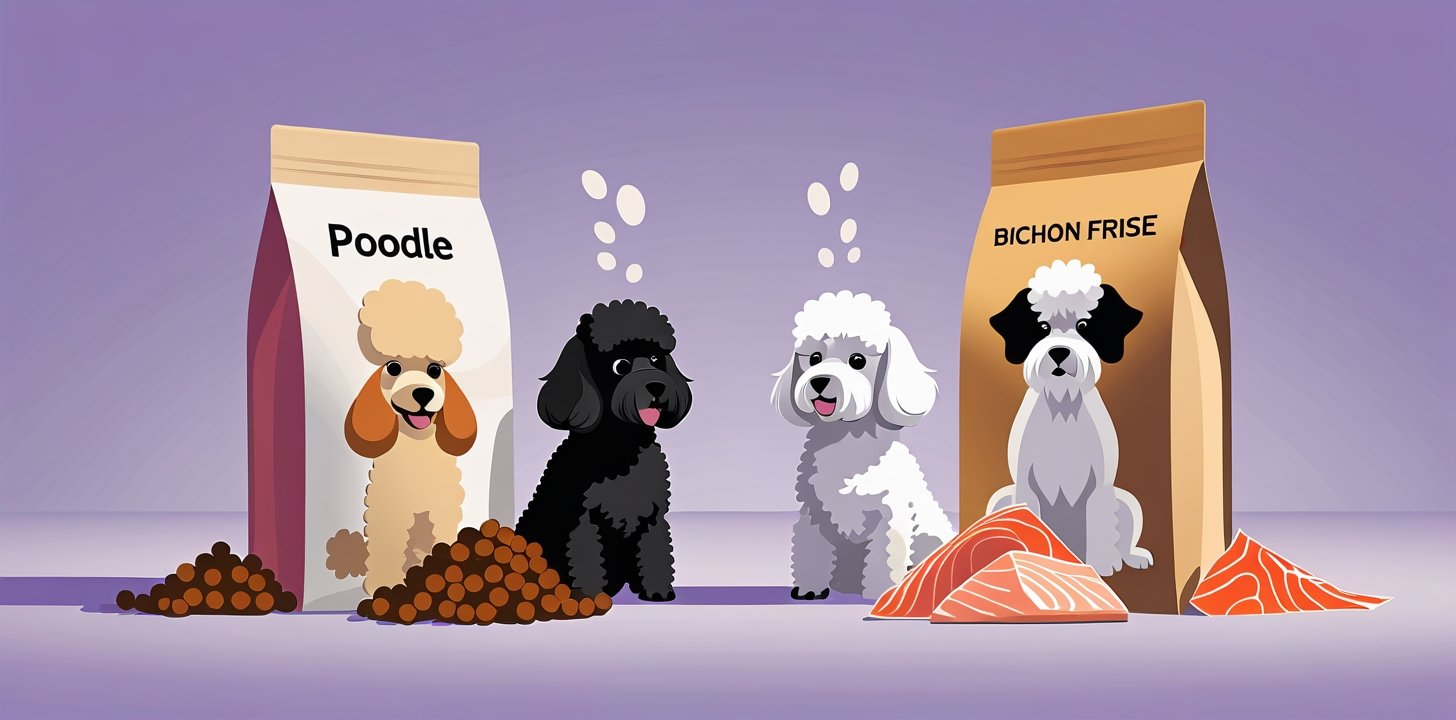
In one corner: the Poodle, a shape-shifting German water dog with three sizes, circus-performer roots, and enough brainpower to file your taxes.
In the other: the Bichon Frise, a Mediterranean sailor’s companion who hunted ship rats, charmed European royalty, and now dramatically limps across your kitchen floor because you sneezed too loud. Both are hypoallergenic. Both are high-maintenance. Both will absolutely steal your spot on the couch.
This is the poodle vs bichon frise showdown. Eight rounds. One fluffy verdict.
| Stat | Poodle (Standard / Mini / Toy) | Bichon Frise |
|---|---|---|
| Size | 18-24 in / under 15 in / under 10 in; 40-70 / 10-15 / 4-6 lbs | 9.5-11.5 in; 12-18 lbs |
| Lifespan | 12-15 yrs (Standard); 13-17 (Mini); 14-18 (Toy) | 14-15 years |
| Energy | High (30-90 min/day by size) | Moderate (60+ min/day) |
| Grooming | Every 3-6 weeks; $720-1,500/year | Every 4-6 weeks; $800-1,500/year |
| Annual Cost | $1,600-4,200+ (size-dependent) | $1,500-3,000 |
Standard Poodles stand 18-24 inches tall and weigh 40-70 pounds, while Bichon Frises measure 9.5-11.5 inches and 12-18 pounds per AKC breed standards. Let the fur fly.

Round 1: Size and Build — Who Actually Fits Your Life?
The Poodle arrives in three configurations: Standard (your jogging partner), Miniature (your couch co-pilot), and Toy (your pocket rocket). All three share identical intelligence and trainability despite the dramatic size gap. Origin story: Germany, 15th century, water retrieval. The French just took credit. Classic France.
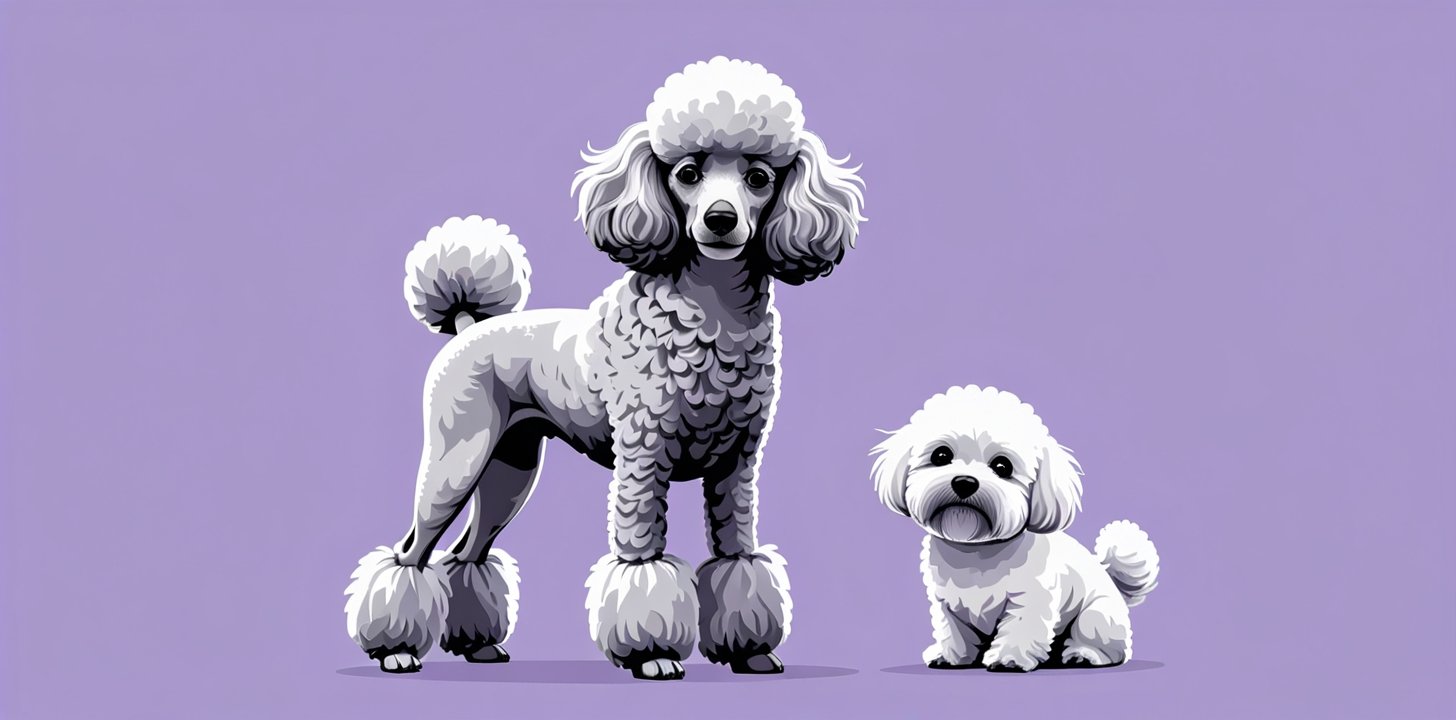
The Bichon Frise comes in exactly one size: compact, sturdy, and deceptively athletic under all that cloud. At 12-18 pounds, it fits apartments, laps, and carry-on bags with equal grace.
Both breeds adapt well to urban apartments and suburban homes, though Standard Poodles need more outdoor access. Poodle wins on sheer flexibility.
Winner: Poodle — three sizes, one genius. (Score: Poodle 1, Bichon 0)
Key Takeaway: Poodle size tip: All three Poodle varieties have equal trainability per AKC standards. Pick your size based on your living space and exercise capacity, not intelligence.
Round 2: Lifespan and Health — Who Sticks Around Longer?
Toy Poodles live 14-18 years. Standard Poodles clock 12-15. The size-to-lifespan tradeoff is real, and it is dramatic. Health watch: Standard Poodles face hip dysplasia (11.9-12.6% prevalence per OFA data), bloat risk, Addison’s disease (up to 2.4% in Standards), and epilepsy. Responsible breeders screen for all of these, and the Poodle Club of America recommends OFA hip and eye certifications before purchase.
Bichon Frises average 14-15 years, though a 2024 UK study found a median of 12.5 years. Their headline health risk is genuinely wild: Bichons are 9.26 times more likely than other dogs to develop gallbladder disease, per veterinary research. They also show elevated rates of immune-mediated hemolytic anemia. The Bichon Frise Club of America recommends regular bloodwork panels for senior dogs.
Both breeds benefit from breed-specific rescue health screening and responsible breeder genetic testing.
Winner: Bichon Frise — edges longevity over Standard Poodles, though Toy Poodles give them a run for their kibble. (Score: Poodle 1, Bichon 1)
Warning: Bloat is a life-threatening emergency in Standard Poodles. Feed smaller meals, avoid vigorous exercise right after eating, and know your nearest emergency vet. This is not a drill.
Round 3: Energy and Exercise — Athlete or Ambler?
Standard Poodles need 60-90 minutes of vigorous daily exercise — think jogging, fetch, dock diving, or agility. Miniatures need 45-60 minutes. Toys need 30-45. All three sizes require significant mental stimulation on top of physical activity. Skip the puzzle toys and your Poodle will invent their own entertainment. You will not enjoy their creativity.
Bichon Frises need at least 60 minutes daily, but the intensity is lower. They are more ambler than athlete — happy with brisk walks and backyard play rather than competitive dock diving. Their ship-rat-hunting ancestors were built for bursts, not marathons.
Both breeds adapt well to various climates, though hot-weather grooming timing matters: schedule professional appointments in cooler morning hours during summer to keep both breeds comfortable.
Winner: Bichon Frise — better match for moderate-activity households. (Score: Poodle 1, Bichon 2)
Round 4: Grooming — The Fluff Tax Is Real
Neither breed sheds meaningfully. Both have curly, low-allergen coats that make them top picks for allergy sufferers per AKC hypoallergenic breed guidance. The good news ends there, financially speaking.
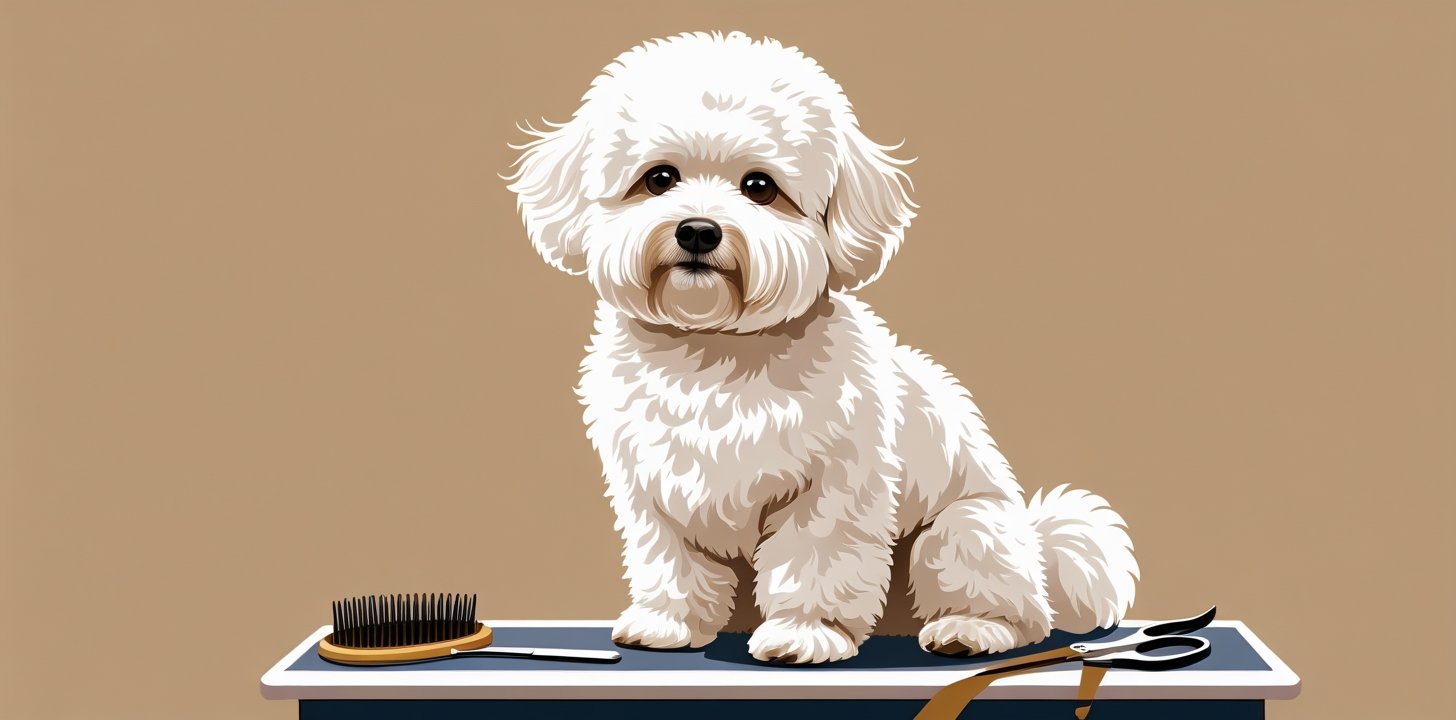
Poodles need professional grooming every 3-6 weeks at $60-100 per session, plus daily brushing to prevent matting. Annual grooming runs $720-1,500. Grooming is the single largest monthly expense for most Poodle owners.
Bichon Frises go every 4-6 weeks professionally at $25-120 per session, with more frequent bathing (every 1-2 weeks vs. every 2-3 for Poodles). Annual grooming lands at $800-1,500. The Bichon’s coat is slightly more manageable for owners who want to learn basic home maintenance between appointments.
In cold climates, both breeds need post-walk coat checks for ice and debris. In humid climates, more frequent bathing prevents skin issues under that dense curl.
Winner: Tie. Both breeds will humble your bank account equally. The Fluff Tax spares no one. (Score: Poodle 1.5, Bichon 2.5)
Tip: New owner grooming reality check: Budget at least $800/year for professional grooming before you bring either breed home. This is not optional maintenance — it is a non-negotiable cost of fluffy dog ownership.
Round 5: Trainability — Eager Genius vs. Clever Negotiator
Poodles consistently rank among the most trainable dogs in existence. All three sizes respond quickly to positive reinforcement, pick up commands fast, and genuinely enjoy the learning process. Housebreaking is relatively straightforward. Expert trainers frequently cite Poodles as ideal for first-time owners precisely because they are forgiving of beginner mistakes and eager to please rather than eager to debate.
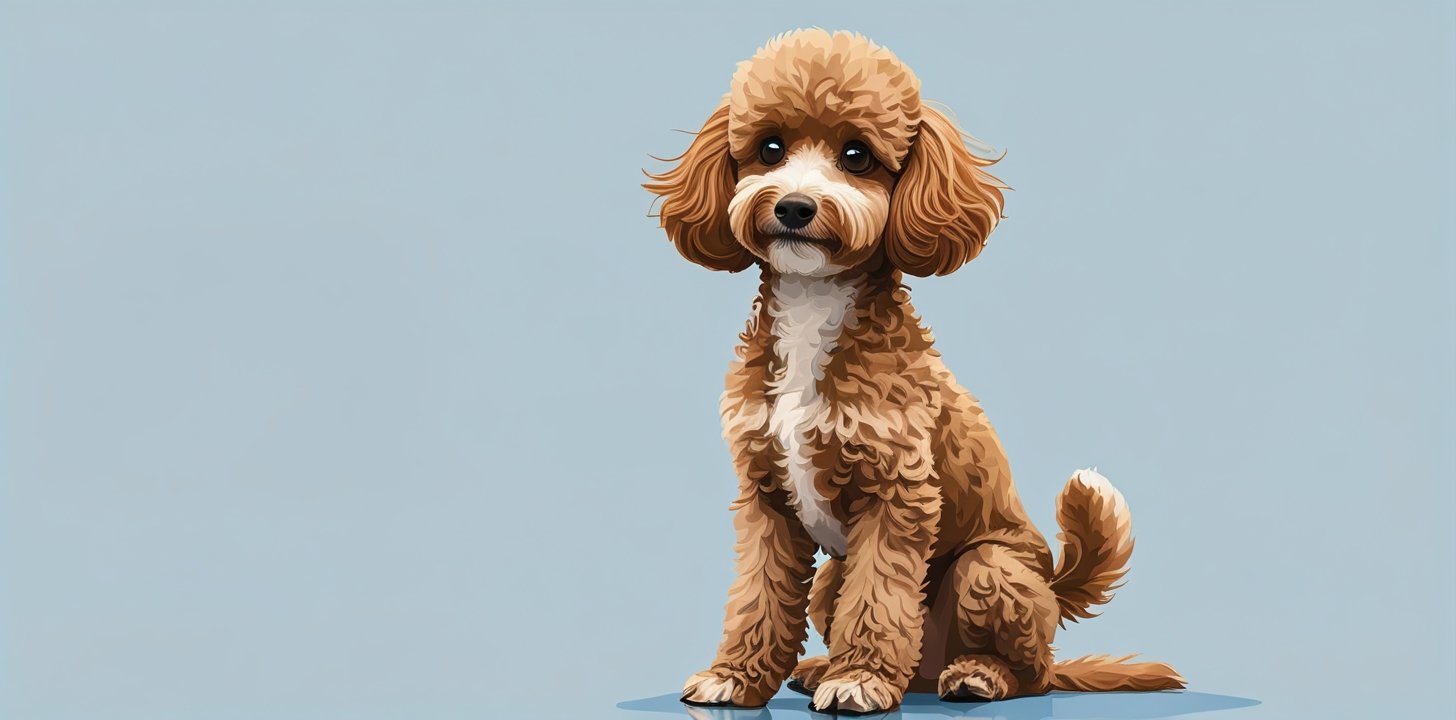
Bichon Frises are intelligent but selective about applying that intelligence. They respond well to positive reinforcement and are highly sensitive to tone — harsh corrections shut them down completely. The specific challenge: housebreaking. Bichons are notoriously stubborn about potty training and require significantly more patience, consistency, and repetition than Poodles. Think of them as clever students who will absolutely ace the test once they decide to care about it.
Both breeds were circus performers historically — their trick-learning ability is genuine. The difference is who shows up to rehearsal on time.
Winner: Poodle — the eager student beats the charming negotiator for first-time owners. (Score: Poodle 2.5, Bichon 2.5)
Round 6: Family and Social Life — Who Throws the Better Party?
Poodles are affectionate, gentle, and playful with children. AKC rates them highly for family households. They are initially reserved with strangers but warm up reliably. They do well with other pets when socialized early, though they are not naturally the first to introduce themselves at the dog park.
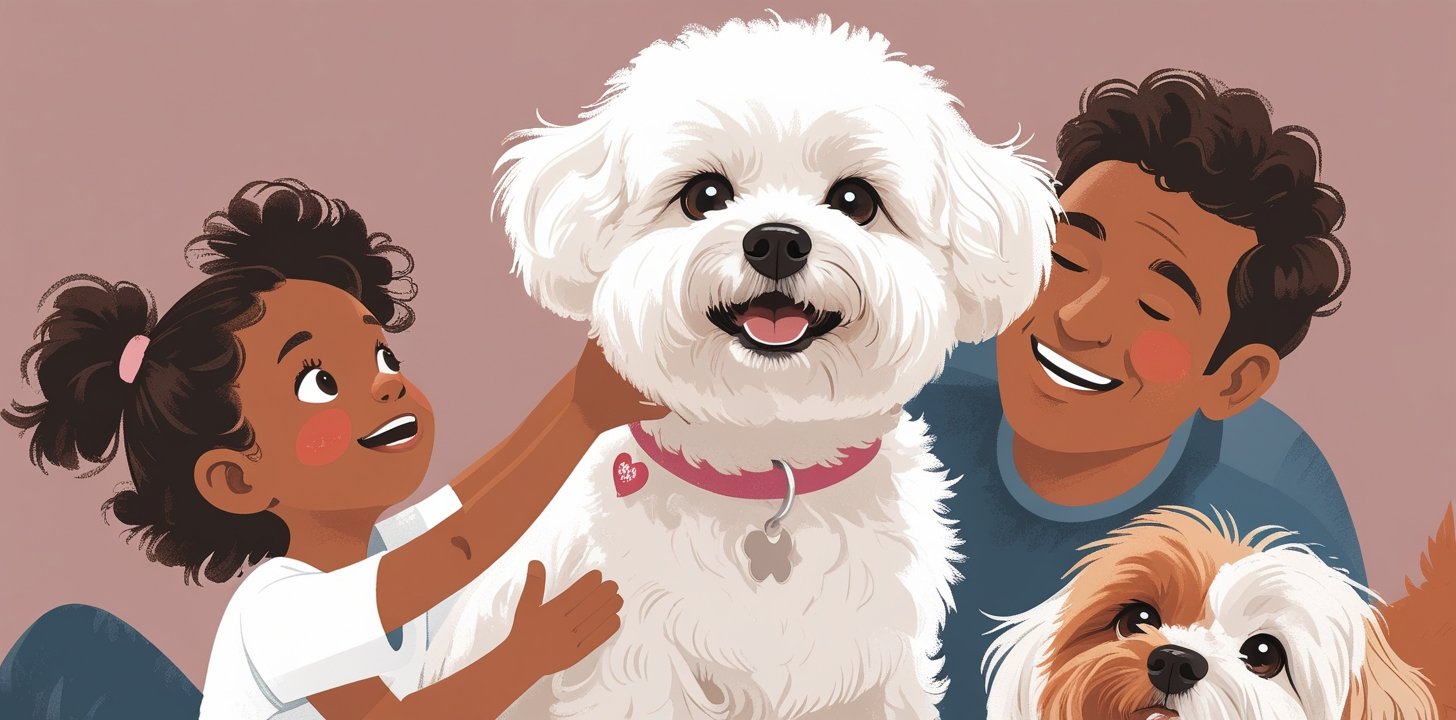
Bichon Frises are the social directors of the dog world. Cheerful, empathetic, and deeply affectionate, they follow their people everywhere and treat every family member as their personal best friend. They are excellent with children and other pets. They are also, per owners, hilariously dramatic: bump their paw and prepare for an Oscar-worthy limp. Give them the wrong treat and expect visible side-eye and a formal protest.
Both breeds are available through breed-specific rescues nationwide — the Poodle Club of America and Bichon Frise Club of America both maintain rescue directories worth checking before going the breeder route.
Winner: Tie. Pure joy machines, different flavors. (Score: Poodle 3, Bichon 3)
Round 7: Cost — The Wallet Reckoning
| Expense | Poodle (Standard) | Bichon Frise |
|---|---|---|
| Purchase (breeder) | $500-3,000 | $800-3,500 |
| Monthly food | $30-90 | $20-40 |
| Monthly grooming | $50-100 | $60-120 |
| Annual vet (routine) | $900-1,900 | $200-400 |
| Annual total (ongoing) | $2,400-4,200+ | $1,500-3,000 |
| Lifetime cost | $9,420-37,080+ | $18,000-35,000 |
Bichons run roughly 30% cheaper annually than Standard Poodles, and similar to Miniature Poodles. Food costs are the clearest gap — a 12-pound Bichon eats considerably less than a 70-pound Standard. Grooming costs are comparable once you account for frequency vs. session length.
Winner: Bichon Frise — lighter on the wallet, especially vs. Standard Poodles. (Score: Poodle 3, Bichon 4)
Warning: First-year sticker shock is real for both breeds. Between purchase, vaccines, spay/neuter, supplies, and grooming, expect $2,000-4,500 before your dog has done a single cute thing to earn it.
Round 8: Separation Anxiety — The Alone Time Audit
Poodles can manage 6-8 hours alone with adequate exercise and mental enrichment beforehand. They may develop anxiety if consistently under-stimulated, but it is manageable with a solid routine. Working professionals with a dog walker or doggy daycare arrangement generally do fine.
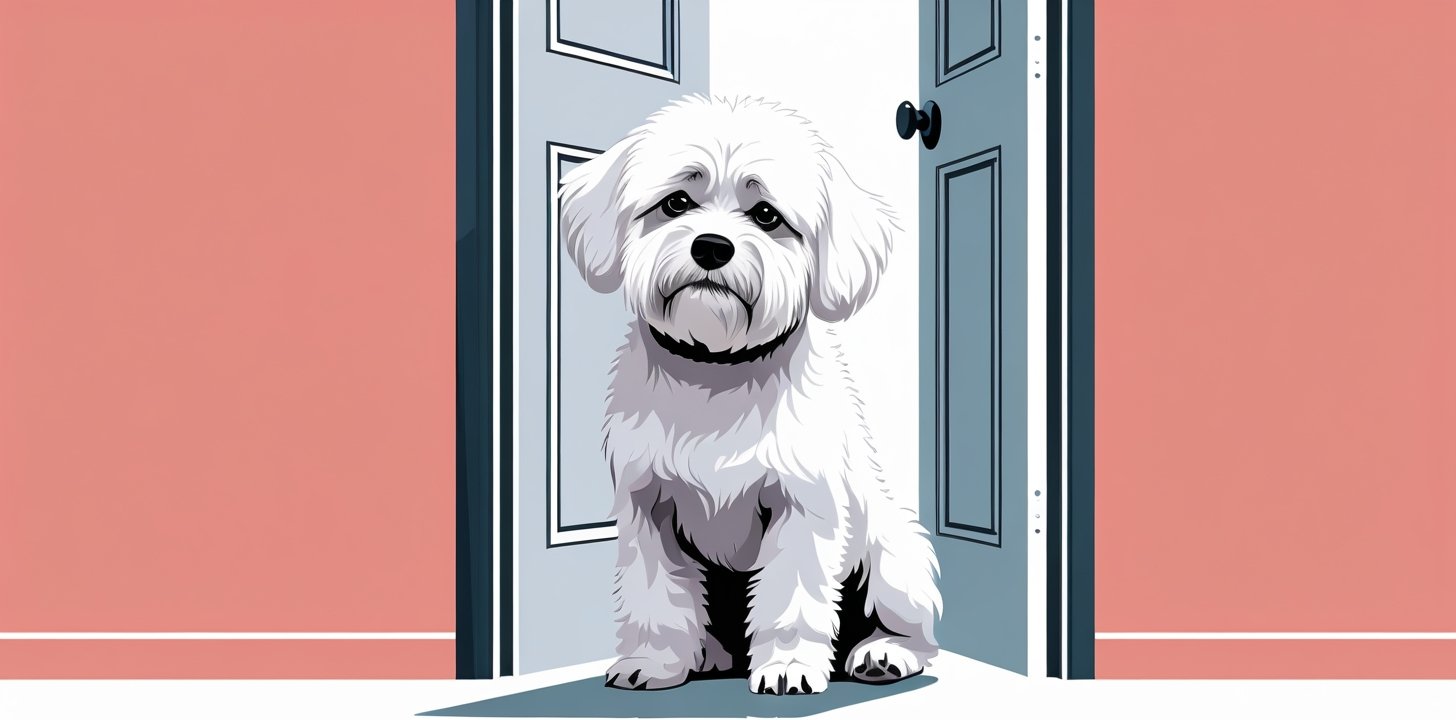
Bichon Frises are a different story entirely. Separation anxiety is not an occasional issue for this breed — it is a defining characteristic. Bichons begin showing stress after 3-4 hours alone. Beyond that: howling, destructive chewing, house soiling, pacing, elevated heart rate. Veterinary behaviorists note that Bichon separation anxiety does not typically resolve on its own without structured intervention. This breed needs owners with flexible schedules, the ability to bring their dog places, or a serious commitment to professional behavior support.
This is the most practically important difference in the entire comparison for anyone who works outside the home.
Winner: Poodle — significantly better for owners with regular away-from-home schedules. (Score: Poodle 4, Bichon 4)
Key Takeaway: Bichon Frise reality check: If you work a standard 9-to-5 outside the home and cannot arrange midday company for your dog, a Bichon Frise will be miserable and will make sure you know about it. This is not a breed that does solo time gracefully.
Final Scorecard
| Round | Category | Winner |
|---|---|---|
| 1 | Size and Build | Poodle |
| 2 | Lifespan and Health | Bichon Frise |
| 3 | Energy and Exercise | Bichon Frise |
| 4 | Grooming | Tie |
| 5 | Trainability | Poodle |
| 6 | Family and Social Life | Tie |
| 7 | Cost | Bichon Frise |
| 8 | Separation Anxiety | Poodle |
| Final Score | Poodle 4, Bichon 4 |
The Real Winner: Whoever Matches Your Life
After eight rounds, two ties, and enough grooming bills to fund a small vacation, the poodle vs bichon frise verdict is a dead heat. Which means the real question was never which breed is better — it was always which breed is better for you.
Choose a Poodle if you want size options, a highly trainable dog that forgives beginner mistakes, a jogging partner with a brain, and a pet that handles your work schedule without staging a protest. Active owners, first-time dog owners, and anyone who wants a versatile companion across urban and suburban settings will find a Poodle an excellent match.
Choose a Bichon Frise if you are home often, want a deeply affectionate lap companion with lower exercise intensity, and can commit to the emotional presence this breed genuinely needs. Remote workers, retirees, and anyone who wants a small dog with a huge personality and a flair for the dramatic will find a Bichon completely irresistible.
Both breeds are hypoallergenic, excellent with children, and available through breed-specific rescues nationwide. Both will cost you more in grooming than you expect. Both will be worth every dollar.
Poodles originated in 15th-century Germany as water retrievers — “Pudelhund” translates roughly to splash dog — while Bichon Frises traveled Mediterranean trade routes as ship companions and rat hunters before charming their way into European royal courts.
If you’re planning to travel with either breed, consider checking out our poodle travel guide for breed-specific tips. For those considering other small breeds, our chihuahua vs pomeranian comparison might also be helpful. When it comes to feeding your new companion, our guides on best dog food for cavapoos and maltipoo supplements can help with similar small, fluffy breeds.
For travel planning, both breeds will need proper preparation. Check out our dog travel essentials guide and learn about keeping dogs calm on flights if you’re planning air travel. If you’re considering camping adventures with your new companion, our camping with your dog checklist will ensure you’re prepared.
For health considerations, both breeds benefit from understanding reading dog food labels and knowing when is a dog senior to plan for their long-term care. Finally, if you’re looking for more breed comparisons, our border collies vs australian shepherds guide offers insights into other intelligent, active breeds.
Which dog is easier to train: Poodle or Bichon Frise?
Poodles are significantly easier to train, particularly for first-time owners. They rank among the most trainable breeds in existence, pick up commands quickly, and are eager to please. Bichon Frises are intelligent but stubborn during housebreaking specifically, and their emotional sensitivity means harsh corrections backfire completely. Both respond best to positive reinforcement, but Poodles are far more forgiving of beginner training mistakes.
Are Poodles or Bichon Frises better for first-time owners?
Poodles are generally the better choice for first-time owners. Their eagerness to please, quick learning, and relatively straightforward housebreaking make them forgiving of rookie mistakes. Bichons require more patience, emotional attunement, and consistency — particularly around housebreaking and separation anxiety management — which can overwhelm owners who are still learning the basics.
Do Poodles or Bichon Frises bark more?
Bichon Frises tend to be more vocal, though not in the way the small-dog stereotype suggests. Bichons are alert and attentive, and they bark at strangers and unfamiliar dogs. More significantly, they bark and howl when left alone due to separation anxiety. Poodles are alert but not typically excessive barkers. Neither breed is inherently yappy when their social and exercise needs are met.
Which breed lives longer: Poodle or Bichon Frise?
It depends on which Poodle you are comparing. Toy Poodles live 14-18 years, making them among the longest-lived dog breeds. Miniature Poodles average 13-17 years. Standard Poodles average 12-15 years. Bichon Frises average 14-15 years, though a 2024 UK study found a median of 12.5 years. Toy and Miniature Poodles generally outlive Bichons; Standard Poodles do not.
Are Poodles or Bichon Frises more expensive to own?
Standard Poodles are the most expensive, running $2,400-4,200+ annually. Bichon Frises ($1,500-3,000/year) and Miniature Poodles ($1,600-3,100/year) are comparable in ongoing cost. Grooming is the primary expense for both breeds. First-year costs for either breed typically run $2,000-4,500 before accounting for the purchase price.
Do Poodles or Bichon Frises get along with other pets?
Both breeds get along well with other pets when properly socialized from an early age. Bichon Frises are naturally sociable and tend to warm up to other animals quickly. Poodles are friendly but slightly more reserved in new social situations. Early socialization is the key variable for both — a well-socialized dog of either breed will generally do fine in a multi-pet household.
Which breed is better for apartments: Poodle or Bichon Frise?
Both breeds are excellent apartment dogs when their needs are met. Bichon Frises and Toy or Miniature Poodles are the best fits for small spaces. Standard Poodles can adapt to apartment living but need consistent outdoor exercise and more square footage. The bigger apartment consideration for Bichons is separation anxiety — a Bichon left alone in an apartment will let the neighbors know about it.
Are Bichon Frises more affectionate than Poodles?
Yes, generally. Bichon Frises are deeply affectionate, follow their owners everywhere, and thrive on constant companionship — affection is central to their personality. Poodles are loving and devoted but slightly more independent and less prone to codependency. If maximum cuddliness is your priority, the Bichon wins. If you want affection with a bit more personal space respected, the Poodle is your match.