
Camping with your dog is one of the best ways to spend a summer weekend, but heat changes everything.
Dogs overheat faster than humans because they can only cool themselves through panting and the pads of their feet. That means keeping your dog cool camping in the summer is your most important job as a pet owner on the trail.
From choosing the right campsite to packing the right gear, there are proven ways to prevent overheating and keep your dog comfortable even when temperatures climb.
his guide covers essential tips, cooling products, and safety measures for keeping your dog cool camping in the summer so you can both enjoy the trip.
How to Keep Your Dog Cool While Camping: Timing and Site Tips
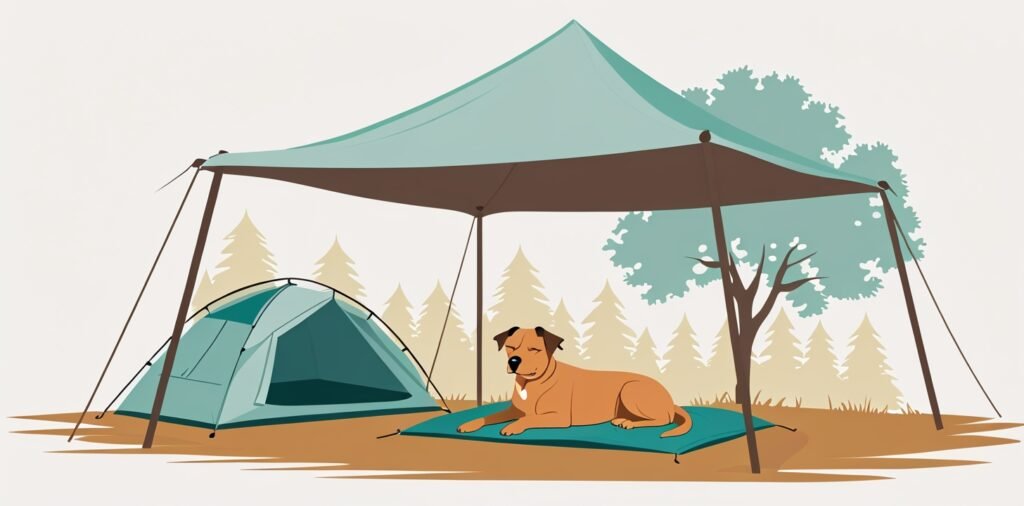
Dogs overheat faster than humans while camping due to limited sweating, relying almost entirely on panting and shade to regulate body temperature. Planning your campsite setup and daily schedule around the heat is the single most effective thing you can do.

How Should You Choose a Shady Campsite?
Pick a site with mature tree cover that will shade your tent during the hottest hours, roughly 11 a.m. to 4 p.m. Tents in direct sunlight can become dangerously hot inside, sometimes 20°F warmer than the ambient temperature.
If natural shade is limited, create your own with tarps, pop-up canopies, or shade screens draped over the tent. Position your dog’s rest area on the shadiest side of camp, and check throughout the day as the sun moves.
Tip: Scout your campsite on a map or app before you arrive. Sites on the north side of a hill or near water tend to stay cooler throughout the day.
When Should You Schedule Walks and Hikes?
Schedule all physical activity for early morning or evening when temperatures drop. Avoid hiking or even casual walks during the hottest part of the day, as this is when heatstroke risk spikes.
Hot ground is a separate hazard. Pavement, exposed rock, and even packed dirt can burn paw pads when air temperatures are above 80°F. If you can’t hold the back of your hand on the ground for five seconds, it’s too hot for your dog to walk on.
Sticking to cooler hours also means more shaded trail routes and a more enjoyable experience for both of you.
How Can Reflective Windshield Shades Help?
Reflective windshield shades aren’t just for your car’s interior. They work anywhere you need to bounce sunlight and heat away from a space your dog occupies.
Place them on your vehicle’s windows whenever you’re parked at the campsite to keep the interior cooler if your dog rests there. Some campers also prop mesh-style shades near tent openings to block direct sun while still allowing airflow. They’re lightweight, packable, and surprisingly effective for such a simple tool.
Gear Tips for Keeping Your Dog Cool While Camping
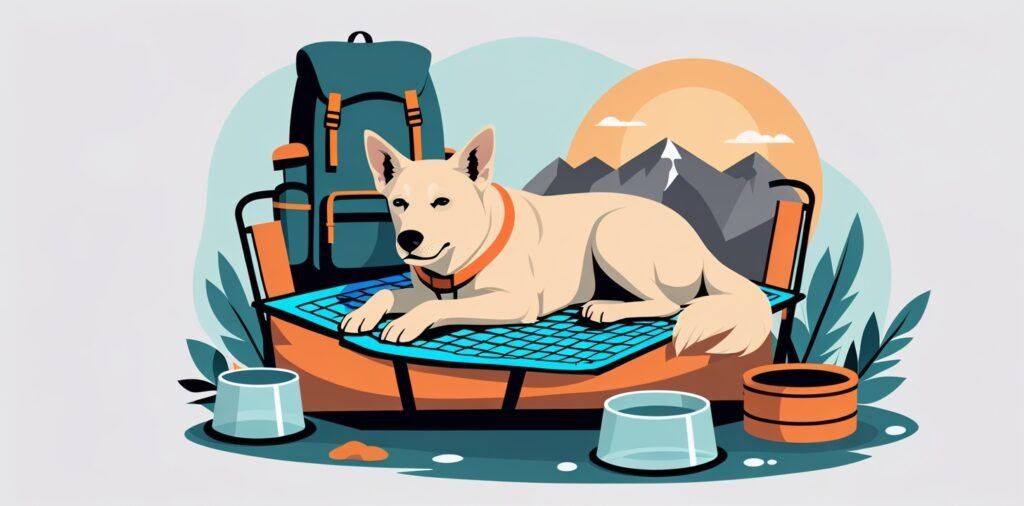
The right gear makes a measurable difference. A few well-chosen cooling products can drop your dog’s body temperature and keep them comfortable through the worst of the afternoon heat. Before you head out, make sure you have all the essential gear for camping with dogs to ensure a safe and comfortable trip.
Why Use an Elevated Dog Bed for Camping?
An elevated dog bed is one of the most practical pieces of camping gear you can bring. Elevated dog beds allow air to circulate underneath, keeping your dog significantly cooler than beds or blankets sitting directly on the ground.
Beyond cooling, they keep your dog off wet, muddy, or rocky ground. For older dogs with joint issues or arthritis, the raised surface is easier to get on and off than the uneven ground of a campsite.
My Pick: The SuperJare Outdoor Dog Bed. This elevated cot uses breathable mesh fabric for airflow and comes with a removable canopy that provides UV-blocking shade. It folds down with a carrying bag and requires no tools to set up. The built-in canopy is what sets it apart from most elevated beds, giving your dog a shaded resting spot anywhere in camp.
Are Cooling Mats Worth Bringing?
Yes. When temperatures rise, dogs instinctively seek cool surfaces. A cooling mat gives them exactly that, wherever you are.
Most cooling mats use pressure-activated gel that absorbs body heat on contact, providing a cooling effect that lasts up to three hours. They’re thin, foldable, and take up almost no space in your pack.
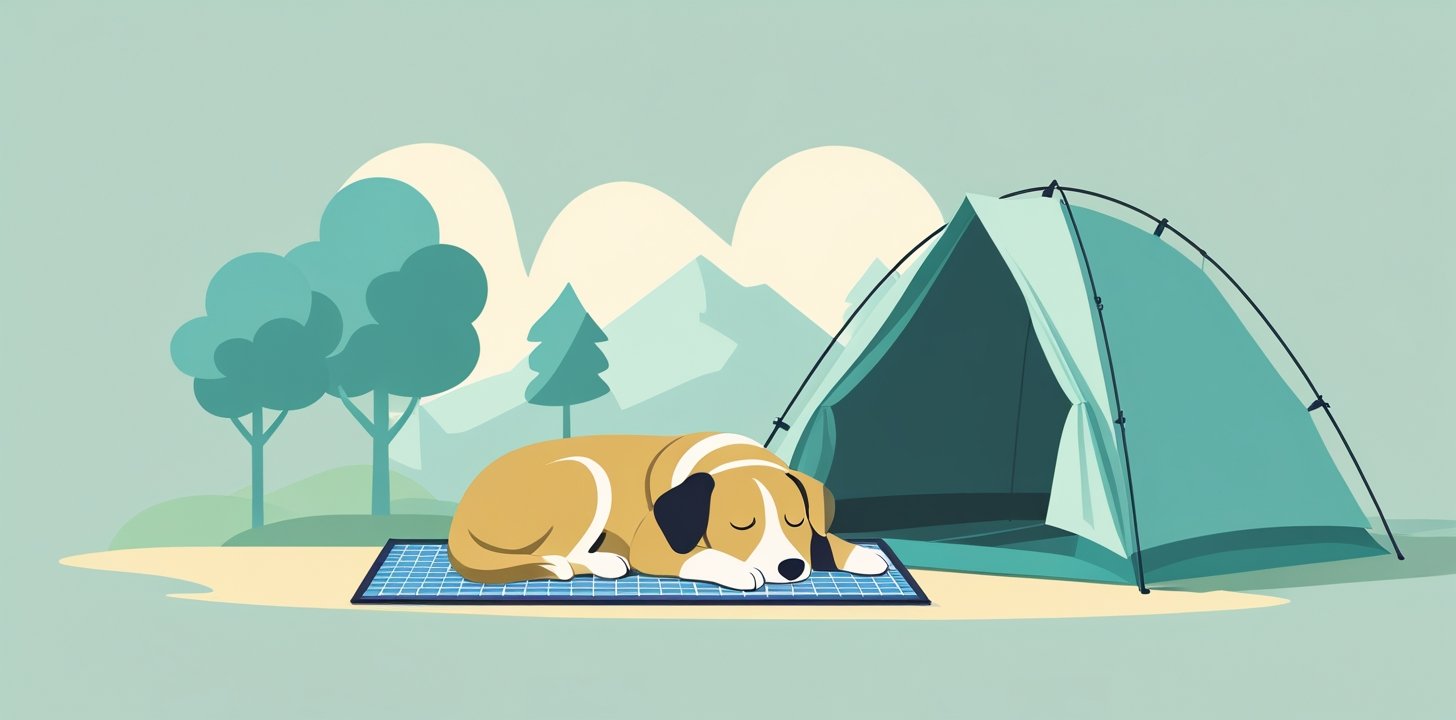
Use them inside the tent, in the car, or in a shaded spot at the campsite. Just keep them out of direct sunlight for the best performance. They also work well layered on top of an elevated bed for double the cooling effect.
My Pick: The Green Pet Shop Cooling Mat. This extra-large mat uses pressure-activated cooling gel, requires no water or electricity, and recharges itself after a period of non-use. It’s lightweight, portable, and one of the most reliable options for summer camping.
Key Takeaway: Pressure-activated cooling mats absorb a dog’s body heat on contact and can provide up to three hours of cooling without water or electricity.
How Do Cooling Bandanas Work?
Cooling bandanas use evaporative cooling to lower your dog’s temperature. Evaporative cooling is heat loss that occurs when water evaporates from a surface, pulling warmth away from the body. You soak the bandana in water, wring it out, and tie it around your dog’s neck.
The neck and chest are two of the most efficient areas to cool a dog down, which is why bandanas work so well. Some bandanas contain polymer crystals that hold water longer, extending the cooling effect up to five hours. You can re-wet them as needed throughout the day.
Compared to ice packs or gel products, bandanas are safer. If a dog chews on an ice pack, the contents can be toxic. A wet bandana poses no ingestion risk.
My Pick: All for Paws Chill Out Ice Bandana. This non-toxic bandana uses a combination of evaporative cooling and water-absorbing material. Soak it, wring it, and it keeps working for hours. It’s lightweight, comfortable, and easy to re-activate on the trail.
Should You Bring a Portable Dog Pool?
A portable dog pool isn’t strictly essential, but it’s the single most effective way to cool a dog down fast. The water helps regulate body temperature and prevents overheating, and most dogs genuinely enjoy it.
Modern dog pools are made from durable PVC, fold flat for transport, and require no inflation. Just unfold, fill with water, and you’re set. Most come with built-in drains for easy cleanup, which matters because standing water can breed bacteria quickly in the heat.
If you have the space in your vehicle, a portable pool is worth the investment, especially for larger dogs or multi-day trips.
My Pick: Yaheetech Foldable Dog Pool. Built with premium PVC and sturdy PP boards, this pool is durable enough for enthusiastic splashers. The directional drain adapter makes emptying simple, and it folds compact for transport.
Portable Fans and Cooling Vests for Active Cooling
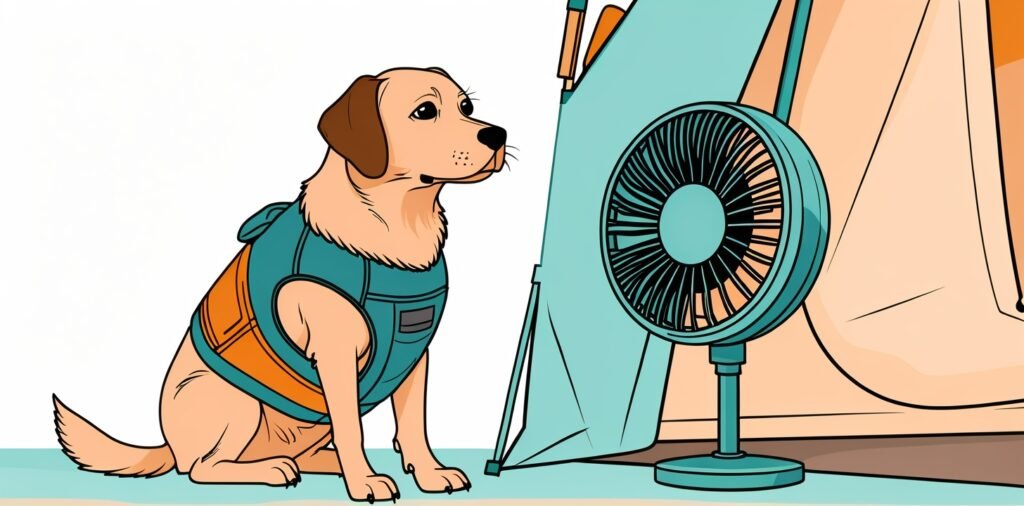
Sometimes shade and water aren’t enough, especially during heat waves or in exposed campsites. Portable fans and cooling vests provide active cooling that can make a real difference for dogs who run hot.
How Does a Tent Fan Help Your Dog?
A battery-operated tent fan improves airflow inside your tent or under a canopy, which can drop the perceived temperature several degrees. Tents trap heat, and even with the vestibule open, air can stagnate on calm days.
Look for a rechargeable tent fan with a clip or hook mount so you can position it near your dog’s sleeping area. Many camping-specific models run 8 to 12 hours on a single charge, which is enough to get through a hot afternoon and night. Point the fan toward your dog’s elevated bed or cooling mat for the best results.
Tip: Clip a battery-powered tent fan near your dog’s bed and pair it with a cooling mat. The moving air accelerates evaporative cooling and can make a stagnant tent feel noticeably more comfortable.
What Is a Dog Cooling Vest?
A dog cooling vest works on the same evaporative principle as a bandana but covers a much larger surface area across the chest and torso. You soak the vest in water, wring it out, and put it on your dog before a hike or during downtime at camp.
Because the vest covers more of the body, it provides more significant cooling than a bandana alone. Evaporative dog cooling vests are especially useful for active dogs on the trail, where shade may be limited. Most vests are lightweight and don’t restrict movement, so your dog can walk, run, and play normally.
Look for a vest with adjustable straps and reflective trim for visibility. Re-wet it every couple of hours or whenever it dries out.
Key Takeaway: A dog cooling vest covers more surface area than a bandana and provides more effective evaporative cooling during hikes and active play.
Paw Protection and Sunscreen Essentials
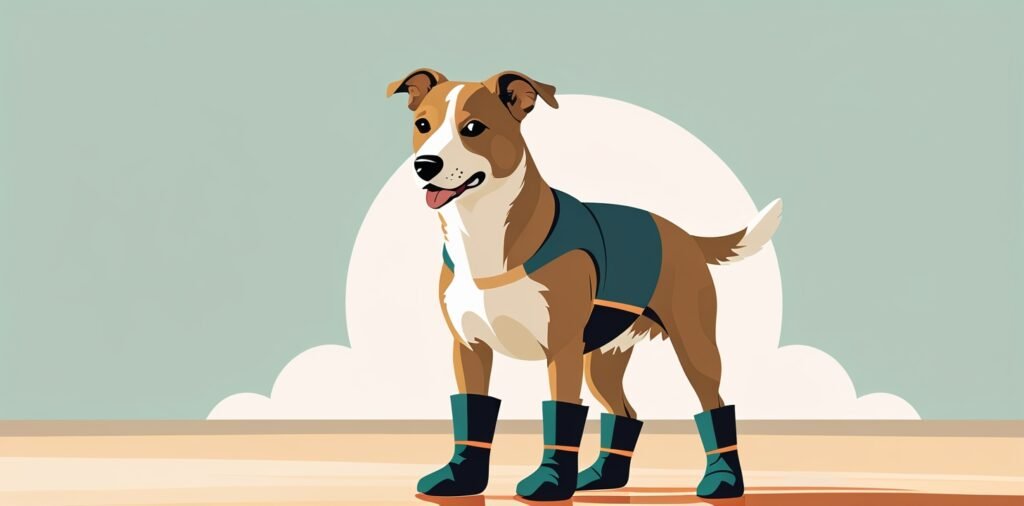
Hot surfaces and direct sun exposure are two hazards that many campers overlook. Both can cause real injury to your dog.
How Do You Protect Dog Paws on Hot Ground?
Ground temperatures can be 40 to 60°F hotter than the air temperature on sunny days. Asphalt, rock, and packed sand can burn paw pads in seconds. Dog booties made for hot surfaces provide a protective barrier and are the most reliable solution for trail walks during warm hours.
If your dog won’t tolerate booties, paw wax is a good alternative. It creates a protective, moisturizing layer over the pads that shields against heat and rough terrain. Apply it before each walk and reapply as needed.
Warning: If you can’t hold the back of your hand on the ground for five seconds, it’s too hot for your dog’s paws. Walk on grass or dirt trails instead, or wait for cooler hours.
Does Your Dog Need Sunscreen?
Dogs with thin coats, light-colored fur, or exposed skin on the nose and ears are vulnerable to sunburn. Pet-safe sunscreen (never human sunscreen, which can contain zinc oxide and other ingredients toxic to dogs) should be applied to the nose, ear tips, belly, and any areas with thin or no fur.
Reapply every few hours, especially after swimming or rolling. Sunburn in dogs is painful and increases the long-term risk of skin cancer, just as it does in humans.
Safety Measures for Camping with Dogs in the Heat
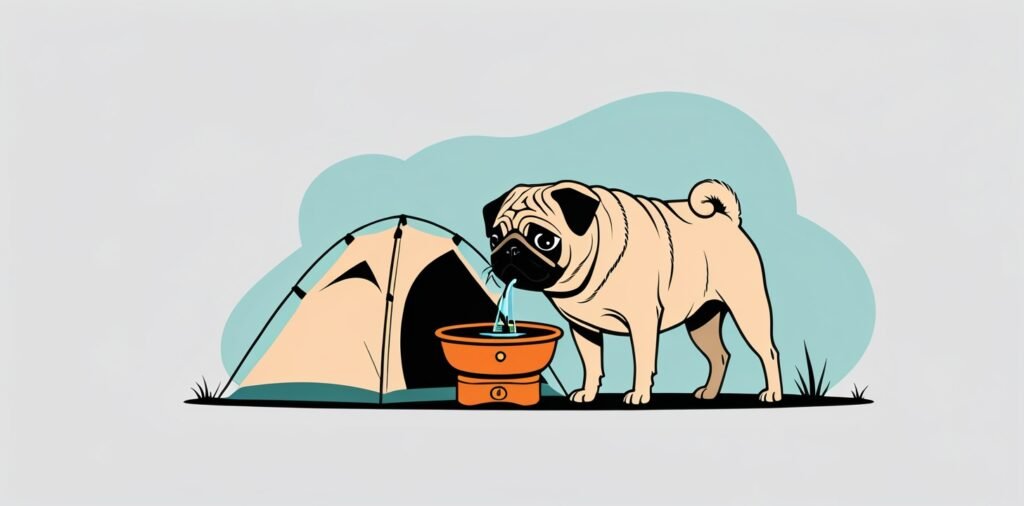
Keeping your dog cool is about more than comfort. Heat-related illness can escalate from mild to life-threatening in minutes. These safety measures should be your baseline for any summer camping trip. For a complete list of what to bring, check out our camping with your dog checklist to ensure you’re fully prepared.
How Do You Keep Your Dog Hydrated While Camping?
Dehydration is the most common heat-related problem for dogs at campsites. Always provide a constant supply of fresh, clean water, and bring more than you think you’ll need. Dogs lose water rapidly through panting, especially in dry heat.
Portable, collapsible bowls make it easy to offer water on hikes and around camp. Clean the bowl and change the water regularly, as dogs are more likely to drink fresh water. You can also boost hydration by adding moisture-rich foods like wet food or safe human foods for dogs to meals.
Watch for signs of dehydration: lethargy, sunken eyes, dry nose, and dry or tacky gums. If you notice any of these, get water into your dog immediately and move to a cool area.
What Are the Signs of Heatstroke in Dogs While Camping?
The early signs of heatstroke in dogs are heavy panting, excessive drooling, lethargy, vomiting, diarrhea, and abnormal gum color (bright red or pale). Heatstroke can progress to seizures, collapse, and death if not treated quickly.
Be extra vigilant during the hottest parts of the day, especially if your dog has been active. Certain dogs face higher risk: brachycephalic breeds (bulldogs, pugs, Boston terriers), senior dogs, puppies, overweight dogs, and those with thick coats or underlying health conditions.
Always provide access to shade and water, never leave your dog in a hot tent or vehicle, and act immediately if you notice any symptoms. For more information about vehicle safety, read our guide on dog hot car dangers.
How Should You Handle Heatstroke First Aid?
If you suspect heatstroke, act fast. Quick action can save your dog’s life.
- Move your dog to a shaded, cool area immediately.
- Offer small amounts of cool (not ice-cold) water. Don’t force them to drink.
- Wet your dog’s fur with cool water, focusing on the belly, groin, and paws. Avoid ice-cold water, which can cause shock.
- Place wet towels on your dog and change them frequently as they warm up. Use a fan if available to increase airflow.
- Check your dog’s temperature with a rectal thermometer if you have one. Normal is 101 to 102.5°F (38.3 to 39.2°C). Continue cooling until the temperature drops below 103°F (39.4°C).
- Stay calm and reassure your dog with a steady voice and gentle contact.
- Get to a veterinarian as soon as possible, even if your dog seems to recover. Heatstroke can cause internal damage that isn’t immediately visible.
Warning: Never use ice-cold water to cool a dog with heatstroke. It constricts blood vessels near the skin and actually slows the cooling process. Use cool water instead.
When Is It Too Hot to Camp? Temperature Guidelines
As a general rule, temperatures above 80°F (27°C) require extra precautions for most dogs. Above 90°F (32°C), the risk of heatstroke increases significantly for all breeds.
For brachycephalic breeds (flat-faced dogs like bulldogs and pugs), the danger zone starts lower, around 75°F (24°C), especially with high humidity. Humidity matters because it reduces the effectiveness of panting, your dog’s primary cooling mechanism. If you’re traveling with a bulldog or other flat-faced breed, extra caution is essential.
If the forecast calls for sustained temperatures above 90°F with high humidity, seriously consider postponing your trip or choosing a higher-elevation campsite where temperatures are cooler.
| Risk Level | Temperature Range | Recommended Action |
|---|---|---|
| Low | Below 75°F (24°C) | Normal activity with water access |
| Moderate | 75 to 80°F (24 to 27°C) | Limit activity during peak hours; extra water |
| High | 80 to 90°F (27 to 32°C) | Restrict exercise; use cooling gear; constant shade |
| Dangerous | Above 90°F (32°C) | Minimize outdoor time; consider postponing trip |
Key Takeaway: Temperatures above 80°F require active cooling measures for most dogs. Brachycephalic breeds face elevated risk starting at 75°F, especially in humid conditions.
Are You Ready to Keep Your Dog Cool While Camping?
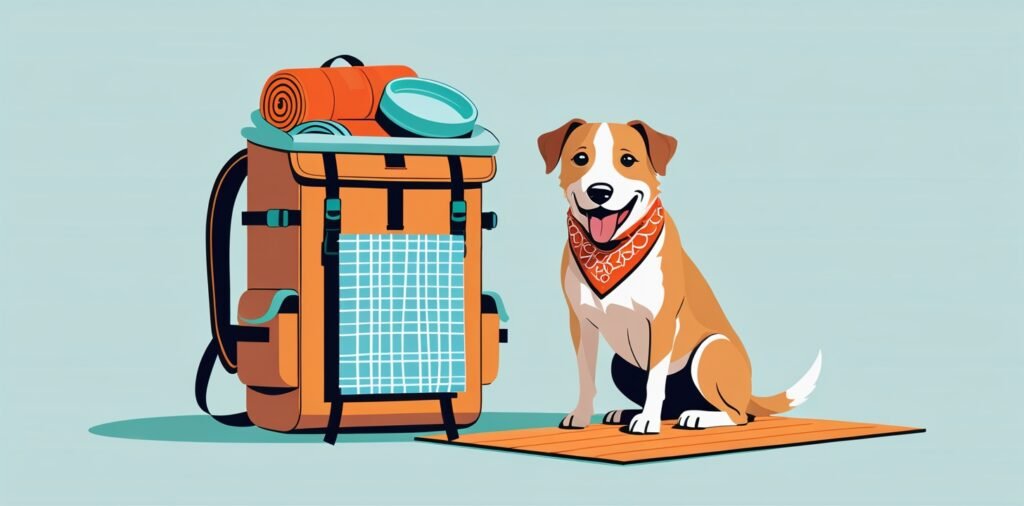
Keeping your dog cool camping in the summer comes down to three things: planning your schedule around the heat, bringing the right cooling gear, and knowing how to spot trouble before it becomes an emergency.
Choose a shaded campsite, schedule activity for cooler hours, and pack essentials like an elevated bed, cooling mat, bandana, and plenty of water. If you’re camping in serious heat, add a cooling vest, tent fan, and paw protection to your kit.
Monitor your dog throughout the day, watch for early signs of heatstroke, and don’t hesitate to cut a hike short or head home early if conditions get dangerous. A safe camping trip is always better than a dramatic one. For more outdoor adventure tips, check out our outdoor adventure checklist for dogs to make sure you’re prepared for any situation.
Frequently Asked Questions
These are some of the most common questions about keeping dogs cool and safe while summer camping.
How hot is too hot to take my dog camping?
Most dogs face increased risk above 80°F (27°C), and brachycephalic breeds can struggle at 75°F (24°C) or higher. High humidity makes it worse because panting becomes less effective. If sustained temperatures will exceed 90°F, consider postponing or choosing a cooler location.
How do I keep my dog cool in a tent at night?
Use a battery-operated tent fan pointed at your dog’s sleeping area, place a cooling mat on their bed, and keep tent vents fully open. An elevated bed also helps by allowing air to circulate underneath. Avoid zipping the tent completely closed in hot weather.
Can I put sunscreen on my dog?
Yes, but only pet-safe sunscreen. Human sunscreen often contains zinc oxide and other ingredients that are toxic to dogs if ingested. Apply pet sunscreen to the nose, ear tips, and any areas with thin or no fur. Reapply every few hours.
What are the signs of dehydration in dogs while camping?
Watch for lethargy, sunken eyes, dry or tacky gums, a dry nose, and reduced skin elasticity. If you gently pinch the skin on the back of your dog’s neck and it doesn’t snap back quickly, your dog is likely dehydrated. Offer water immediately and move to a cool area.
Do cooling vests really work for dogs?
Yes. Evaporative cooling vests lower body temperature by releasing heat as the water in the vest evaporates. They’re most effective in dry heat and during active movement like hiking. In very humid conditions, they’re less effective because evaporation slows down.