
Leaving a dog in a hot car is one of the most dangerous mistakes a pet owner can make. Even on a mild day, the temperature inside a parked vehicle can climb to lethal levels in minutes. Every summer, dogs suffer heatstroke, organ failure, and death because someone thought a quick errand would be fine. It never is.
This guide covers exactly how fast cars heat up, the real risks to your dog, what the law says in your state, and what to do if you spot a dog trapped in a hot vehicle. The goal is simple: make sure you never have to learn these lessons the hard way.
How Quickly Does a Parked Car Heat Up for Dogs?

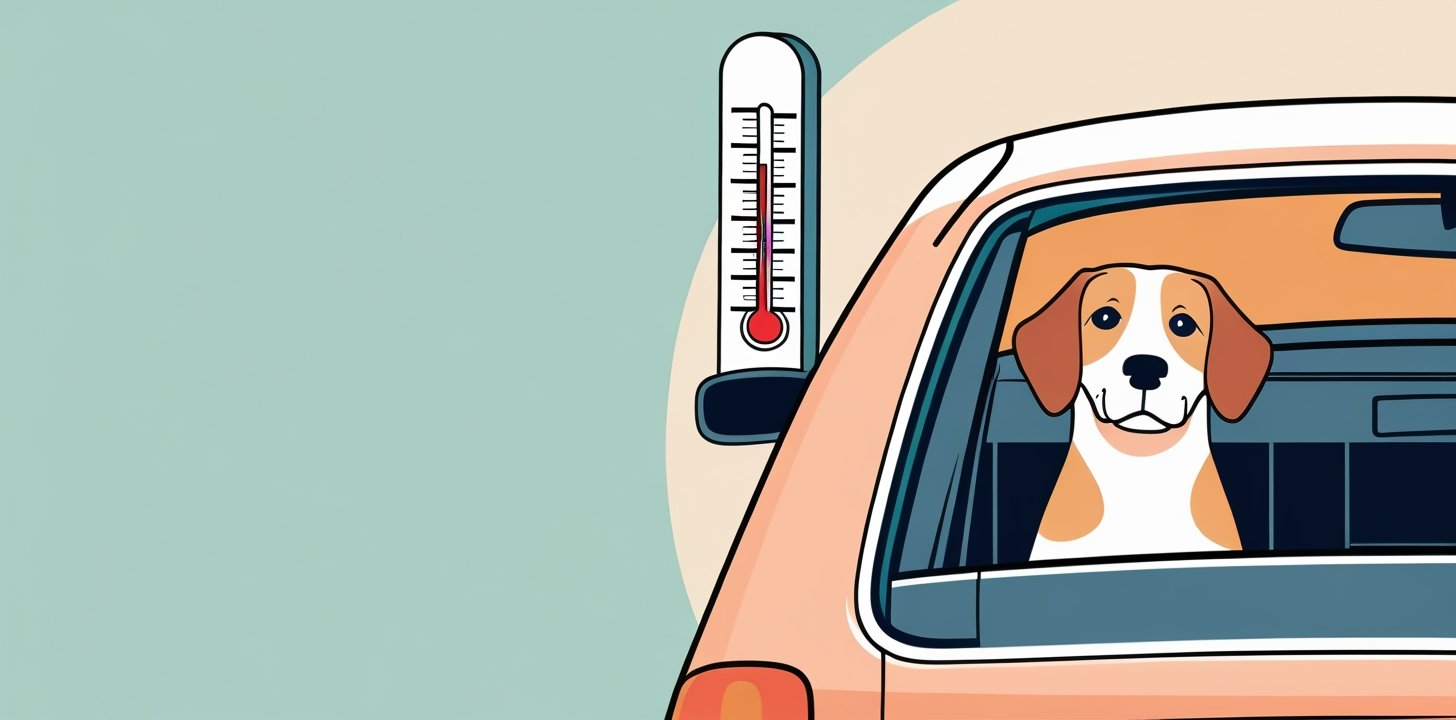
Cars heat up to dangerous levels for dogs in minutes. On a 70°F day, the interior reaches 89°F in 10 minutes, 104°F in 30 minutes, and 115°F in 60 minutes. Roughly 80% of that temperature rise happens in the first half hour.

That speed catches people off guard. A body temperature above 105°F is where dogs enter the danger zone, and above 106°F, heatstroke sets in. So the question of “how hot is too hot for a dog in a car” has a clear answer: it doesn’t take much. A 70°F afternoon that feels pleasant to you can push a car’s interior well past the threshold for heatstroke in under 15 minutes.
The car’s interior color matters more than you might expect. Dark dashboards and seats absorb heat aggressively. On a hot day, dashboard surfaces can reach 157°F, steering wheels 127°F, and seats 123°F within an hour. But even light-colored interiors won’t keep a car safe. The greenhouse effect traps heat regardless of color.
Studies consistently show that cracking the windows has minimal impact on the maximum temperature reached inside the vehicle. We’ll cover that myth in detail below, but the short version: it doesn’t work.
Warning: A parked car can become dangerously hot for a dog in as little as 10 minutes, even when the outside temperature feels comfortable to you.
Car Temperature Rise Chart
The data below, based on studies from the American Veterinary Medical Association, shows how quickly interior temperatures climb at various outside temperatures.
| Outside Temp | 10 Min Inside | 20 Min Inside | 30 Min Inside | 60 Min Inside |
|---|---|---|---|---|
| 70°F | 89°F | 99°F | 104°F | 115°F |
| 75°F | 94°F | 104°F | 109°F | 120°F |
| 80°F | 99°F | 109°F | 114°F | 125°F |
| 85°F | 104°F | 114°F | 119°F | 130°F |
| 90°F | 109°F | 119°F | 124°F | 135°F |
| 95°F | 114°F | 124°F | 129°F | 140°F |
These numbers assume a car parked in direct sunlight with windows closed. Even at 70°F outside, the interior crosses the heatstroke threshold for dogs within 20 to 30 minutes.
Brachycephalic breeds (pugs, bulldogs, Boston terriers, Shih Tzus) are at even greater risk because their shortened airways make it harder to cool down through panting. Overweight dogs, senior dogs, and puppies also overheat faster than healthy adult dogs of average build. For these animals, the window of safety is even shorter than the chart suggests.
Key Takeaway: On an 80°F day, the inside of a parked car reaches 114°F in 30 minutes. That is hot enough to cause fatal heatstroke in any dog.
Do Cracked Windows or Shade Prevent Dog Heatstroke?
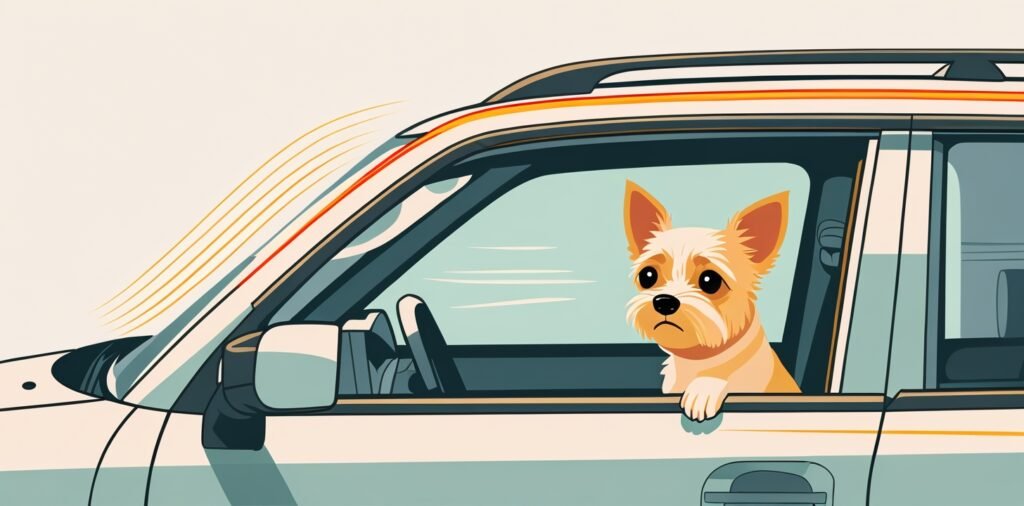
No. Cracking the windows does not prevent a car from reaching dangerous temperatures, and parking in the shade provides only temporary, unreliable protection.
Many people believe that leaving windows open an inch or two creates enough airflow to keep the car cool. Research has repeatedly disproven this. In controlled studies, vehicles with cracked windows reached nearly the same peak temperatures as vehicles with windows fully closed. The difference was negligible, just a few degrees, and nowhere near enough to keep a dog safe.
The shade misconception is equally dangerous. Shade shifts as the sun moves. A spot that’s shaded when you park may be in full sun 20 minutes later. Even in consistent shade, the greenhouse effect still traps heat inside the vehicle. Temperatures in shaded cars still climb well above safe levels.
These half-measures create a false sense of security. They make people feel like they’ve taken a precaution when they haven’t meaningfully reduced the risk at all. The only safe option is to not leave your dog in the car.
Warning: Cracking windows or parking in shade does not make a parked car safe for a dog. Studies show these measures reduce interior temperatures by only a few degrees.
What Are the Risks to Dogs Left in a Hot Car?
Dogs left in hot cars risk heatstroke when body temperature exceeds 106°F, dehydration, organ failure, and death, sometimes in as little as 15 minutes. Dogs regulate body temperature primarily through panting, which is far less efficient than human sweating. In an enclosed car where the air itself is superheated, panting becomes almost useless.
The risks escalate quickly and compound each other. Here’s what happens to a dog’s body as the heat takes hold.
Heatstroke Symptoms and Prevention
Heatstroke occurs when a dog’s core body temperature rises above 106°F, triggering a cascade of dangerous physiological responses. Dog heatstroke symptoms include heavy panting, bright red gums, excessive drooling, vomiting, diarrhea, staggering, seizures, and collapse. In severe cases, gums may turn blue or gray as oxygen levels drop.
Heatstroke can cause irreversible damage in as little as 6 to 15 minutes. The condition progresses rapidly from early warning signs (restlessness, heavy panting) to a medical emergency (seizures, loss of consciousness). Once a dog’s body temperature passes 109°F, survival rates drop dramatically even with veterinary intervention.
Prevention is straightforward: never leave your dog unattended in a parked vehicle, regardless of the weather, the duration, or whether the windows are cracked. If your dog shows any signs of overheating during travel, stop immediately, move them to a cool area, offer water, and contact a veterinarian.
Tip: Learn to recognize early heatstroke signs: heavy panting, red gums, and excessive drooling. Catching it early can be the difference between recovery and tragedy.
Dehydration
The extreme heat inside a parked car causes dogs to lose fluids rapidly through heavy panting. Unlike sweating, panting expels moisture from the respiratory tract without effectively cooling the body in superheated air, so the dog loses water without gaining relief.
Signs of dehydration include a dry nose and gums, sunken eyes, lethargy, and loss of skin elasticity (if you gently pinch the skin on the back of the neck and it doesn’t snap back quickly, the dog is dehydrated). Severe dehydration compounds the effects of heatstroke, making organ failure more likely.
If you suspect dehydration, offer small amounts of cool (not ice-cold) water and seek veterinary care immediately. Dogs in advanced dehydration often need IV fluids to recover. When traveling with pets, always carry fresh water and take frequent breaks.
Hot Pavement and Paw Burns
Hot pavement is a related risk that many people overlook. When the air temperature is 87°F, asphalt can reach 140°F or higher, hot enough to cause burns on a dog’s paw pads in under 60 seconds.
Before walking your dog on pavement during warm weather, press the back of your hand against the surface for seven seconds. If it’s too hot for your hand, it’s too hot for your dog’s paws. Symptoms of paw burns include limping, refusing to walk, licking or chewing at the feet, and visibly red or blistered pads.
Stick to grass or shaded paths during peak heat hours, and consider protective booties for dogs that must walk on pavement. This applies to parking lots too. A dog rescued from a hot car and placed on scorching asphalt faces a second source of injury.
Long-Term Damage and Death
Even if a dog survives heatstroke, the consequences can be severe and permanent. Extreme heat causes widespread cellular breakdown that damages the brain, kidneys, liver, and heart.
Brain damage from heat exposure may not show symptoms immediately. In the hours and days following an episode, dogs can develop behavioral changes, seizures, and lasting neurological problems. Kidney damage impairs the body’s ability to filter toxins. Liver cells die off rapidly under extreme temperatures. The heart faces immense strain, potentially leading to arrhythmias or cardiac arrest.
When multiple organs are affected simultaneously, the condition is called multiple organ failure. Even with aggressive veterinary treatment, the prognosis is often poor. Dogs that survive may face chronic health issues for the rest of their lives.
In the worst cases, death can occur in as little as 15 minutes. This is not a slow process. A dog that seemed fine when you walked into the store can be in critical condition by the time you walk out. This is a preventable tragedy, and it happens every year to dogs whose owners simply underestimated how fast a car heats up.
Is It Illegal to Leave a Dog in a Hot Car? (State Laws)

Yes, in many places. At least 31 states have laws that address leaving animals in dangerous conditions inside vehicles, though the specifics vary widely. Nineteen states and Washington D.C. explicitly prohibit leaving a pet in a car under conditions that could cause suffering or death, and violations can result in animal cruelty charges.
Penalties range from fines of a few hundred dollars to felony charges with jail time, depending on the state and the outcome for the animal. Even in states without a specific “hot car” law, leaving a dog in a dangerous situation can still be prosecuted under general animal cruelty statutes.
Several states also have Good Samaritan laws that protect civilians who break into a vehicle to rescue a distressed animal, provided they follow certain steps (typically calling 911 first and using no more force than necessary).
The table below covers some of the most notable state laws. This is not exhaustive, so check your own state’s current statutes.
| State | Law Prohibiting Dogs in Hot Cars | Good Samaritan Immunity for Civilians |
|---|---|---|
| California | Yes | Yes |
| Arizona | Yes | Yes |
| Colorado | Yes | Yes |
| Florida | Yes | Yes (first responders) |
| Illinois | Yes | Yes |
| Indiana | Yes | No |
| Tennessee | Yes | Yes |
| Ohio | Yes | No |
| New York | Yes | No |
| Washington D.C. | Yes | Yes |
Key Takeaway: At least 19 states explicitly make it illegal to leave a dog in a hot car under dangerous conditions. Several also grant legal immunity to bystanders who rescue distressed animals.
The safest legal and ethical approach is simple: never leave your dog unattended in a vehicle. If you see a distressed animal in a car, call 911 or local animal control immediately. Document the situation with photos or video if you can do so safely.
What to Do If You See a Dog in a Hot Car

If you spot a dog trapped inside a hot vehicle, acting quickly could save their life. Here’s a step-by-step approach.
Step 1: Assess the Dog’s Condition
Look for signs of heatstroke: heavy panting, drooling, lethargy, vomiting, glazed eyes, or collapse. A dog that is unresponsive or having seizures is in immediate, life-threatening danger. Note the car’s make, model, color, and license plate number.
Step 2: Try to Find the Owner
If the car is parked near a business, go inside and ask staff to make an announcement. Check the immediate area, but don’t leave the dog unattended for more than a couple of minutes. Every minute counts.
Step 3: Call the Authorities
If you can’t locate the owner quickly and the dog is showing signs of distress, call 911 or your local non-emergency police line. Contact animal control as well. Give them the vehicle’s location and description, and describe the dog’s condition.
Step 4: Consider Breaking the Window as a Last Resort
If the dog appears to be dying and help has not arrived, some states legally protect you if you break the window to rescue the animal. Before doing so, make sure you’ve called 911, found a witness, and documented the situation. Use the minimum force necessary. Be aware that in states without Good Samaritan protections, you could face property damage liability.
Step 5: Provide Emergency First Aid
Once the dog is out of the car, move them to a cool, shaded area immediately. Offer small amounts of cool water (not ice water, which can cause shock). Pour cool water over their body, focusing on the neck, armpits, and groin. Apply wet towels to help lower their temperature gradually.
Tip: After providing first aid, always get the dog to a veterinarian as soon as possible. Heatstroke can cause internal damage that isn’t visible, including organ failure and blood clotting disorders that may not show symptoms for hours.
High-Risk Breeds and Safe Alternatives

Some dogs are significantly more vulnerable to heat than others. Brachycephalic breeds, those with flat faces and shortened airways, are at the highest risk because their anatomy makes panting less effective. This includes pugs, English bulldogs, French bulldogs, Boston terriers, Shih Tzus, Pekingese, and boxers.
Beyond breed, other risk factors include obesity, old age, very young age, thick or dark-colored coats, and pre-existing heart or respiratory conditions. A senior dog bulldog with a weight problem is in a completely different risk category than a young, lean Labrador, though neither should ever be left in a hot car.
If you’re running errands and can’t bring your dog inside with you, plan ahead. Many pet supply stores, hardware stores, and outdoor retailers welcome dogs. Some shopping centers have shaded outdoor areas where one person can wait with the dog while the other shops. Doggy daycare and boarding facilities offer drop-in options in many cities. Or simply leave your dog at home with water, shade, and air conditioning.
The inconvenience of adjusting your plans is nothing compared to the risk of leaving a dog in a vehicle. There is always an alternative.
Tip: Before heading out, check whether your destination is pet-friendly. Many stores welcome leashed dogs, and planning ahead eliminates the temptation to leave your dog in the car “just for a minute.”
Frequently Asked Questions
These are some of the most common questions about dogs and hot cars, answered directly.
How long before a dog gets heatstroke in a hot car?
A dog can develop heatstroke in as little as 6 to 15 minutes in a hot car. On warm days, interior temperatures rise fast enough to push a dog’s body temperature past the critical 106°F threshold within minutes, not hours.
Does cracking the windows help keep a dog cool in a car?
No. Studies show that cracking windows reduces the maximum interior temperature by only a few degrees. The car still reaches dangerous levels quickly, making cracked windows an ineffective and potentially deadly half-measure.
What temperature is too hot to leave a dog in a car?
There is no safe temperature for leaving a dog unattended in a parked car. Even on a 70°F day, the interior can reach over 100°F within 20 minutes. Most veterinary organizations recommend never leaving a dog in a parked car regardless of outside temperature.
Can I legally break a car window to save a dog?
It depends on your state. Several states, including California, Colorado, and Tennessee, have Good Samaritan laws that protect civilians who break into vehicles to rescue distressed animals, provided they call 911 first and use reasonable force. In states without these protections, you could face property damage charges.
What should I do if I see a dog in a hot car?
Assess the dog’s condition, try to locate the owner, and call 911 or animal control immediately. If the dog appears to be in critical danger and help hasn’t arrived, check your state’s laws regarding vehicle entry. Once the dog is removed, move them to shade, offer cool water, and seek veterinary care.
Never Leave Your Dog in a Hot Car
Leaving a dog in a hot car is preventable, and yet it keeps happening. The facts are not ambiguous: cars heat up fast, dogs overheat faster, and the consequences range from permanent organ damage to death. Cracked windows don’t help. Shade doesn’t help. “Just a few minutes” is not safe.
Know the law in your state. Recognize the signs of heatstroke. If you see a dog in distress, act immediately. And most importantly, plan your outings so your dog never has to sit in a parked car waiting for you to come back.
When planning trips, consider dog travel essentials and keeping your dog cool camping for safer alternatives. If you’re traveling by air, research airlines that allow pets in cabin to avoid leaving your dog in cargo holds. For road trips, use our dog-friendly road trip planner to find pet-friendly stops along your route.
Your dog depends on you to make the right call. Every single time, the right call is to leave them home or bring them with you. There is no errand worth your dog’s life.