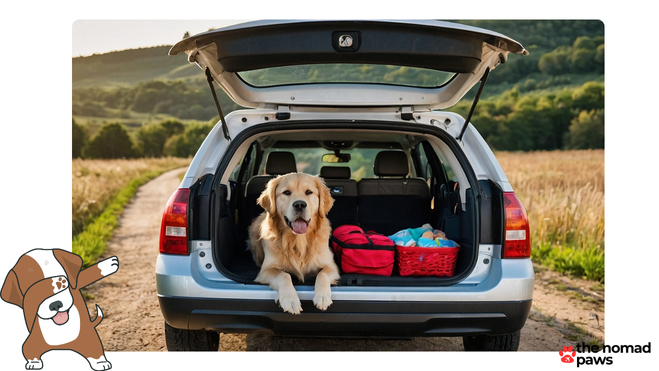
A road trip with your dog gives you a reason to slow down: a walk somewhere new, a quiet stretch of grass, a break that feels better than another gas station coffee. But finding those places while keeping the drive manageable takes a little planning.
Our dog-friendly road trip planner helps you explore parks and rest areas along your route, with estimated driving times and detours. Enter your starting point, destination, and preferred time between breaks below.
Plan your drive with parks and rest-area candidates near your route. Check venue dog policies before you go. Your journey starts here. Enter two places to explore stop candidates along the way. This planner suggests places to investigate, not verified dog-friendly venues. Check current dog policies, opening times, parking and safe walking access with the venue. Driving times are estimates without live traffic, and do not include breaks. Plan additional stops whenever your dog needs them. Your origin, destination and route information are sent to Google to calculate the journey. We do not save your itinerary or venue information on this website. Temporary counters use a hashed network address to limit misuse and are deleted after expiry. Your hosting provider and Google may retain their own logs. Maps and place information are supplied by Google. Map use is subject to the Google Maps Additional Terms and Google Privacy Policy. See our website privacy policy for other site data practices. ROAD TRIP PLANNER
Good road trips.
Better dog breaks.Planner terms and data use
Plan the drive around your dog’s breaks
The quickest route is a useful starting point, but it rarely tells you everything you need for a trip with a dog. You also need somewhere to park, a safe place to walk, and enough time for your dog to settle before getting back in the car. A stop that looks convenient on a map may turn out to have locked gates, little shade, or restrictions on where dogs can go.

Start by entering a city or street address for each end of your journey. For example, you could plan a drive from Los Angeles, CA, to San Francisco, CA. Then choose the maximum time you would like to drive between breaks and select “Find my stops.” The planner searches for park and rest-area candidates and checks their estimated driving legs and added detour time.
Treat the result as the beginning of your research. Open the Google Maps links, look at the locations, and check the current rules with the venue or managing authority. Once you have chosen suitable stops, put them into your navigation app and review the full journey before departure.
Understand the driving estimates
The planner checks suggested stops against your chosen driving interval and a 15-minute detour limit. That helps you judge whether a break fits the drive, but the estimates exclude live traffic and time spent at stops. A walk, lunch, roadwork, or a slow stretch of highway can change your arrival time considerably.
Keep that difference in mind when deciding how much driving to fit into a day. A six-hour driving estimate does not mean you will be at your destination six hours after leaving home. Give yourself room for unhurried breaks, and avoid making the day depend on reaching every stop at a precise time.
What a partial route means
If the result says “Partial route — needs review,” the planner has not completed a sequence of checked stops for the whole journey. It may not have found a suitable candidate in a search area, or it may have reached a search or execution limit. Any stops already shown can still be investigated, but you will need to plan the uncovered stretch yourself.
For a long trip, planning one day’s drive at a time can make the results easier to review. You can also investigate the alternatives shown, although their later driving legs have not been checked. If you replace a suggested stop with an alternative, review the revised route in your navigation app rather than assuming the rest of the timings still work.
Choose stops you would actually want to use
A good break gives your dog somewhere to move around without adding stress to the journey. Look beyond the place name and check how you would get from the parking area to the walking space. A patch of green across a busy road is less useful than a modest rest area with straightforward access.
Dog rules deserve particular attention. A park may allow dogs in one section but exclude them from playgrounds, sports fields, beaches, or trails. The presence of a park listing does not confirm dog access, and it certainly does not mean dogs can run off leash. Check the rules for the specific area you intend to use and keep your dog leashed unless you have confirmed that off-leash access is permitted.
Check opening hours and any seasonal restrictions, especially if you expect to arrive early or late. Look at the forecast and the conditions on the ground: shade, exposed pavement, and muddy paths can all affect how useful a stop will be. Carry your own drinking water so the break does not depend on finding a working fountain.
It also helps to have another stopping option in mind. If your first choice is closed, crowded, or unsuitable when you arrive, you can move on without having to start researching from the roadside.
How often should you stop with a dog?
Choose a break interval that suits the dog traveling with you. Age, health, bathroom needs, and experience in the car all matter. A dog that settles comfortably on familiar drives may cope differently on a full day of travel, while a puppy or a dog with a medical condition may need a more flexible schedule. Your veterinarian can help you plan around individual health needs.
The interval in the planner is a way to organize your route, not a reason to keep driving when your dog needs a break. Watch how your dog is doing and stop safely if they become unsettled or appear unwell. It is better to adjust the day than to push on toward a planned location because it is already on the map.
During a break, allow time for a bathroom opportunity, fresh water, and a short walk where the conditions are suitable. Have the leash attached before opening the car door, particularly beside a highway or in an unfamiliar parking lot. Some dogs will enjoy exploring; others may be happier with a quiet pause away from traffic and other dogs.
Pack for the journey, not just the destination
Keep the things you will use during the drive within easy reach. Water, a bowl, waste bags, a leash, and a towel are much more useful beside you than underneath the luggage. Bring enough of your dog’s usual food for the trip, along with any prescribed medications and the instructions you need to follow.
Familiar bedding can help make a new place feel more comfortable, whether you are stopping overnight at a hotel or arriving at a campsite. Choose something practical to wash, and allow space for your dog to rest comfortably in their secured travel setup. Try packing the car before departure day so you can check that luggage does not interfere with the restraint or crate.
Check your dog’s ID tag and microchip contact details before leaving. Keep a recent photo and relevant veterinary records accessible, and save your veterinarian’s number alongside emergency clinic details for your overnight destinations. Those are small jobs to do at home that become much harder when you are tired and somewhere unfamiliar.
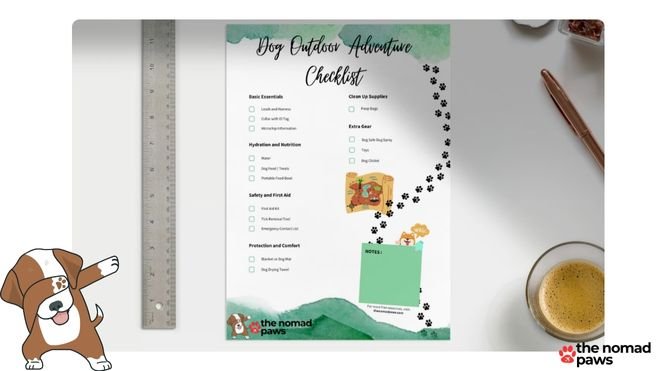
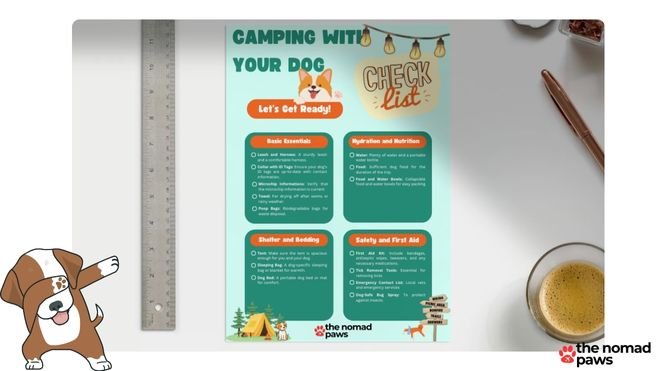
Our dog travel essentials guide covers packing in more detail. If your route includes nights outdoors, the camping with your dog checklist will help you prepare for the campsite as well as the drive.
Make the car a comfortable, secure place
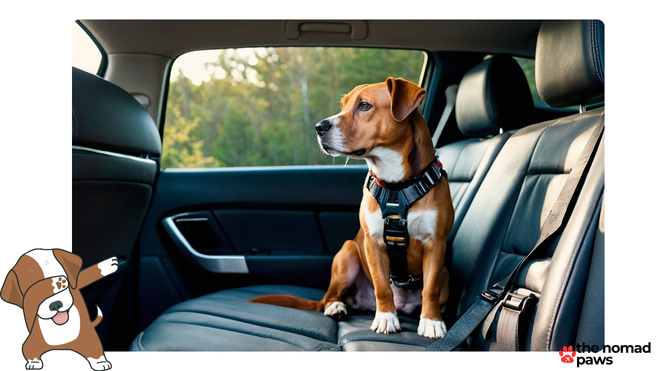
Your dog should travel restrained, away from the driver’s lap and front-seat airbags. Use a vehicle harness or secured crate that fits your dog, and follow the manufacturer’s installation instructions. Take time to get the setup right before the trip, including checking how it works in your particular car.
When comparing safety equipment, look for evidence about the exact product rather than relying on a broad “crash-tested” claim. The Center for Pet Safety’s certified products are a useful place to check independent certification. Make sure you are looking at the relevant model and size, and follow the conditions of use.
A few short practice rides can help you see how your dog responds to the car and their travel setup before committing to a long journey. If rides cause vomiting or distress, speak with your veterinarian about a suitable plan. Travel anxiety and motion sickness need individual attention; do not start medications or supplements without veterinary advice.
Plan meals and errands so your dog stays with you
Never leave your dog unattended in the car. A parked vehicle can become dangerously hot, including when it is in shade or the windows are cracked. Think about this when planning human breaks as well as dog breaks: a restaurant reservation or a grocery stop needs a workable arrangement for your dog.
Traveling with another person may allow one of you to stay with the dog outside the vehicle in a suitable place. If you are traveling alone, choose stops where your dog can remain with you. Having a simple meal option available gives you more flexibility when the place you hoped to visit cannot accommodate a dog.
Bring plenty of fresh drinking water, offer it regularly, and monitor your dog’s comfort throughout the day. Excessive panting, heavy drooling, unsteadiness, or collapse can indicate heat stress and require urgent veterinary attention. Our guide to dogs and hot cars explains why parked vehicles are such a serious risk.
Arrange overnight stays and food stops separately
The planner helps you research driving breaks; it does not find or book accommodation, restaurants, or veterinary clinics. For a trip over several days, choose your overnight destinations early enough to give each day a realistic finish. That also lets you look for somewhere convenient to walk your dog after arrival.
Before booking a hotel or vacation rental, confirm the policy for that specific property. Ask about pet fees, the number of dogs allowed, any size or breed restrictions, and whether dogs can be left alone in the room. A “pet-friendly” label can mean different things, so make sure the actual rules work for your stay.
For camping, check both the campground’s pet policy and the rules for surrounding trails and recreation areas. Being allowed at your campsite does not automatically mean your dog can join every activity nearby. Our guide to dog-friendly camping in Colorado is one starting point if that is where your route takes you; confirm current rules before booking.
For meals, check that the restaurant allows dogs in the seating area you plan to use and that it will be open when you arrive. A patio can be a pleasant break, but an outdoor table alone does not confirm dog access. Keep a backup option that lets your dog stay with you if your plans change.
Dog road trip planner FAQs
Are the suggested stops verified as dog-friendly?
No. The planner finds parks and rest-area candidates through Google Maps and checks estimated driving times and detours. You still need to confirm current dog policies, opening hours, and practical access with the venue or managing authority before traveling.
Does the planner account for traffic and walking breaks?
No. The estimates exclude live traffic and time spent at stops. Add time for walks, meals, delays, and overnight stays when deciding what your day will look like.
Can I change a suggested stop?
You can investigate an alternative, but its driving legs later in the trip have not been checked by the planner. Enter your chosen stops into your navigation app and review the revised drive, including how long you will travel before the next break.
What should I do if the planner cannot finish my route?
Review the checked stops and identify the part of the journey that still needs planning. Research additional stopping places yourself, or try planning a shorter section such as one day’s drive. A partial result should not be treated as a complete itinerary.
Can I use this instead of a navigation app?
Use the planner to research break locations, then use your navigation app for the drive. Check your chosen stops before departure and stay flexible if traffic, closures, or your dog’s needs change the plan.
Travel safety sources
The safety advice on this page draws on the FDA’s pet travel guidance, the AVMA’s warm-weather pet advice, and VCA’s guidance on road trips with dogs. Speak with your veterinarian about your dog’s health, travel anxiety, or motion sickness before a long drive.