


Your Bulldog’s nutrition isn’t a generic dog food problem. Their brachycephalic structure, low energy level, and predisposition to joint and skin issues mean the wrong food can directly worsen breathing difficulties, accelerate hip dysplasia, and trigger painful skin infections.
What you feed them is a functional health decision, not a preference.
BULLDOG NUTRITION AT A GLANCE
PROTEIN TARGET: 18-22% (dry matter basis)
DAILY CALORIES (40-50 LB ADULT): 760-950 kcal
CRITICAL SUPPLEMENTS: Glucosamine 1,500-2,000 mg + Chondroitin 1,200-1,600 mg + EPA/DHA 1,000-2,000 mg
Understanding Bulldog Nutritional Needs

Bulldogs require 18-22% protein content based on their low energy requirements, significantly less than the 25-30% marketed for active breeds. Their sedentary nature means a 50 lb Bulldog needs only 860-1,000 kcal/day, 20-30% fewer calories than an active dog of the same weight. Excess protein beyond 22% provides no additional benefit and converts to fat storage or stresses kidneys in seniors.

Their wrinkled skin and food sensitivities demand ingredients that support skin barrier health and avoid common triggers.
Omega-3 fatty acids help manage skin fold dermatitis in brachycephalic breeds, with clinical trials showing skin health improvements at EPA 50 mg/kg and DHA 35 mg/kg daily (approximately 1,000-1,500 mg total for a 50 lb dog).
The goal is a diet that maintains lean muscle with moderate protein, provides targeted nutritional support for joints and skin, and is highly digestible to minimize gastrointestinal upset common in brachycephalic dogs.
Key Nutrients for Bulldogs: What to Look For
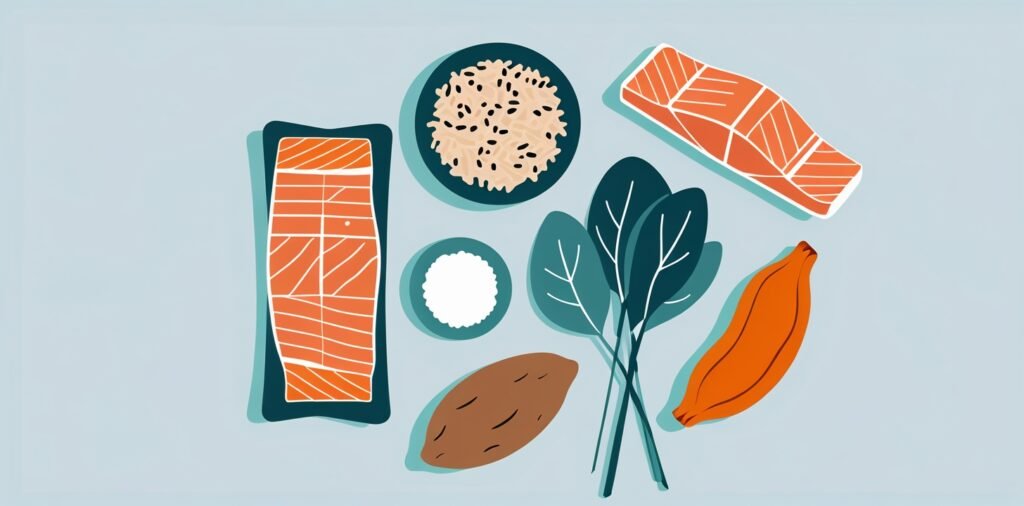
Look beyond marketing claims to the guaranteed analysis. Your Bulldog’s food must balance macronutrients to fuel them without fueling weight gain, while including specific compounds for their documented health risks.
| Nutrient | Target Range | Why It Matters for Bulldogs |
|---|---|---|
| Protein | 18-22% | Bulldogs require this moderate level based on their low energy requirements. Maintains muscle mass at their 40-50 lb frame without excess calories that convert to fat. |
| Fat | 5-8% | Lower end of AAFCO range (minimum 5.5%) is appropriate due to obesity predisposition. Fat delays gastric emptying and can worsen reflux in brachycephalic dogs. |
| Fiber | 3-5% | Supports satiety without excess bulk. Avoid gel-forming fibers (guar gum, carrageenan) that worsen reflux in Bulldogs. |
| Glucosamine | 1,500-2,000 mg/day | Joint-supporting ingredients are essential for Bulldogs due to high hip dysplasia prevalence (19.8% per OFA data). Provides cartilage building blocks. |
| Chondroitin | 1,200-1,600 mg/day | Retains water in cartilage, improving shock absorption. Clinical evidence shows improved mobility scores vs. placebo in Journal of Veterinary Internal Medicine review. |
| EPA/DHA (Omega-3) | 1,000-2,000 mg/day | Reduces airway inflammation in brachycephalic syndrome, supports skin barrier function (strengthens cell membranes, reduces allergen penetration), anti-inflammatory for joints. |
Your Bulldog doesn’t need “high-protein, high-fat” performance fuel. They need lean, targeted nutrition that keeps their joints mobile, their skin clear, and their waistline trim. Every pound of excess weight increases hip joint stress by 4-6 lbs.
Connecting Health Conditions to Ingredients

Bulldogs face specific health predispositions that nutrition can directly address. Here’s how to translate their medical risks into ingredient decisions.
Brachycephalic Airway Syndrome (BOAS)
Nutritional Management:
- Omega-3 fatty acids (EPA/DHA): Reduce airway inflammation at 20-55 mg/lb body weight daily (1,000-2,500 mg for a 50 lb Bulldog). Look for fish oil, salmon oil, or whole fish (salmon, herring) as primary ingredients. Results take 3-4 weeks of consistent use.
- Lower fat (5-8%): Slows digestion, prevents gastric distension that exacerbates breathing difficulties.
- High digestibility proteins: Fish, turkey, or duck reduce reflux risk. Avoid beef by-products and low-quality proteins that are harder to digest.
Feeding Modifications: Soft/wet food or kibble soaked in water reduces choking risk. Feed 4-5 small meals daily instead of 1-2 large meals to prevent stomach distension. Use elevated feeding bowls to improve airway clearance.
Hip Dysplasia
Therapeutic Dosages:
- Glucosamine HCl + Chondroitin Sulfate: 1,500-2,000 mg glucosamine + 1,200-1,600 mg chondroitin daily for a 50 lb dog. Most effective when started early in disease progression. Benefits diminish if supplementation stops.
- EPA/DHA: 310 mg/kg^0.75^ daily for osteoarthritis (approximately 1,000-1,500 mg for a 50 lb dog). Anti-inflammatory effects reduce joint pain and swelling.
- L-carnitine: Supports fat metabolism to maintain lean body weight, critical for reducing joint stress.
Weight Management Critical: Excess weight on dysplastic hips accelerates cartilage degradation. Every pound of excess weight increases hip joint stress by 4-6 lbs.
Skin Fold Dermatitis
Specific Nutrients:
- Omega-3 fatty acids (EPA 50 mg/kg, DHA 35 mg/kg daily): Clinical trial showed skin health improvements in 10-week double-blind study. Strengthens skin barrier, reduces water loss, decreases allergen penetration. Sources: fish oil (salmon, sardine), flaxseed (lower bioavailability).
- Novel proteins: Lamb, turkey, fish (if not allergic) vs. chicken/beef for dogs with concurrent food allergies triggering skin issues.
- Zinc and B vitamins: Support skin healing. Deficiency worsens dermatitis.
Avoid: Corn, wheat, soy (inflammatory), beef and chicken (common allergens in Bulldogs), artificial colors/preservatives (BHA, BHT, ethoxyquin).
Food Allergies
Prevalence Data: Limited ingredient diets benefit 15-20% of Bulldogs with food sensitivities. Most common triggers:
- Beef: 34% of dogs with food allergies
- Dairy: 17%
- Chicken: 15%
- Wheat: 13%
- Corn: 4%
Elimination Diet Protocol: Feed single novel protein (duck, venison, rabbit, kangaroo) + single carbohydrate source (sweet potato, potato) for 8-12 weeks. Avoid ALL treats, table scraps, flavored medications during trial. Reintroduce ingredients one at a time to identify triggers.
Reading Bulldog Food Labels: What Matters
First, find the AAFCO statement. It must say the food is complete and balanced for your dog’s life stage (growth, adult maintenance, or all life stages). This is the baseline for nutritional adequacy, not a marketing claim.
Next, scrutinize the ingredient panel. The first ingredient should be a named whole meat (deboned chicken, salmon, lamb), not by-products or “meat meal” without species identification.
For Bulldogs, be aware of common allergens: chicken, beef, wheat, corn, and dairy. If your dog is sensitive, look for novel proteins like duck, turkey, fish, or lamb.
Look for named fat sources (chicken fat, salmon oil, fish oil) over generic “animal fat.” For skin and joint support, verify fish oil or salmon oil appears in the first 10 ingredients, providing EPA/DHA content. Target omega-6 to omega-3 ratio of 5:1 or lower for Bulldogs with skin issues (standard kibble often exceeds 10:1).
Finally, use the guaranteed analysis to check the numbers against the targets above. A food with 30% protein and 20% fat is a recipe for weight gain in a sedentary Bulldog, regardless of how “premium” the brand sounds.
Calculate dry matter basis if comparing wet and dry foods: divide nutrient percentage by (100 – moisture percentage) × 100.
Best Ingredients for Bulldogs vs. What to Avoid
LOOK FOR
Protein Sources:
- Whole fish (salmon, herring, sardine): Primary ingredient + rich in EPA/DHA for skin/joint. Novel protein for allergen-prone Bulldogs. Look for antioxidant-preserved formulas to prevent rancidity.
- Whole poultry (turkey, duck, not chicken): High-quality protein without common chicken allergen.
- Lamb (whole or meal): Novel protein, historically lower allergen rate (22% vs. 34% for beef).
Carbohydrate Sources:
- Sweet potato: Highly digestible, lower glycemic impact, natural antioxidants.
- White rice or basmati: Excellent digestibility for brachycephalic GI issues, neutral allergen profile.
- Pumpkin: Soluble fiber aids satiety without bloating risk.
Fat Sources:
- Fish oil or salmon oil: Highest EPA/DHA content. Target 2-3% fish oil equivalent in formula.
- Flaxseed: ALA source (converts to EPA/DHA less efficiently but plant-based option).
AVOID
Allergen Triggers:
- Beef, beef by-products: 34% allergen rate + harder to digest.
- Chicken (if sensitive): 15% allergen rate in dogs with food allergies.
- Wheat, corn, soy: Inflammatory for predisposed dogs. Corn as 2nd ingredient = empty calories.
- Dairy products: 17% allergen rate.
Low-Quality Ingredients:
- Meat by-products or “meat by-product meal” without species ID: Unknown protein quality, higher allergen risk.
- Artificial colors (Red 40, Yellow 5, Blue 1): No nutritional value, linked to hyperactivity.
- Artificial preservatives (BHA, BHT, ethoxyquin): Oxidative stress, compromise immune function.
- Guar gum, xanthan gum, carrageenan: Slow gastric emptying, worsen reflux in brachycephalic dogs.
Excess Nutrients:
- Excessive animal fat (beef tallow): Increases calories without joint/skin benefits.
- High-fat treats or table scraps: Worsen reflux, contribute to obesity and pancreatitis.
How Much to Feed Your Bulldog by Life Stage
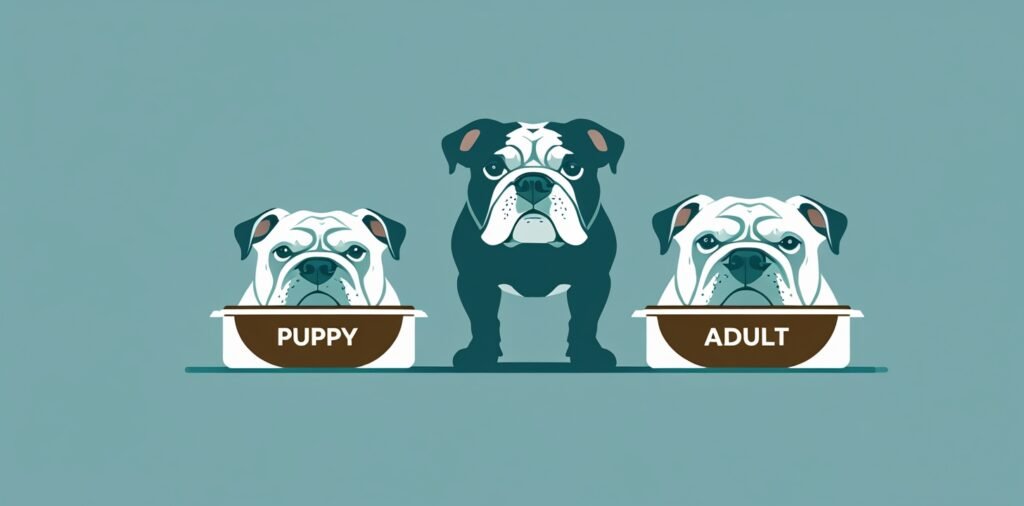
These are starting points based on a sedentary Bulldog. Always adjust based on your individual dog’s body condition score. Ribs should be palpable without pressing but not visible.
Abdominal tuck visible from side, waist visible from above. Weight checks monthly for adults, more frequent if adjusting portions.
| Life Stage | Daily Calories | Cups/Day* | Meals/Day | Notes |
|---|---|---|---|---|
| Puppy (8-12 weeks) | 500-600 kcal | As directed | 3-4 | Use controlled-growth puppy formula with AAFCO “Growth and Reproduction” statement. Calcium: 2.0-4.5 g per 1,000 kcal, Ca:P ratio 1.1:1 to 1.5:1 critical for hip dysplasia prevention. Do NOT supplement additional calcium. |
| Puppy (3-6 months) | 700-850 kcal | As directed | 3 | Monitor growth rate: Bulldogs should reach 75% adult size by 6 months. Rapid growth stresses developing joints. Measure portions by weight, not visual estimates. |
| Puppy (6-12 months) | 900-1,050 kcal | As directed | 2-3 | Transition to adult food at 9-12 months. Switch gradually over 7-10 days (25% new food days 1-3, 50% days 4-6, 75% days 7-9, 100% day 10+). |
| Adult (40 lbs) | 760-890 kcal | 1.75-2.0 | 2 | Calculation: RER (weight in kg^0.75 × 70) × 1.2 activity factor. Obesity is rule, not exception. Most need lower end of range. Never free-feed. |
| Adult (50 lbs) | 860-1,000 kcal | 2.0-2.25 | 2 | Even 50 extra calories daily can lead to significant weight gain. Measure every meal with food scale. Treats ≤10% of daily calories (max 80-100 kcal/day). |
| Senior (7-9 years) | 630-720 kcal | 1.5-1.75 | 2-3 | Reduce by 20-30% from adult requirement. Maintain 18-22% protein (myth that seniors need less protein is outdated). Prioritize joint supplements. |
| Geriatric (10+ years) | Consult vet | Consult vet | 2-3 | May increase calories and protein if weight loss occurs. Monitor body weight monthly. Wet or softened kibble preferred for easier digestion. Sodium <0.5% for hypertension risk. |
*Cup amounts vary drastically by food density (kcal/cup). Always follow the specific feeding guide on your food’s bag and adjust based on your dog’s body condition score, not the number on the scale alone.
Best Food for Bulldog Puppies
Bulldog puppies need a formula designed for controlled growth, not maximum growth. Rapid weight gain puts immense stress on their developing joints, increasing the severity of future hip dysplasia. Look for a puppy food specifically for medium breeds with AAFCO “Growth and Reproduction” statement.
These formulas have optimized calcium (2.0-4.5 g per 1,000 kcal) and phosphorus (2.5-4.0 g per 1,000 kcal) levels with calcium-to-phosphorus ratio of 1.1:1 to 1.5:1, critical for medium-breed bone development. Ratio too high (>1.8:1) or too low (<1:1) causes orthopedic abnormalities in Bulldogs prone to hip dysplasia. They should contain DHA (minimum 0.05%) for brain development and foundational joint support from glucosamine.
Feed 3-4 small meals daily to manage energy and prevent hypoglycemia. Do NOT use adult food for puppies (insufficient calcium/phosphorus).
Do NOT supplement with additional calcium, a common owner mistake that causes excess and worsens joint development. Monitor puppy growth rate weekly. Bulldogs should reach full size at 12-14 months, not 8-10 months.
Best Food for Adult Bulldogs

The priority for an adult Bulldog is weight management and proactive joint care. An “all life stages” food often has too many calories for a sedentary 40-50 lb dog. Seek an adult maintenance formula with the macronutrient targets: 18-22% protein and 5-8% fat.
If your Bulldog is already prone to skin issues, a formula with a novel protein like salmon, lamb, or duck and added omega-3 fatty acids (EPA/DHA totaling at least 0.3% on dry matter basis) can be beneficial. The inclusion of prebiotics and probiotics (BC30, Saccharomyces) supports gut barrier health, which improves skin immunity.
Verify glucosamine (1,500-2,000 mg/day) and chondroitin (1,200-1,600 mg/day) are listed in the guaranteed analysis, not just the ingredient list. Many foods claim “joint support” without therapeutic dosages. For a 50 lb Bulldog, this translates to approximately 30-40 mg glucosamine per lb body weight.
Best Food for Senior Bulldogs

As your Bulldog ages, joint health and digestibility become paramount. Senior formulas often have slightly fewer calories to match a slower metabolism (reduce by 20-30% from adult requirement) and include higher levels of joint supplements. Look for glucosamine (1,000-1,500 mg/day) and chondroitin (800-1,200 mg/day) in the guaranteed analysis, or add a vet-recommended supplement.
Easily digestible proteins like fish, turkey, or lamb are gentler on a senior’s system. Avoid beef, which is harder to digest and a common allergen. Continued skin support with omega-3s (1,000-1,500 mg EPA/DHA daily) remains important, as aging skin becomes more fragile and prone to infection in those signature wrinkles.
Wet or softened kibble is preferred for easier chewing and swallowing. Monitor phosphorus levels (excess harmful in seniors with kidney disease risk) and sodium (<0.5%) for hypertension risk in older dogs. Adequate water intake is critical: 30-40 mL/kg body weight daily.
Frequently Asked Questions About Bulldog Nutrition
What is the best dog food for English Bulldogs?
The “best” food meets your individual Bulldog’s needs. Start by looking for an adult formula with 18-22% protein, 5-8% fat, and joint-supporting ingredients like glucosamine (1,500-2,000 mg/day) and chondroitin (1,200-1,600 mg/day). If skin issues are present, prioritize omega-3 fatty acids (EPA/DHA 1,000-2,000 mg/day) from fish oil or salmon oil. Avoid common allergens like chicken, beef, wheat, corn, and dairy unless you’ve confirmed your dog tolerates them.
How much should I feed my Bulldog puppy?
Bulldog puppies need 3-4 small meals daily of a controlled-growth puppy formula with AAFCO “Growth and Reproduction” statement. Strictly follow the cup guidelines on the bag for your puppy’s projected adult weight (40-50 lbs). Monitor body condition weekly to prevent rapid growth that stresses developing joints. An 8-week puppy (approximately 15 lbs) needs around 500-600 kcal/day. A 6-month puppy (approximately 35 lbs) needs around 900-1,050 kcal/day. Adjust based on individual growth rate, not just age.
Can Bulldogs eat grain-free food?
Grain-free isn’t necessary unless your Bulldog has a veterinarian-diagnosed grain allergy, which is rare. Focus on high-quality ingredients instead. The FDA investigation into grain-free diets and dilated cardiomyopathy (DCM) suggests grain-free formulas with high legume content (peas, lentils, chickpeas) may pose risks in predisposed breeds. Grains like rice and oats are easily digestible and provide no allergenic risk for most Bulldogs. Allergies are protein-based (chicken, beef), not grain-based.
What ingredients should I avoid in Bulldog food?
Avoid common allergens like chicken, beef, wheat, corn, and dairy if your dog is sensitive (15-20% of Bulldogs have food sensitivities). For all Bulldogs, avoid artificial colors (Red 40, Yellow 5, Blue 1), artificial preservatives (BHA, BHT, ethoxyquin), and unnamed by-products (“meat by-product meal” without species identification). Avoid gel-forming fibers (guar gum, xanthan gum, carrageenan) that worsen reflux in brachycephalic dogs. Avoid excessive fat (>8%) and high-calorie treats that contribute to obesity.
How do I know if my Bulldog has food allergies?
Watch for persistent symptoms: itchy skin (especially face, paws, ears), recurrent ear infections (yeast overgrowth from inflammation), chronic diarrhea or vomiting, and excessive licking. These can also signal environmental allergies.
The only reliable way to diagnose a food allergy is through an 8-12 week elimination diet trial managed by your veterinarian. Feed a single novel protein (duck, venison, rabbit) + single carbohydrate source (sweet potato, potato). Avoid ALL treats, table scraps, and flavored medications during the trial. Reintroduce ingredients one at a time to identify triggers. At-home food sensitivity tests are not scientifically validated.
The Bottom Line: Your Bulldog’s food should be a tool for managing their health risks, not just filling their bowl. Prioritize a lean formula with 18-22% protein, 5-8% fat, and built-in joint support (glucosamine 1,500-2,000 mg, chondroitin 1,200-1,600 mg) and skin support (EPA/DHA 1,000-2,000 mg). Measure every portion with a food scale. If they’re itchy or gassy, suspect food sensitivities and consult your vet for an elimination diet trial.
Start by auditing your current food’s guaranteed analysis against the targets here. If it exceeds 22% protein or 8% fat, or lacks therapeutic levels of joint supplements, consider a switch. For any suspected allergy, partner with your veterinarian for a proper elimination diet, not an at-home test kit. Your Bulldog’s comfort and longevity are directly linked to what’s in their bowl.
This article is for informational purposes only and does not replace professional veterinary advice. Consult your veterinarian before making significant changes to your dog’s diet, especially for puppies, seniors, or dogs with diagnosed health conditions.