

Bringing a dog to Japan pet entry requirements are among the strictest in the world. The Animal Quarantine Service (AQS), under Japan’s Ministry of Agriculture, Forestry and Fisheries (MAFF), governs all pet imports under the Rabies Prevention Law and the Domestic Animal Infectious Diseases Control Law.
For most dog owners traveling from the US or Europe, the minimum preparation timeline is 7 months from first rabies vaccination to arrival, and errors at any stage can result in up to 180 days of mandatory detention.
This guide covers every regulatory step, cost, and document required as of February 2026. Verify current requirements with the Animal Quarantine Service at maff.go.jp/aqs/english before travel, as requirements are updated quarterly.
How Japan Classifies Your Country
Japan’s Animal Quarantine Service divides all countries into two categories: designated (rabies-free) regions and non-designated regions. Your country of origin determines your entire quarantine pathway.
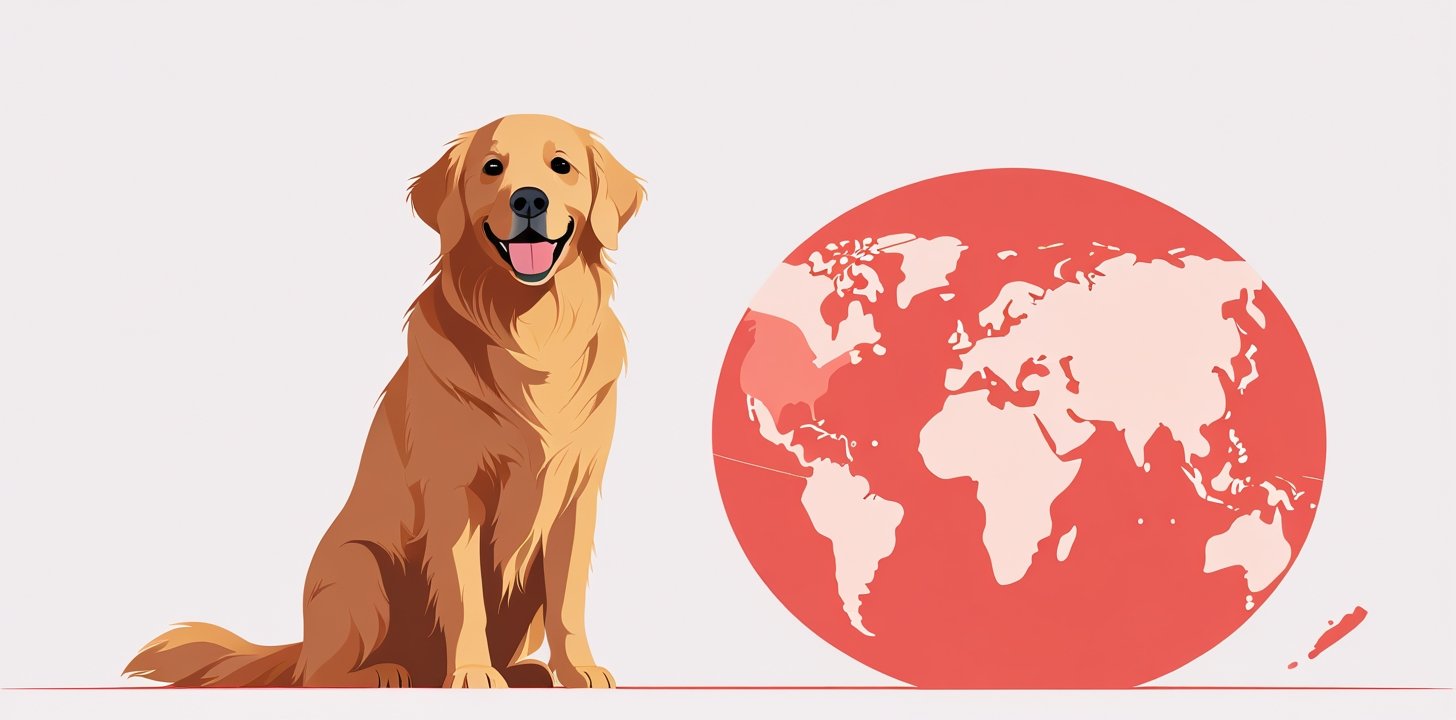
Designated (rabies-free) regions: Dogs face a maximum 12-hour inspection on arrival. Rabies vaccination and titer testing are not required.

Non-designated regions (including the US and most of Europe): Dogs must complete two rabies vaccinations, a rabies titer test, and a 180-day waiting period from the blood draw date before they can enter Japan. Failure to meet any requirement results in up to 180 days of quarantine detention.
Key Takeaway: Japan classifies countries into designated (rabies-free) and non-designated groups. Dogs from non-designated countries, including the US, face a mandatory 180-day wait after their rabies titer test before entry is permitted. Check the current country list at maff.go.jp/aqs/english, updated quarterly.
The AQS does not issue a standalone import permit. Instead, after reviewing your Advance Notification Form (AC), it issues an “Approval of Import Inspection of Animals” document, which you must present at arrival.
Which Airports Accept Pet Arrivals
Only four Japanese airports are designated for pet import arrivals. Book your flight accordingly before submitting any documentation.

- Narita International Airport (NRT), Tokyo: +81-476-32-6664 / aqs.nrtr1@maff.go.jp
- Haneda Airport (HND), Tokyo: +81-3-5757-9755 / aqs.hnd@maff.go.jp
- Chubu Centrair International Airport (NGO), Nagoya: +81-569-38-8577 / aqs.nga@maff.go.jp
- Kansai International Airport (KIX), Osaka: +81-72-455-1956 / aqs.kixk1@maff.go.jp
Warning: No other Japanese airport accepts pet imports. Arriving at any other airport with a dog will result in denied entry. Confirm your routing before purchasing tickets.
Pet Eligibility
Dogs and cats are permitted as accompanied pets. Other species, including foxes, raccoons, and skunks, require 180-day quarantine regardless of documentation and are not covered in this guide.
Dogs must be at least 91 days old at the time of their first rabies vaccination. No national breed restrictions apply under Japanese law, though individual prefectures may have local rules. Verify with your destination city or prefecture directly.
Step 1: Microchip
Your dog must have an ISO 11784 or ISO 11785 compliant 15-digit microchip implanted before any rabies vaccination. The microchip and first rabies shot may be given on the same day, but the chip must come first.

The microchip number must match exactly across every certificate and document in your file. A mismatch at AQS inspection is grounds for detention.
Estimated cost: ¥5,000–10,000 (~$35–70 USD)
Step 2: Rabies Vaccinations
Dogs from non-designated countries require a minimum of two rabies vaccinations using an inactivated (killed) virus or recombinant vaccine. Live rabies vaccines are not accepted.
- First vaccination: Day 0 (same day as microchip, or after)
- Second vaccination: Minimum 30 days after the first
- The second vaccination must not have expired before your arrival date in Japan
Estimated cost: ¥8,000–15,000 per dose (~$55–105 USD), two doses required
Step 3: Rabies Titer Test
After the second vaccination, your dog requires a rabies antibody titer test, either the FAVN (Fluorescent Antibody Virus Neutralization) or RNATT test. The result must show ≥ 0.5 IU/ml.

Blood must be sent to a laboratory officially designated by the Minister of Agriculture, Forestry and Fisheries of Japan. Not all US laboratories qualify. Results are valid for 2 years from the blood draw date.
Kansas State University Veterinary Diagnostic Laboratory is one example of a MAFF-approved US lab that sends results directly to Japan as required. Confirm current MAFF approval status before submitting samples.
Estimated cost: ¥15,000–25,000 (~$105–175 USD)
Tip: The 180-day waiting period begins on the blood draw date, counted as Day 0. Your dog cannot arrive in Japan until Day 180 is complete. Schedule the titer draw as early as possible after the second vaccination to avoid extending your overall timeline.
Step 4: The 7-Month Minimum Timeline
For dogs from non-designated countries, the minimum time from first rabies vaccination to Japan arrival is 7 months. There are no shortcuts.

| Step | Timing |
|---|---|
| Microchip implantation | Day 0 |
| Rabies vaccination #1 | Day 0 (same day as microchip, or after) |
| Rabies vaccination #2 | Day 30 minimum |
| Rabies titer blood draw | After vaccination #2 |
| 180-day waiting period | Begins on blood draw date (Day 0) |
| Health exam and parasite treatment | Within 10 days of departure |
| Form AC submission | 40–90 days before arrival |
| Earliest permitted arrival | Day 180 from blood draw (~7 months from start) |
Step 5: Pre-Departure Health Certificate and Parasite Treatment
A licensed veterinarian must conduct a clinical examination and administer parasite treatment within 10 days of your departure date. Treatment or examination outside this window invalidates your health certificate, and AQS will not accept it.
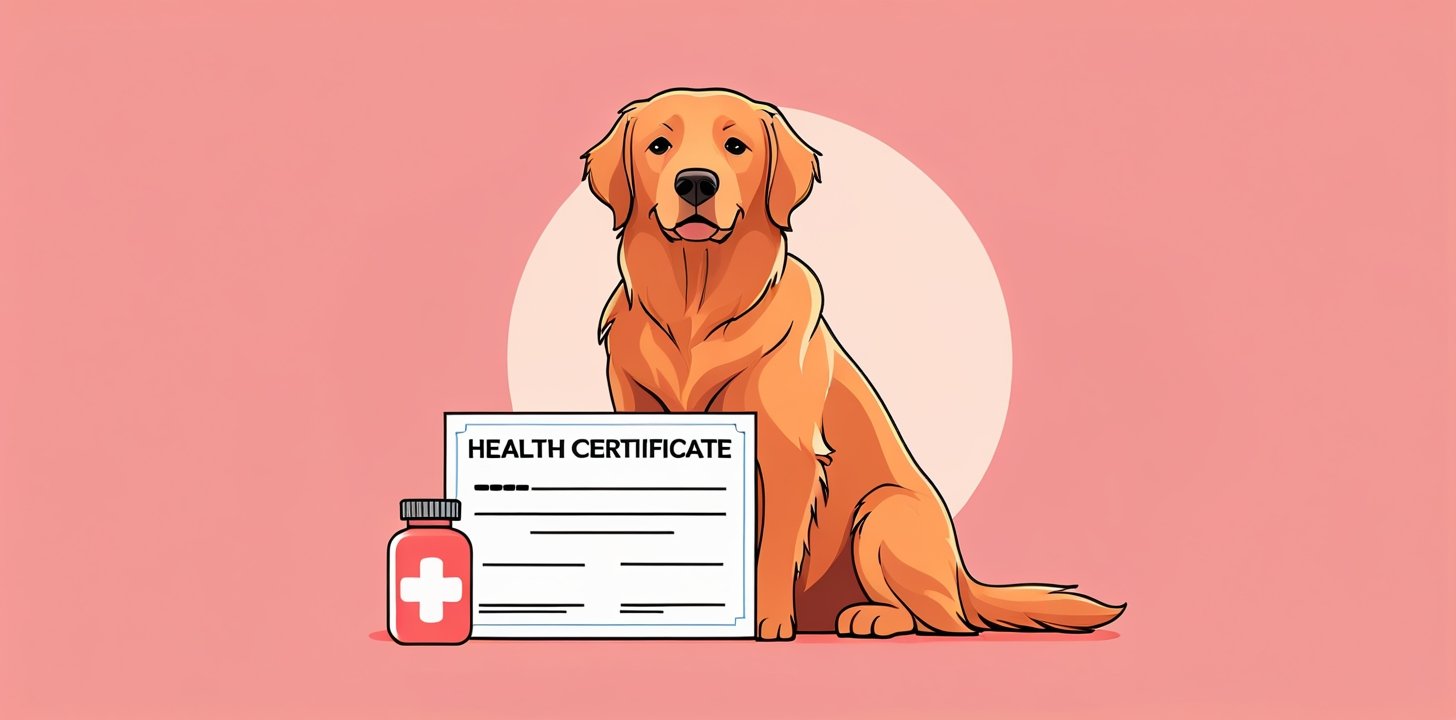
For US residents: Your veterinarian must be USDA-accredited. The completed health certificate must then be endorsed by USDA APHIS (Animal and Plant Health Inspection Service). A state veterinarian signature alone is not sufficient. USDA APHIS information for US-to-Japan pet travel is available at aphis.usda.gov/pet-travel.
Exception: Active duty US military personnel may use health certificates issued by military veterinarians without APHIS endorsement.
Estimated costs:
- Health certificate (vet-issued): ¥10,000–20,000 (~$70–140 USD)
- USDA APHIS endorsement: $50–150 USD
- Clinical exam: ¥10,000–20,000 (~$70–140 USD)
- Parasite treatment: ¥5,000–10,000 (~$35–70 USD)
Warning: The 10-day parasite treatment window is a hard deadline. If your treatment date falls outside this window, your health certificate is invalid and AQS will not clear your dog at arrival. Schedule your vet appointment as close to your departure date as possible.
Step 6: Advance Notification Form AC
Form AC (Advance Notification Form, submitted to the Animal Quarantine Service) must be submitted at least 40 days before your planned arrival date. Submissions can be made up to 90 days in advance. Late submissions are rejected, and your dog will not be cleared for entry.

Form AC requires your dog’s exact arrival date. This date cannot change after submission without prior AQS approval. The form also requires your dog’s measurements, your Japan address, and full documentation details.
Submit via NACCS (Nippon Automated Cargo and Port Consolidated System) or by email to the AQS office at your arrival airport. Form AC and submission guidance are available at maff.go.jp/aqs/english/dog/cat_guide.html.
Upon approval, AQS issues the “Approval of Import Inspection of Animals” document. Bring this to the airport.
Form AC processing fee: No fee charged for submission.
Required Documents Checklist
Bring originals or approved digital copies of all documents to the AQS office at your arrival airport.

- “Approval of Import Inspection of Animals” (issued by AQS after Form AC approval)
- USDA APHIS-endorsed health certificate (US residents)
- Rabies vaccination records, both doses, with dates and vaccine type
- Rabies titer test results (≥ 0.5 IU/ml, from a MAFF-designated laboratory)
- Microchip implantation proof and scanner-readable confirmation
- Pre-departure clinical examination record (within 10 days of departure)
- Parasite treatment proof (within 10 days of departure)
- Owner’s passport
Arrival and Inspection
Proceed directly to the AQS office at your arrival airport before clearing customs. Present all documents listed above.

AQS inspectors will verify:
- Your dog shows no signs of illness
- Rabies vaccination and titer timelines are compliant
- Leptospirosis vaccination (dogs only)
- Microchip number matches all certificates
- Health certificate carries valid government endorsement
- All documents are complete and within required timeframes
If all requirements are met, inspection takes up to 12 hours and AQS issues an Import Quarantine Certificate. Your dog is released to you.
If any requirement is not met, your dog is held at an AQS detention facility for up to 180 days. Owners cannot retrieve pets during this period.
Key Takeaway: Dogs entering Japan that meet all AQS requirements are cleared within 12 hours of arrival. Dogs that fail any requirement face up to 180 days of detention at AQS facilities, at the owner’s expense.
Quarantine Costs If Requirements Are Not Met
Quarantine is entirely avoidable with correct preparation. It applies only when entry requirements are not fully satisfied.

Duration: Up to 180 days
Estimated cost: ¥300,000 or more (~$2,000–2,200 USD at current exchange rates)
Owners are responsible for all detention costs. AQS facilities do not permit owner visits during the quarantine period.
Full Cost Breakdown
| Item | JPY | USD Equivalent |
|---|---|---|
| Microchip implantation | ¥5,000–10,000 | $35–70 |
| Rabies vaccination x2 | ¥16,000–30,000 | $110–210 |
| Rabies titer test | ¥15,000–25,000 | $105–175 |
| Health certificate (vet-issued) | ¥10,000–20,000 | $70–140 |
| USDA APHIS endorsement (US) | N/A | $50–150 |
| Pre-departure clinical exam | ¥10,000–20,000 | $70–140 |
| Parasite treatment | ¥5,000–10,000 | $35–70 |
| Form AC submission | No fee | No fee |
| Quarantine detention (if required) | ¥300,000+ | $2,000–2,200+ |
Compliant imports typically cost ¥61,000–115,000 (~$425–805 USD) in Japan-side fees, plus USDA APHIS endorsement costs for US residents. These figures exclude airline cargo or cabin fees, which vary by carrier.
Tip: The ¥300,000+ quarantine cost is avoidable. Every step in this guide exists to prevent it. Build your timeline carefully and submit Form AC on time.
Travel Logistics: Cabin vs. Cargo
Japan’s AQS does not mandate cabin-only or cargo-only travel. Whether your dog travels in-cabin or as checked cargo depends entirely on your airline’s policies and IATA-compliant crate requirements.
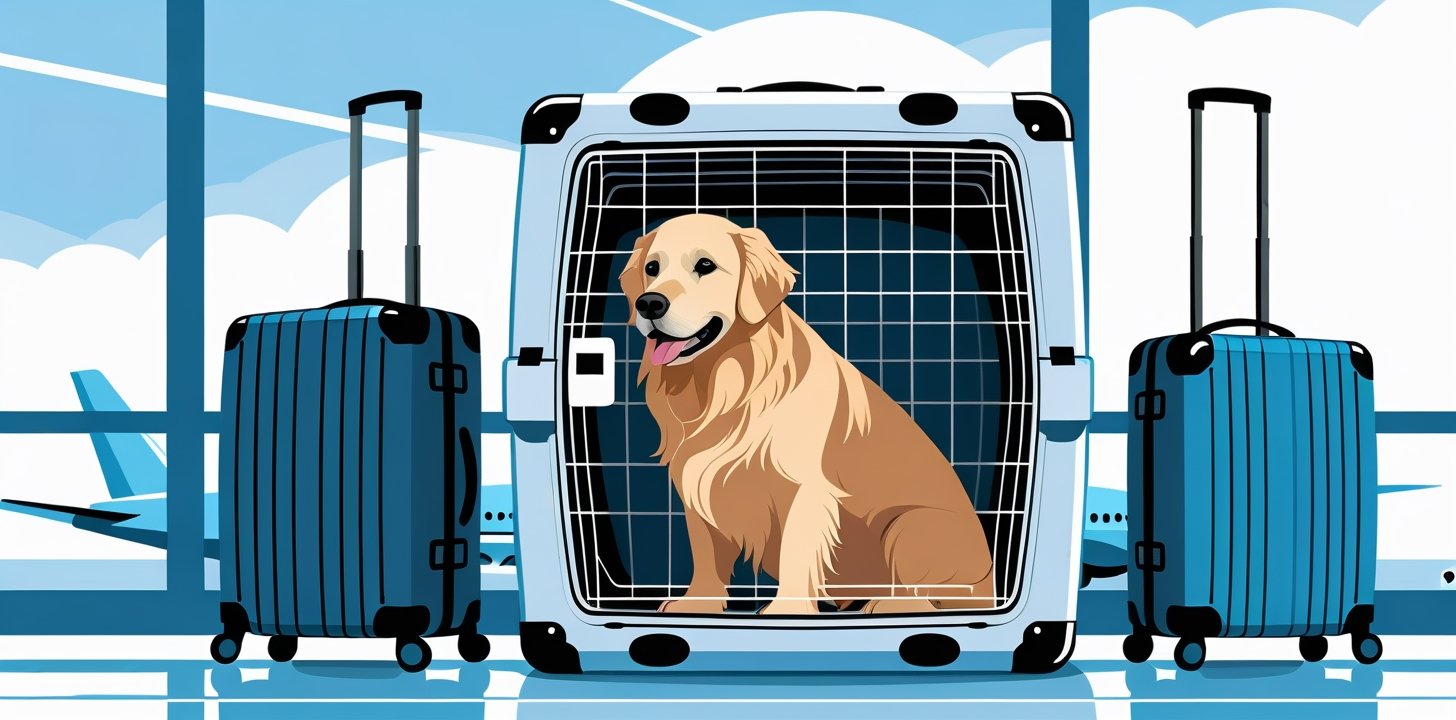
Confirm your airline’s pet policy and book your pet’s space before submitting Form AC, since Form AC requires a fixed arrival date and flight details. Some airlines that allow pets in cabin restrict pet travel during summer heat periods. Contact your carrier directly for current restrictions.
No seasonal embargoes are imposed by AQS on pet arrivals.
Settling In Japan
Veterinary care in Japan is widely available in urban areas. English-speaking vets can be located through the Japan Veterinary Medical Association. Consultation fees typically run ¥5,000–10,000 (~$35–70 USD) per visit, though this varies by clinic and region.

Register your dog with your local municipal office within 90 days of arrival to obtain a dog license, as required under Japanese law. Confirm lease terms with your landlord before arrival, as pet policies vary significantly across rental properties.
Official Resources
- Animal Quarantine Service (動物検疫所), MAFF Japan: maff.go.jp/aqs/english
- Dog and cat import guide with Form AC download: maff.go.jp/aqs/english/dog/cat_guide.html
- USDA APHIS pet travel (US residents): aphis.usda.gov/pet-travel
- Narita AQS: +81-476-32-6664 / aqs.nrtr1@maff.go.jp
- Haneda AQS: +81-3-5757-9755 / aqs.hnd@maff.go.jp
- Chubu AQS: +81-569-38-8577 / aqs.nga@maff.go.jp
- Kansai AQS: +81-72-455-1956 / aqs.kixk1@maff.go.jp
Frequently Asked Questions
How much does it cost to bring a dog to Japan?
Compliant imports cost approximately ¥61,000–115,000 (~$425–805 USD) in preparation fees, plus $50–150 USD for USDA APHIS endorsement for US residents. Individual costs: rabies titer test ¥15,000–25,000 (~$105–175 USD), USDA APHIS endorsement $50–150 USD, health certificate ¥10,000–20,000 (~$70–140 USD). If your dog fails AQS inspection, quarantine detention costs ¥300,000 or more (~$2,000–2,200 USD). Verify current fees with the Animal Quarantine Service before travel.
Can I take my dog to Japan without quarantine?
Yes, if all requirements are fully met before arrival. Dogs from designated (rabies-free) countries face only a 12-hour inspection. Dogs from non-designated countries, including the US, must complete two rabies vaccinations, a titer test showing ≥ 0.5 IU/ml, and a 180-day waiting period. Compliance means no quarantine. Non-compliance means up to 180 days of detention at ¥300,000 or more.
How long does it take to prepare a dog for Japan travel?
For dogs from non-designated countries, the minimum is 7 months from first rabies vaccination to arrival. This covers: microchip implantation, two rabies vaccinations spaced at least 30 days apart, a rabies titer test, and the mandatory 180-day waiting period from the blood draw date. Form AC must be submitted 40–90 days before your fixed arrival date.
What is Form AC and when do I submit it?
Form AC is Japan’s Advance Notification of Animal Quarantine, submitted to the Animal Quarantine Service. It must be submitted at least 40 days before your planned arrival date, and no more than 90 days in advance. Submit via NACCS or email to your arrival airport’s AQS office. Late submissions are rejected. Your arrival date cannot change after submission without AQS approval. Download the form at maff.go.jp/aqs/english/dog/cat_guide.html.
Does my dog need a rabies titer test for Japan?
Yes, dogs from non-designated (non-rabies-free) countries require an FAVN or RNATT rabies titer test from a laboratory officially designated by Japan’s Minister of Agriculture, Forestry and Fisheries. The result must show ≥ 0.5 IU/ml. Results are valid for 2 years. The 180-day waiting period begins on the blood draw date. Verify your lab’s MAFF approval status before submitting samples.
Which airports in Japan accept pet arrivals?
Only four airports accept pet imports: Narita International Airport (NRT) in Tokyo, Haneda Airport (HND) in Tokyo, Chubu Centrair International Airport (NGO) in Nagoya, and Kansai International Airport (KIX) in Osaka. Arriving at any other Japanese airport with a dog will result in denied entry.
Requirements verified against Animal Quarantine Service (MAFF) official sources and USDA APHIS guidance as of February 2026. Japan’s AQS updates its country classification list quarterly at maff.go.jp/aqs/english. Always confirm current requirements directly with the Animal Quarantine Service before travel.
This article is for informational purposes only and does not constitute veterinary or legal advice. Regulations change. Verify all requirements with the Animal Quarantine Service (動物検疫所) and, for US residents, USDA APHIS before making travel arrangements.