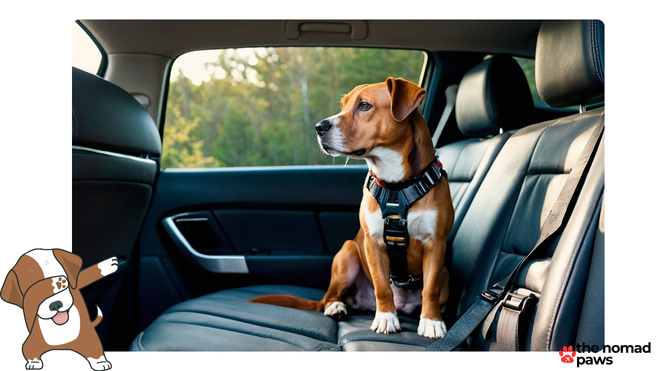


The single most important step in how to calm an anxious dog during travel is starting desensitization at least 6 weeks before your trip, with 12 weeks optimal for severe cases.
Research shows that rushing this process in three weeks or fewer typically causes more harm than good, because the neurological stress response requires time to rewire. Last-minute fixes rarely work for dogs with established travel anxiety.
Key Takeaway: Start desensitization 6 weeks minimum before travel. For severe anxiety, 12 weeks is optimal per veterinary behaviorist recommendations. Book your vet consultation in week one, not week five.
Preparation Timeline: 8-Week Checklist
This timeline builds positive associations step by step. Each phase must be completed before advancing. If your dog shows no improvement by week three, contact your vet immediately to discuss prescription options.
| Week | Action | Goal |
|---|---|---|
| Week 1 | Book vet consultation; purchase airline-approved carrier | Baseline anxiety assessment; carrier on hand |
| Weeks 1-2 | Stationary crate in high-traffic room, door open; toss high-value treats inside; feed meals near crate | Positive crate association |
| Weeks 3-4 | Engine on without driving; introduce airline carrier; reward calm behavior | Motion and carrier acclimation |
| Weeks 5-6 | 15-30 second drives; aircraft noise at low volume near crate; backtrack if stress signals appear | Short mock trips; sensory exposure |
| Week 7 | Full mock travel day; airport visit if permitted; test medication at exact travel timing | Identify problems with time to adjust |
| Final days | Lock in routine; no extra comforting; confirm airline medication policy in writing | Stability before departure |
Most major airlines including Delta, United, and American require health certificates issued within 10 days of travel. For international travel, USDA-endorsed health certificates are valid for 30 days from the date of issuance as of 2026. Schedule your vet appointment accordingly.

Tip: During weeks 5-6, play airport ambient noise from free apps like “White Noise and Sounds” at low volume near the crate for 20-30 minutes daily. Your dog acclimates to crowd noise, announcements, and engine sounds without real crowds.
Crate Training: The Non-Negotiable Foundation
A crate-trained dog has significantly lower stress levels during travel. Research on confined dogs shows that untrained confinement triggers the sympathetic nervous system, causing elevated heart rate, rapid breathing, and plasma cortisol levels up to three times higher than baseline. Dogs with positive crate associations activate the parasympathetic nervous system and remain calm despite confinement.
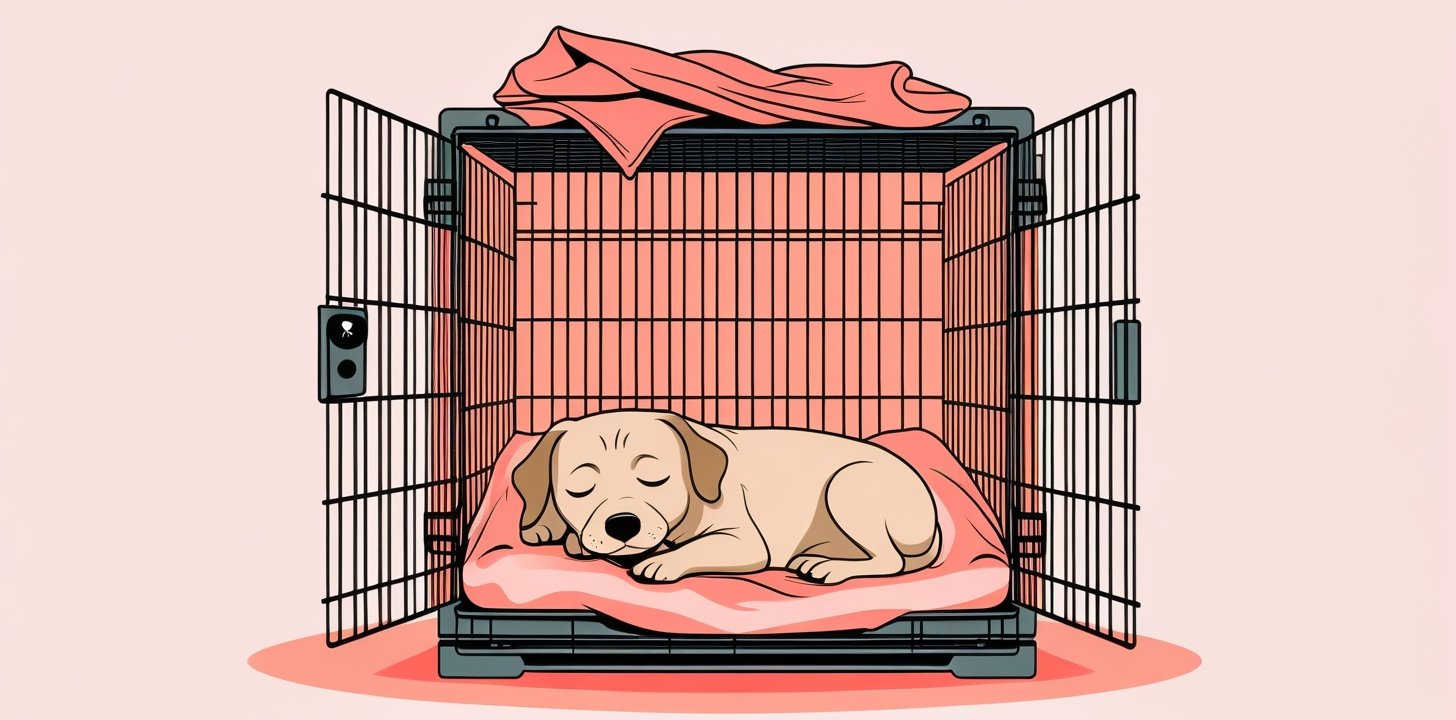
The most common cause of crate training failure is rushing duration before the dog associates the crate with safety. This classical conditioning must come first.
3-week protocol for anxious dogs:
- Days 1-3: Open crate in a high-traffic room. Toss treats inside randomly. Never force entry.
- Days 4-7: Feed all meals inside the crate with the door open.
- Week 2: Close the door for 10-30 seconds during meals or high-value chews. Open before any distress signal appears.
- Week 3 onward: Increase closed-door duration in 5-second increments only when your dog is fully calm at the current duration.
Place a worn t-shirt with your scent inside the crate. Research confirms familiar scents lower cortisol levels in stressed dogs and activate parasympathetic calm. Cost: $0.
“7-day crate training” guides are premature for anxious dogs. Allow a minimum of 3 weeks. If you have fewer than 3 weeks before travel, consider driving instead of flying.
Medication: Natural Options for Mild Anxiety, Prescription for Severe
Natural options are effective for mild to moderate anxiety in 50-60% of dogs. Prescription medication is required for severe cases. This is a tiered system, not one-size-fits-all.
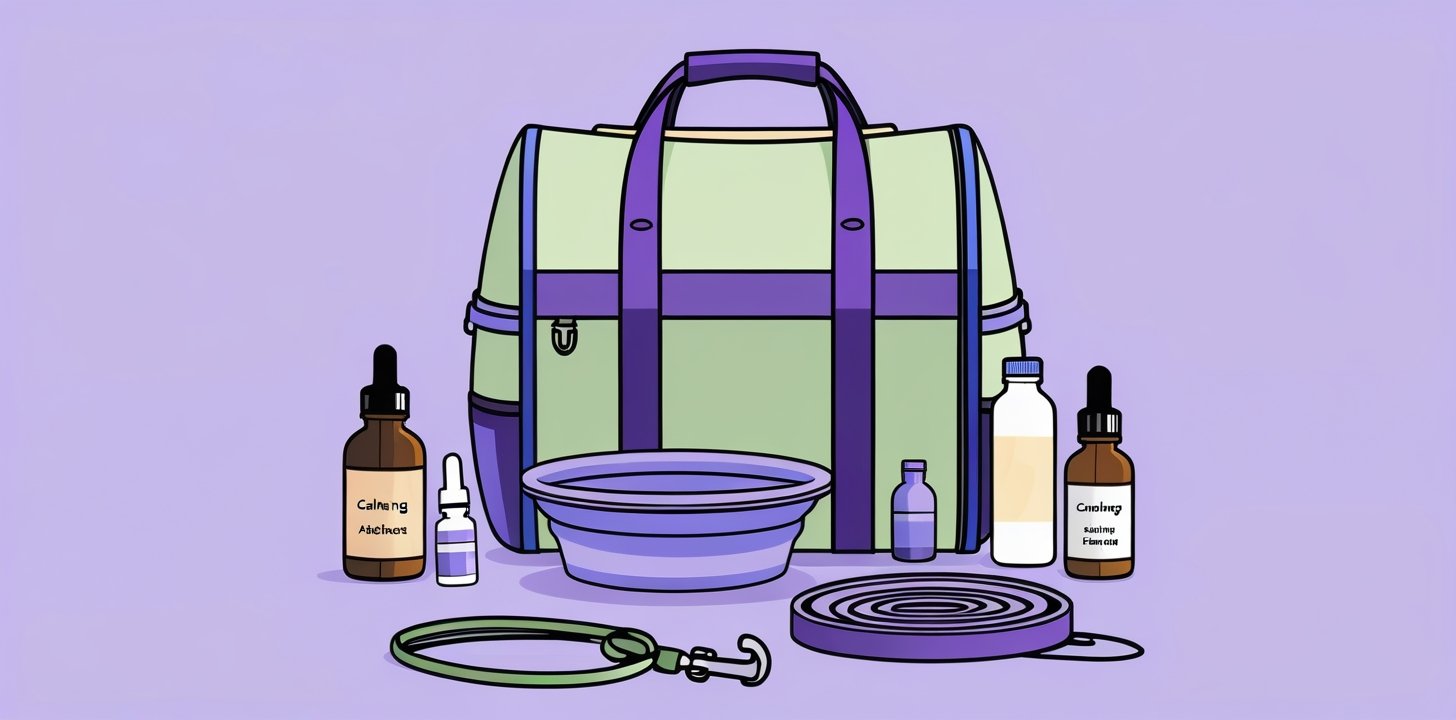
Natural and OTC options ($10-$45 per bottle):
- L-Theanine and magnesium blends ($10-$22): Support calm without sedation; minimal side effects
- Adaptil pheromone collar ($15-$25): Mimics natural calming scents; effective for 50-60% of anxious dogs; wear during all travel prep
- Melatonin 3-5mg ($10-$20 per 120 count): Light circadian support; safe at vet-approved doses
- Chamomile, valerian root, and passionflower blends ($13-$30): Mild relaxation; 30-60 minute onset
- CBD oil, vet-grade ($18-$40): Non-THC hemp; emerging research supports anxiety reduction in 40-60% of dogs; do not use human CBD products
- Thunder shirt or anxiety wrap ($25-$60, one-time): Gentle pressure wrap; studies show approximately 80% of dogs show reduced anxiety with compression wraps when introduced at least two weeks before travel
Prescription options ($20-$150 per course):
All prescription medications require veterinary approval. Dosing is weight-specific. Never adjust doses without consulting your vet.
- Trazodone: 5-10 mg/kg orally, 1-2 hours before travel. Increases serotonin; mild lethargy possible. Recommended by the American Veterinary Medical Association for travel anxiety.
- Alprazolam: 0.01-0.05 mg/kg, 1 hour before travel. Faster onset than trazodone; dependency risk with repeated use.
- Gabapentin: 10-30 mg/kg, 1-2 hours before travel. Especially effective for older dogs or those with chronic pain; drowsiness possible.
- Fluoxetine or sertraline (SSRIs): Require 4-6 weeks of daily dosing before travel for full effect. For chronic anxiety management, not acute travel situations.
Never give human Benadryl (diphenhydramine) without vet approval. The standard dose is approximately 1 mg per pound, but it is weight-specific and can cause paradoxical hyperactivity or dehydration in some dogs. It is also less effective than prescription options for true anxiety. Contact the ASPCA Animal Poison Control at 1-888-426-4435 if accidental overdose occurs.
Trial run rule: Test any new medication at home 1-2 weeks before travel at the exact time it will be given on travel day. Some dogs become more anxious when medicated; others sleep through the journey. Individual responses vary significantly.
Confirm your airline’s medication policy in writing at least 4 weeks before departure. Call Delta’s Pet Travel desk at 1-800-221-1212, United at 1-800-864-8331, or American at 1-800-433-7300. Do not rely on chatbots for policy confirmation.
Warning: Sedation is not recommended for air travel by the Australian Veterinary Association, IATA, or most US veterinarians. Sedation lowers blood pressure and respiratory rate during flight when your dog is inaccessible, compromises thermoregulation, and removes the dog’s ability to brace during turbulence. It masks anxiety without resolving it. Request non-sedating anxiolytics specifically when speaking with your vet.
Reward Calm, Ignore Anxiety: The Reinforcement Trap
Comforting a whining or panting dog reinforces the anxious behavior. Your dog learns that anxiety produces attention, which rewards the panic cycle. This is the most common mistake owners make during travel prep.

What to do instead:
- Ignore whining, pacing, and escape attempts during crate training
- Reward only relaxed body language and quiet behavior with treats and praise
- Use a neutral or cheerful tone, not a soothing voice (“it’s okay” in a soft tone communicates that anxiety is warranted)
- Advance to the next desensitization step only when your dog is calm at the current one
The one exception: medication trial runs should proceed on schedule regardless of mild anxiety during the test.
Cabin vs. Cargo: Two Different Anxiety Problems
Cabin and cargo travel create fundamentally different stressors. Your anxiety management strategy must match the travel mode.
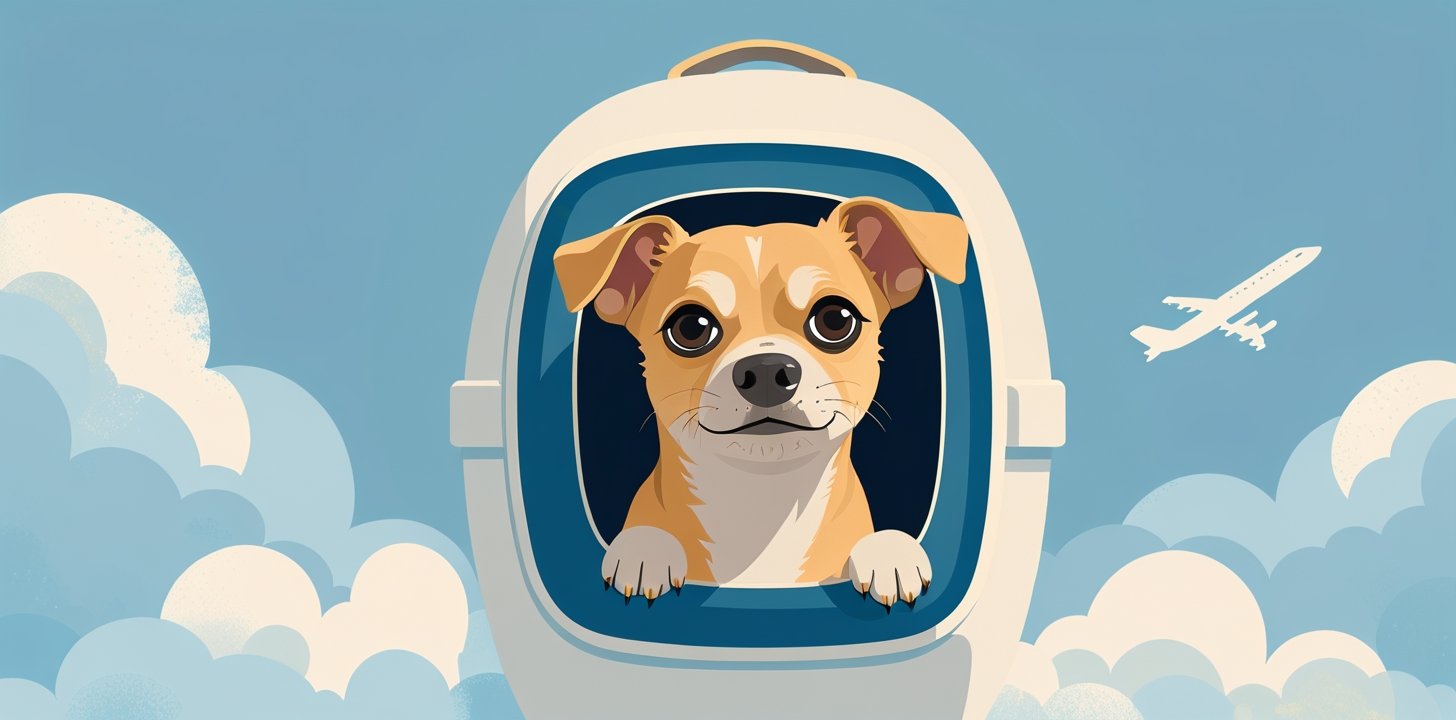
Cabin travel stressors:
- Tight under-seat carriers (typically 19″ x 13″ x 9″; confirm exact dimensions with your airline before purchasing a carrier)
- Sensory overload from announcements, crowd noise, and pressure changes
- No mid-flight access to the carrier once stowed under the seat
- Excessive barking or urination in the cabin may result in removal from the flight
Cargo hold stressors:
- Temperature variability (regulations require 60-75°F, but fluctuations occur; confirm climate-control protocols with your airline)
- Multiple handler transfers with no behavior training
- Complete owner separation amplifying isolation stress
- Louder ambient noise than the cabin
- Pre-flight confinement of 2-4 hours before the aircraft even departs
Brachycephalic breeds represented 50% of all in-flight pet deaths before cargo bans were implemented, with English Bulldogs alone accounting for 25 of 122 total deaths. Delta and United now ban all brachycephalic breeds from cargo entirely.
If your dog qualifies by size and weight for cabin travel, choose cabin over cargo. The proximity to you reduces separation anxiety even if the carrier is smaller.
Extend desensitization to 10 weeks for cargo travel, adding specific separation anxiety drills without owner proximity from weeks 5 onward.
Warning: American Airlines suspended general cargo pet programs on most domestic routes as of 2026. Verify current cargo availability directly with your airline before booking.
Breed-Specific Risks and Restrictions
Brachycephalic breeds face elevated anxiety during all travel because stress plus heat plus compressed facial structure equals respiratory distress. Anxiety exacerbates breathing difficulty, and sedation increases respiratory depression risk further.
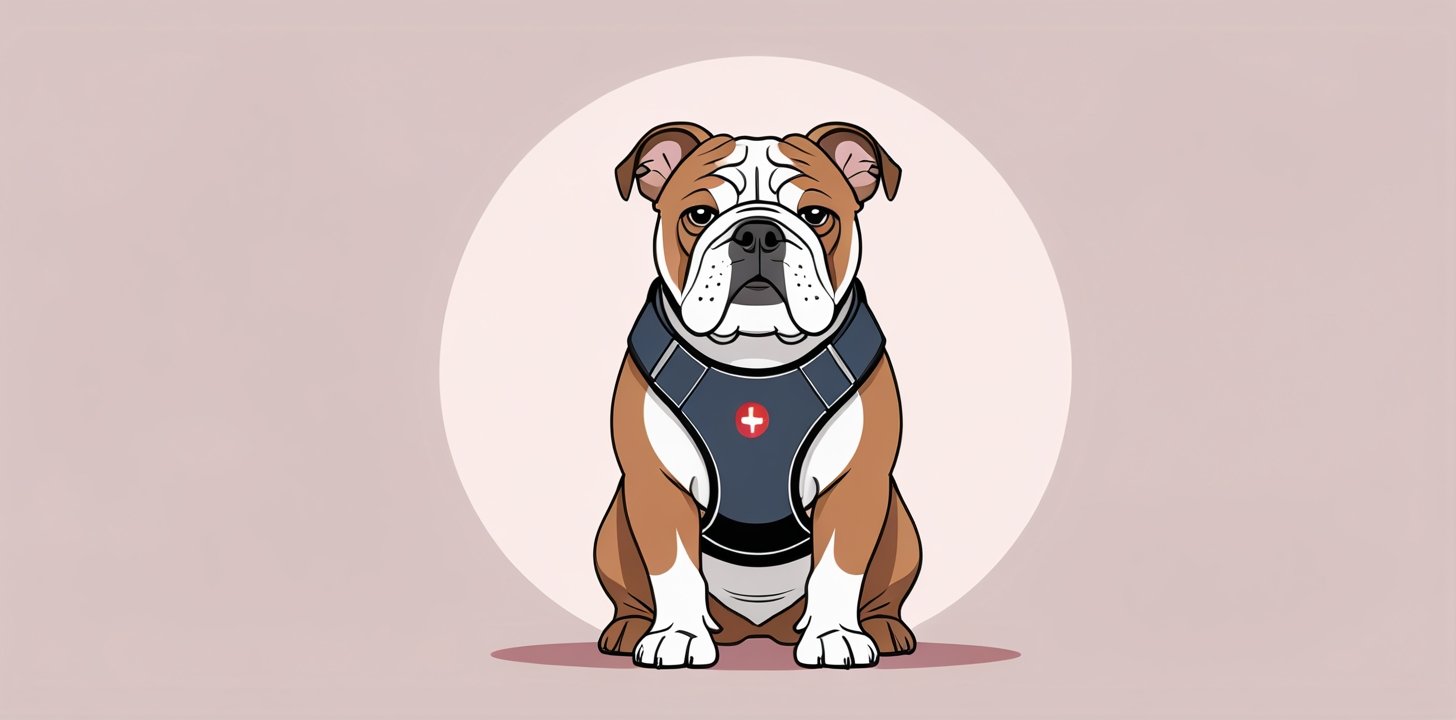
Brachycephalic breeds banned from cargo on most major airlines:
- English, French, and American Bulldogs
- Pugs
- Boston Terriers
- Boxers
- Shih Tzu
- Pekingese
- Japanese Chin
- Brussels Griffon
- Lhasa Apso
- Affenpinscher
- Chow Chow
- Dogue de Bordeaux
- Mastiffs (most types)
For brachycephalic dogs, cabin travel with pre-travel vet clearance is the only safe air travel option. Anxiety management is more critical for these breeds, not less, because their respiratory system is already compromised. If you’re wondering about specific breeds, check our guide on can pugs fly on planes or french bulldogs flying on planes. Discuss existing breathing issues with your vet before any travel.
Restricted “strong-jawed” breeds on United Airlines and some other carriers:
- American Pit Bull Terrier
- American Staffordshire Terrier
- Pit Bull variants
- Cane Corso
These breeds are often highly social and bond-focused. Separation anxiety in cargo is particularly severe. Cabin travel (if qualified by size) or driving are the preferred alternatives. For more information on breed restrictions, see our guide on which countries ban pit bulls.
Review the full USDA APHIS Pet Travel resource and FAA Pet Travel Guidelines for federal-level requirements that apply regardless of airline.
Cost Breakdown
| Category | Item | Cost Range | Notes |
|---|---|---|---|
| Vet Visits | Initial anxiety consultation | $100-$300 | Book at week 1, 6-8 weeks before travel |
| Prescription visit and dosing | $75-$150 | Required for all Rx anxiety meds | |
| Travel health certificate | $50-$100 | Required for international travel; valid 10 days domestic, 30 days international | |
| Carrier | Airline-approved hard-sided (small) | $40-$150 | One-time; verify dimensions with your airline |
| Soft-sided under-seat carrier | $30-$80 | Lighter; often preferred for cabin | |
| Bedding and padding | $20-$50 | Include worn clothing at no cost | |
| Natural Aids | OTC calming treats (30-180 count) | $10-$45 | Per-dose cost: $0.10-$0.40 |
| Adaptil pheromone collar | $15-$25 | 30-day wear; start during prep | |
| Melatonin supplement | $10-$20 | 120-count; 3-5mg tablets | |
| Thunder shirt or anxiety wrap | $25-$60 | One-time; reusable | |
| Prescription Meds | Trazodone (10-30 tablets) | $20-$80 | Use GoodRx for 20-40% savings |
| Alprazolam | $15-$60 | Short course typical (1-3 uses) | |
| Gabapentin | $20-$100 | Dosage-dependent | |
| SSRI (fluoxetine or sertraline) | $30-$150 | 4-6 weeks pre-travel; chronic anxiety only | |
| Training | Professional trainer (4-8 sessions) | $200-$1,200 | $50-$150 per hour; optional but effective |
| Veterinary behaviorist | $150-$300 per session | For severe anxiety; worth the cost | |
| Travel Fees | Cabin pet fee | $100-$250 per segment | Charged per flight leg on most US carriers |
| Cargo pet fee | $200-$500 per segment | Varies significantly by airline and route | |
| TOTAL: Mild anxiety (OTC) | $500-$1,200 | Assumes one-time carrier purchase | |
| TOTAL: Moderate anxiety (Rx + training) | $1,500-$2,500 | Includes trainer and medication trial | |
| TOTAL: Severe anxiety (specialist + Rx) | $2,000-$4,000+ | Veterinary behaviorist and extended medication |
Cost-saving tips: Buy generic Rx medications through GoodRx or veterinary discount programs for 20-40% savings. Purchase OTC calming treats in 120-count bulk packages to reduce per-dose cost from $0.40 to $0.10-$0.15. Use your own worn t-shirt instead of purchasing scent-based anxiety products.
What Goes Wrong: Specific Problems and Fixes
Starting crate training too late. If you begin with fewer than 3 weeks until travel, the crate becomes a fear trigger rather than a safe den. The fix: start at 6-8 weeks minimum. If you discover this with only 2-3 weeks remaining, drive instead of flying or postpone the trip.
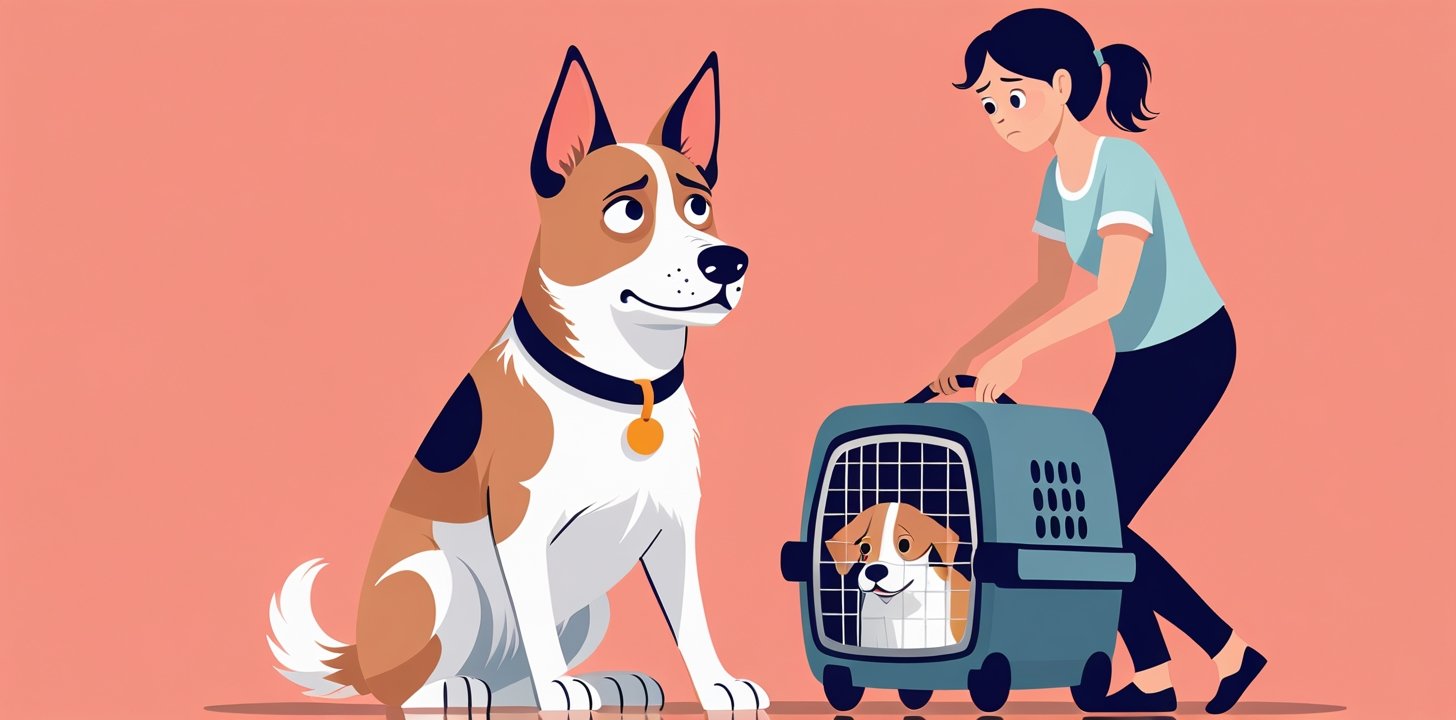
Forcing crate entry before positive association exists. One forced entry creates negative classical conditioning that can take months to reverse. The fix: voluntary entry only during all early phases. If your dog won’t enter voluntarily, you are not ready to advance.
Over-comforting anxious behavior. Soothing a whining dog teaches anxiety equals attention. Whining and panting increase over time. The fix: reward only calm, settled behavior. Use a neutral tone, not a soft reassuring voice.
Skipping the week-7 trial run. Problems surface on actual travel day with no time to adjust. A medication that works at home may cause vomiting in a moving vehicle due to the different stress context. The fix: conduct a full mock travel day 7 days before departure, including medication at exact travel timing.
Testing new medication for the first time on travel day. Paradoxical reactions (increased anxiety, vomiting, extreme sedation) go unmanaged mid-flight. The fix: trial every new Rx medication at home 1-2 weeks before travel at the exact time it will be given.
Using sedatives for air travel. Sedation lowers blood pressure and respiratory rate during flight when your dog is inaccessible. It masks anxiety without resolving it and can cause cardiovascular or respiratory compromise. The fix: request non-sedating anxiolytics explicitly. Ask your vet: “I need a non-sedating anxiety medication approved for air travel.”
Arriving with a health certificate dated more than 10 days before departure. You will be turned away at check-in. No exceptions, no refunds. The fix: schedule the vet appointment so the certificate is issued within 10 days of your departure date. For international travel, confirm the validity window with the destination country, as requirements vary.
Not confirming airline medication policy before booking. Some airlines restrict medicated pets. You arrive at the airport and are denied boarding. The fix: call your airline’s pet travel desk 4-6 weeks before departure and request written email confirmation of their medication policy.
The CDC updated pet importation requirements in 2024. If you are traveling internationally, verify current regulations at new cdc regulations for dogs before booking. Requirements change without notice.
Monitoring Stress Signals During Travel
Signs your dog needs intervention:
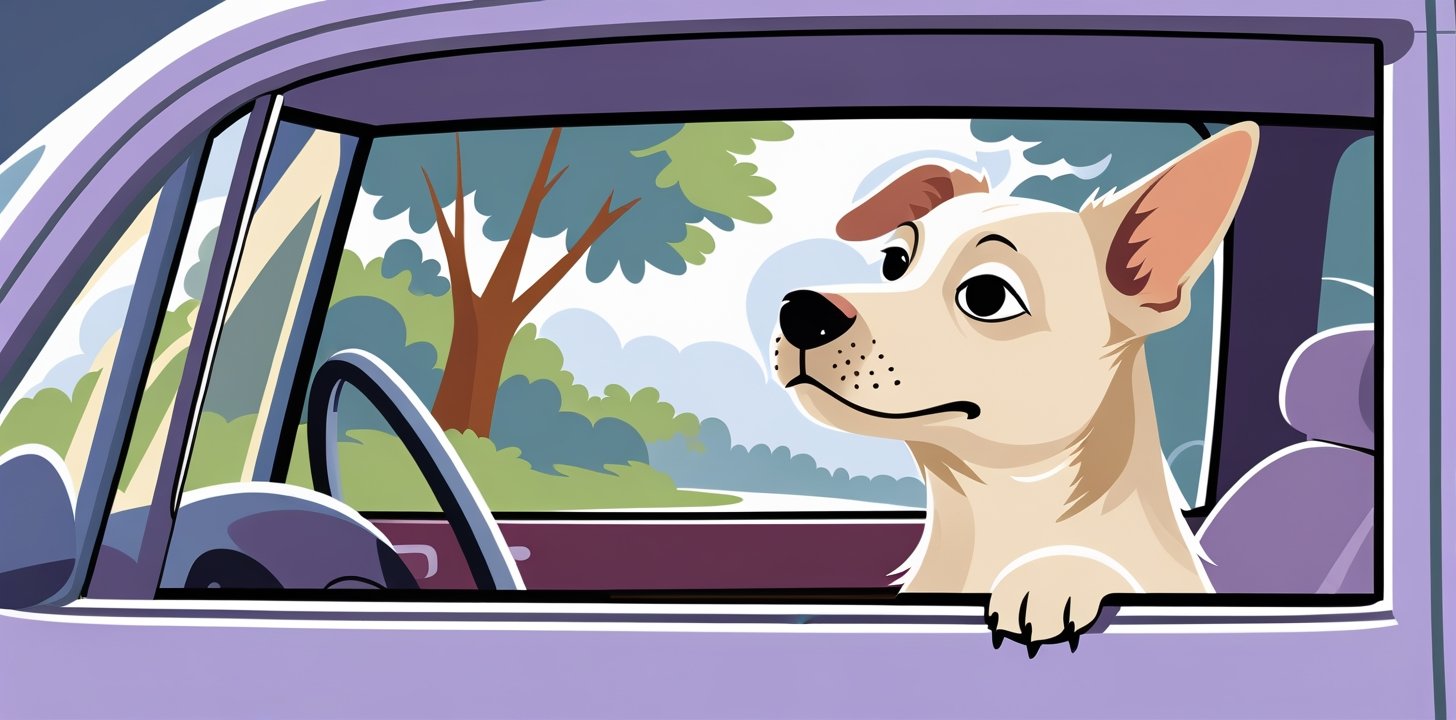
- Physiological: rapid panting, drooling, trembling, dilated pupils, repeated yawning
- Behavioral: whining, barking, pacing, escape attempts, refusing water
- GI distress: vomiting, diarrhea, nausea (common in anxious dogs during travel)
In-transit care:
- Food: Withhold food 2-3 hours before travel to reduce motion sickness. Offer a small meal upon arrival.
- Water: Offer water at rest stops every 15-30 minutes during car travel. Limit water in the final 2 hours before air travel to reduce in-flight bathroom needs.
- Car breaks: Stop every 2 hours for potty breaks.
- Temperature: Keep the crate out of direct sun during car travel. Cargo holds should maintain 60-75°F; confirm climate-control protocols with your airline before booking.
Safety by Travel Mode
Cabin air travel: Administer medication 1-2 hours before boarding so it takes effect during takeoff, which is the most stressful phase. You cannot access the carrier once it is stowed under the seat mid-flight. Excessive barking or urination in the cabin may result in removal from the flight. For more tips, see our guide on keeping dogs calm on flights.
Cargo hold transport: Most airlines restrict cargo pet transport from May through September due to heat risk. Book winter flights if cargo is required.
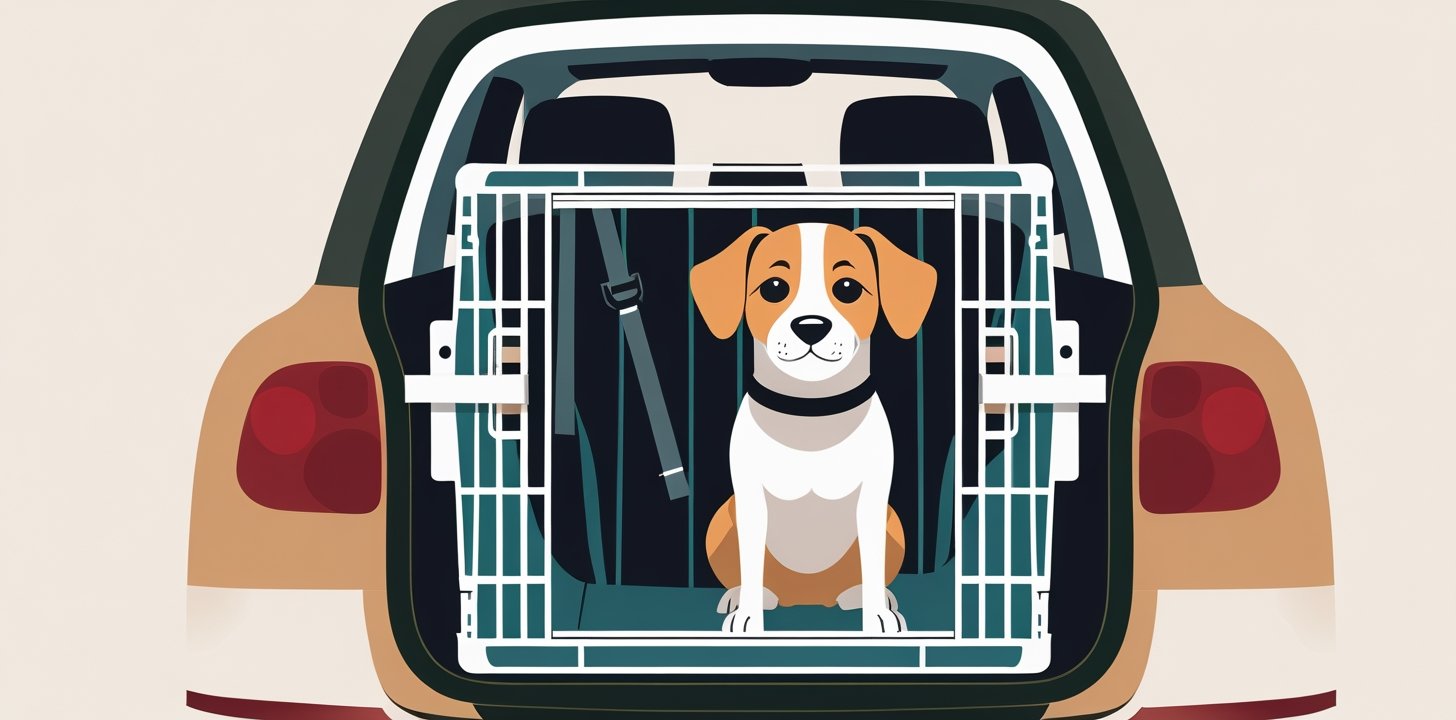
Car travel: Use a crash-tested harness or carrier to prevent injury from sudden stops. Administer anxiety medication 30-45 minutes before departure for car travel. Discuss anti-nausea medication with your vet if dog motion sickness is a concern.
Tip: Withhold food 2-3 hours before travel to reduce nausea. For car travel, keep the crate positioned so your dog can see out a window, which reduces motion sickness in many dogs.
Frequently Asked Questions
Can I give my dog Benadryl for travel anxiety?
Benadryl (diphenhydramine) can be used but only with vet approval. The standard dose is approximately 1 mg per pound, but it is weight-specific and must be confirmed by your vet for your dog’s exact weight. It can cause paradoxical excitement in some dogs and is less effective than prescription options for true anxiety. Never dose without veterinary guidance. Contact the ASPCA Animal Poison Control at 1-888-426-4435 if accidental overdose occurs.
How long before a flight should I give my dog calming treats?
Calming treats typically need 30-60 minutes to take effect. Give them 45-60 minutes before takeoff, accounting for boarding time. Never rely on treats alone for dogs with severe anxiety. If OTC treats show no effect after consistent use during weeks 3-4 of prep, consult your vet about prescription options.
Do thunder shirts actually work for dog travel anxiety?
Studies show approximately 80% of dogs show reduced anxiety with compression wraps [2]. They work best when paired with desensitization training, not as a standalone solution. Introduce the thunder shirt at least 2 weeks before travel so your dog associates it with calm rather than with the stress of travel day.
Should I sedate my dog for a long flight?
No. Sedation is not recommended by the Australian Veterinary Association, IATA, or most US veterinarians. It can cause breathing problems at altitude, compromises thermoregulation, and removes the dog’s ability to brace during turbulence. This risk is highest in brachycephalic breeds. Discuss non-sedating anxiolytics like Trazodone or Gabapentin with your vet instead.
What if my dog panics during the flight?
Stay calm. Dogs read your emotional state directly. Speak softly, place your hand near (not inside) the carrier, and use a low, steady voice. You cannot remove the carrier from under the seat during flight. For extreme distress, notify a flight attendant. This is why the week-7 trial run is critical: if your dog panics during the mock run, you still have time to adjust medication or reconsider the travel plan.
How do I know if my dog’s anxiety is severe enough for prescription medication?
If your dog shows excessive panting, drooling, vomiting, diarrhea, or complete immobilization during practice trips in weeks 3-4, consult your vet about prescription options. Trazodone (5-10 mg/kg) and Gabapentin (10-30 mg/kg) are commonly prescribed. Both require a vet visit for weight-specific dosing and a home trial 1-2 weeks before travel.
Disclaimer: This guide is for informational purposes only. Airline policies, health certificate requirements, breed restrictions, and government importation regulations change frequently. Always verify current requirements directly with your airline, your veterinarian, and relevant government agencies including USDA APHIS Pet Travel and the FAA before travel. The American Veterinary Medical Association provides updated guidance on pet travel safety.
Start tonight: place your carrier in the living room, toss three high-value treats inside, and let your dog investigate on their own terms. Book your vet consultation this week. Systematic preparation turns travel panic into calm. For more comprehensive travel preparation, check out our dog travel essentials guide. Safe journeys.