
Cooked sweet potato is safe for dogs in moderation, capped at 10% of daily calories, and delivers fiber, antioxidants, and key minerals. This guide covers what the research actually shows, how much to feed by weight, which commercial foods use it well, and where the superfood marketing falls apart.
Sweet Potato Nutritional Profile for Dogs
Cooked sweet potato provides 86 calories per 100g, with 2.7g fiber, 1.6g protein, and approximately 11,500 IU beta-carotene. Vitamin C comes in at 2.4mg per 100g, alongside 0.28mg B6, 337mg potassium, 0.259mg manganese, 38mg calcium, and under 0.2g fat. These figures are drawn from food composition databases and UC Davis veterinary research.
The beta-carotene number looks impressive until you understand canine metabolism. Dogs convert beta-carotene to vitamin A at only 10 to 30% efficiency, compared to 50% or higher in omnivores, per Green and Fascetti’s 2016 study published in the Scientific World Journal.

Unconverted beta-carotene still circulates in the bloodstream and provides antioxidant and immune-modulating benefits, but it does not reliably meet AAFCO’s 1,212 IU/kg vitamin A minimum for adult dog diets.
Commercial foods using sweet potato as a primary carbohydrate must add preformed retinyl acetate separately to hit that threshold.
Sweet potato earns its place as a fiber and mineral source. It is not a reliable vitamin A delivery system for dogs. Animal-sourced retinol does that job.
Key Takeaway: Key nutritional facts: 86 cal/100g cooked, 2.7g fiber (60% insoluble, 40% soluble), beta-carotene converted at 10 to 30% efficiency in dogs. AAFCO requires a minimum of 18% crude protein on a dry matter basis for adult dog maintenance and 1,212 IU/kg vitamin A. Sweet potato contributes to neither.
What the Science Says
AAFCO recognizes sweet potatoes as an acceptable carbohydrate and fiber source in compliant dog foods, though it regulates total nutrient content rather than individual ingredients. A 2024 collaborative review by Shastak and Pelletier, published in the journal Animals, confirmed that “substantial amounts of intact beta-carotene have been observed in the bloodstream of dogs following dietary supplementation, indicating a constrained conversion within the enterocytes.”
The American Kennel Club and Tufts Veterinary School both recognize sweet potato as a beneficial supplemental ingredient when properly prepared.
Studies have shown that sweet potatoes can help regulate digestion due to their high fiber content, though the effect depends on fiber type, dose, and individual dog tolerance. Current FDA guidelines for pet food safety emphasize the importance of properly prepared ingredients, and no FDA advisory specific to sweet potatoes in dog food exists.
Digestibility and Glycemic Response
Cooked sweet potato reaches 85 to 90% digestibility in dogs, comparable to rice, per University of Illinois digestibility research. Its glycemic index sits at approximately 54 to 63, lower than white rice at 70 or higher, but higher than pumpkin. For most healthy dogs, this is a non-issue. For diabetic dogs, it warrants veterinary guidance before feeding.
Cooking breaks down cell walls and raises digestibility significantly from raw sweet potato’s estimated 60%. Raw sweet potato also poses a choking and intestinal blockage risk regardless of piece size, a point of consensus across AKC, PetMD, and veterinary nutrition sources.
Warning: Diabetic dogs: Sweet potato’s moderate glycemic index can affect blood glucose. Get veterinary approval before adding it to the diet. Dogs with a history of pancreatitis should avoid high-carbohydrate additions entirely without specific veterinary guidance.
Fiber and Gut Health
Sweet potato delivers 2.7g of fiber per 100g cooked, split approximately 60% insoluble and 40% soluble. Insoluble fiber adds stool bulk; soluble fiber acts as a prebiotic. Exceeding 10% of daily caloric intake from fiber sources like sweet potato can cause gas, bloating, and loose stools.
Sweet potato is not a reliable constipation remedy on its own. Its insoluble fiber dominance means it can worsen constipation if water intake is insufficient. Pumpkin puree, which runs approximately 80% soluble fiber, is a better first choice for dogs with constipation. If you use sweet potato for digestive support, ensure your dog drinks at least 1 oz of water per pound of body weight daily.
Sweet Potato vs. Other Carbohydrate Sources
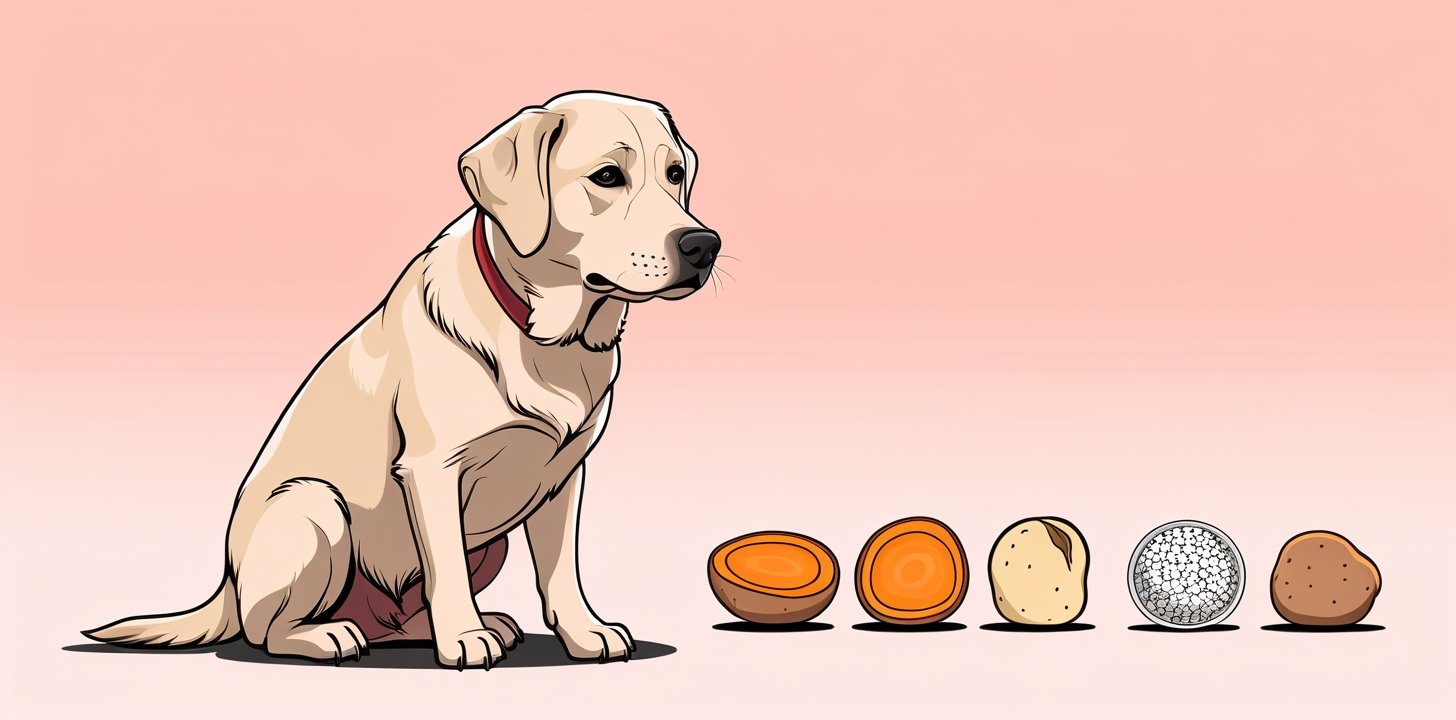
Sweet potato provides more beta-carotene than white potato by a factor of over 1,000 (11,500 IU vs. approximately 10 IU per 100g) and more fiber than white rice (2.7g vs. 0.6g per 100g). Neither sweet potato nor white potato is toxic to dogs when cooked plain.
The solanine concern that applies to white potatoes does not apply to sweet potatoes: solanine is a nightshade-specific compound, and sweet potatoes are not nightshades.
| Carb Source | Calories/100g | Fiber (g) | Glycemic Index | Digestibility in Dogs |
|---|---|---|---|---|
| Sweet potato (cooked) | 86 | 2.7 | 54 to 63 | 85 to 90% |
| White potato (cooked) | 77 | 2.2 | 70 to 80 | ~90% |
| White rice (cooked) | 130 | 0.6 | 70+ | ~95% |
| Peas (grain-free common sub) | 81 | 5.7 | 45 to 50 | 80 to 85% |
| Pumpkin (cooked) | 26 | 0.5 | ~75 | ~90% |
Sweet potato wins on antioxidant content and fiber quality over refined grains. It does not universally outperform all alternatives. WSAVA recommends rotating carbohydrate sources rather than relying on a single ingredient.
Tip: Rotate sweet potato with pumpkin or plain cooked oats to vary fiber types without overloading any single source. Pumpkin’s higher soluble fiber ratio makes it the better choice specifically for loose stools or constipation.
Feeding Guidelines and Portions
Treats and food additions, including sweet potato, should not exceed 10% of a dog’s daily caloric intake, per AAFCO and WSAVA guidelines. One cup of cooked sweet potato without skin contains approximately 215 calories. Use that as your ceiling reference when calculating portions.

| Dog Weight | Safe Portion (2 to 3x per week) | Approximate Calories |
|---|---|---|
| Up to 10 lbs | 1 tsp mashed | ~4 |
| 11 to 20 lbs | 1 to 2 tsp mashed | ~8 to 15 |
| 21 to 50 lbs | 1 to 2 tbsp | ~15 to 30 |
| 51 to 80 lbs | 2 to 3 tbsp | ~30 to 45 |
| 80+ lbs | Up to 1/4 cup | ~45 to 55 |
Portions are drawn from veterinary clinical guidance by Dr. Duncan Houston, BVSc, and cross-referenced against AAFCO’s 10% treat threshold.
Puppies should receive no more than 5% of daily calories from sweet potato. AAFCO requires 1.0 to 2.5% calcium and 0.8 to 1.6% phosphorus for growth-stage dogs. Sweet potato provides only 38mg calcium per 100g (approximately 0.038%), making it nutritionally inadequate as a bulk carbohydrate for puppies. Use it as an occasional treat only.
Senior dogs (7+ years) can follow adult portions, but lower metabolic rates mean even modest additions can contribute to weight gain. Cap at 5% of daily calories for sedentary seniors.
Brachycephalic breeds (Bulldogs, Pugs, French Bulldogs) face elevated choking risk. Mash only, no chunks.
Large and giant breeds are at higher risk for gastric dilatation-volvulus if food is gulped. Introduce slowly and serve mashed.
How to Prepare Sweet Potato for Dogs
Preparation method affects both safety and nutrient availability. Ranked from safest to least preferred:
- Mashed: Boil chunks until soft, remove skin after cooling, mash with a fork. Safest for all sizes and ages.
- Pureed: Blend boiled sweet potato smooth. Ideal for seniors or dogs with dental issues.
- Pea-sized pieces: Boil until very soft, cut small, verify soft consistency before serving.
- Baked: Acceptable but produces a drier texture. Increase water intake to offset constipation risk.
- Never: Raw, frozen solid, seasoned, or prepared with butter, oil, sugar, or any human recipe ingredients.
Warning: Never feed sweet potato fries, casserole, or any human preparation. Sweet potato casserole contains butter, sugar, marshmallows, and sometimes nutmeg, all of which are harmful to dogs. Fries add salt, oil, and often garlic. Plain cooked sweet potato only.
Introducing Sweet Potato: A 3-Week Protocol
- Week 1: Feed a single small dose (1 tsp for dogs under 20 lbs, 1 tbsp for larger dogs) as a standalone treat, not mixed into kibble. Wait 24 to 48 hours and check for vomiting, diarrhea, gas, or itching.
- Week 2: If tolerated, double the portion. Maintain 1 to 2 times per week frequency. Continue monitoring stool consistency and skin condition.
- Week 3 onward: Establish a 2 to 3 times per week routine at the target portion. Mix into regular food if well tolerated.
Potential Risks and When to Stop
Most healthy dogs tolerate sweet potato without issue. Watch for these signs after introduction:

- 0 to 4 hours: Vomiting, excessive drooling, difficulty swallowing. Call your vet.
- 4 to 24 hours: Diarrhea, constipation, gas, bloating, appetite loss. Pause feeding and monitor.
- 24 to 72 hours: Itching (especially ears and paws), hives, facial swelling. Discuss with your vet. True sweet potato allergies affect fewer than 1% of food-allergic dogs, but intolerance is possible.
- Week 1 onward: Persistent stool changes beyond 3 days, lethargy, or weight loss. Discontinue and consult your vet.
Stop feeding sweet potato and consult your vet if: diarrhea lasts more than 24 hours after pausing, any choking or swallowing difficulty occurs, or skin changes appear within the first week.
The oxalate concern circulating online is overstated for most dogs. Sweet potato does contain oxalates, but at levels that pose meaningful risk only to dogs with a diagnosed history of calcium oxalate kidney stones. If your dog has that history, discuss with your vet before adding sweet potato.
Sweet Potato in Commercial Dog Foods
AAFCO-compliant dog foods using sweet potato as a carbohydrate source must still include preformed vitamin A (retinyl acetate) to meet the 1,212 IU/kg minimum, because beta-carotene conversion in dogs is too unreliable to satisfy that requirement alone.
Processing concentrates nutrients in kibble but degrades heat-sensitive vitamins, particularly vitamin C. Beta-carotene and fiber remain largely stable through standard kibble manufacturing.

| Product | Protein % | Fat % | AAFCO Status | Price/lb | Notes |
|---|---|---|---|---|---|
| Merrick Grain-Free Chicken + Sweet Potato | 34% | 15% | Feeding trial | ~$4.20 | Named whole chicken first; sweet potato secondary carb; USA-made |
| Wellness Core Grain-Free Chicken + Sweet Potato | 32% | 12% | Formulated | ~$3.40 | High protein; pea-heavy formula |
| Natural Balance Salmon + Sweet Potato | 20% | 10% | Formulated | ~$2.50 | Omega-3 rich; pea-heavy |
| Canidae Grain-Free All Life Stages | 24% | 14% | Formulated | ~$2.10 | Budget-friendly; chicken meal not whole chicken |
| Hill’s Science Diet Adult Light | 18% | 9% | Feeding trial | ~$1.80 | Vet-recommended weight management; corn-based |
| Stella and Chewy’s Freeze-Dried Beef + Sweet Potato | 40% | 20% | Formulated | ~$8 to $12 | Minimal processing; raw handling required; high fat |
Feeding trial-tested AAFCO status is meaningfully stronger than “formulated to meet” AAFCO profiles. Feeding trials confirm real-world digestibility and palatability. When comparing products at similar price points, prioritize feeding trial status over marketing language about ingredients.
One persistent marketing claim to ignore: “Grain-free with sweet potato for sensitive stomachs.” Grain-free does not mean low-carbohydrate. Many grain-free formulas replace grains with peas and legumes at higher volumes than the grains they replaced, which may worsen digestive sensitivity in some dogs. Sweet potato’s carbohydrate content (approximately 20g per 100g cooked) is comparable to grains.
Common Myths, Corrected
Key Takeaway: Myth: Sweet potatoes provide vitamin A for dogs. Reality: Dogs convert beta-carotene to vitamin A at only 10 to 30% efficiency (Green and Fascetti, Scientific World Journal, 2016). Commercial foods using sweet potato still add synthetic retinyl acetate to meet AAFCO’s vitamin A minimum. “Rich in vitamin A” on a pet food label refers to beta-carotene content, not bioavailable retinol.
Key Takeaway: Myth: Sweet potatoes are toxic like white potatoes. Reality: Solanine is a nightshade compound. Sweet potatoes are not nightshades and contain no significant solanine. Neither sweet potato nor white potato is toxic to dogs when cooked plain.
Key Takeaway: Myth: Raw sweet potato is fine if cut small enough. Reality: Raw texture, not piece size, is the hazard. Raw sweet potato is hard and fibrous; even small pieces resist digestion and can cause intestinal obstruction. Cooking is required.
Making Sweet Potato Treats at Home
Home preparation is straightforward and costs $0.50 to $1.00 per pound at bulk pricing, compared to $1.80 to $4.20 per pound for commercial kibble containing sweet potato.
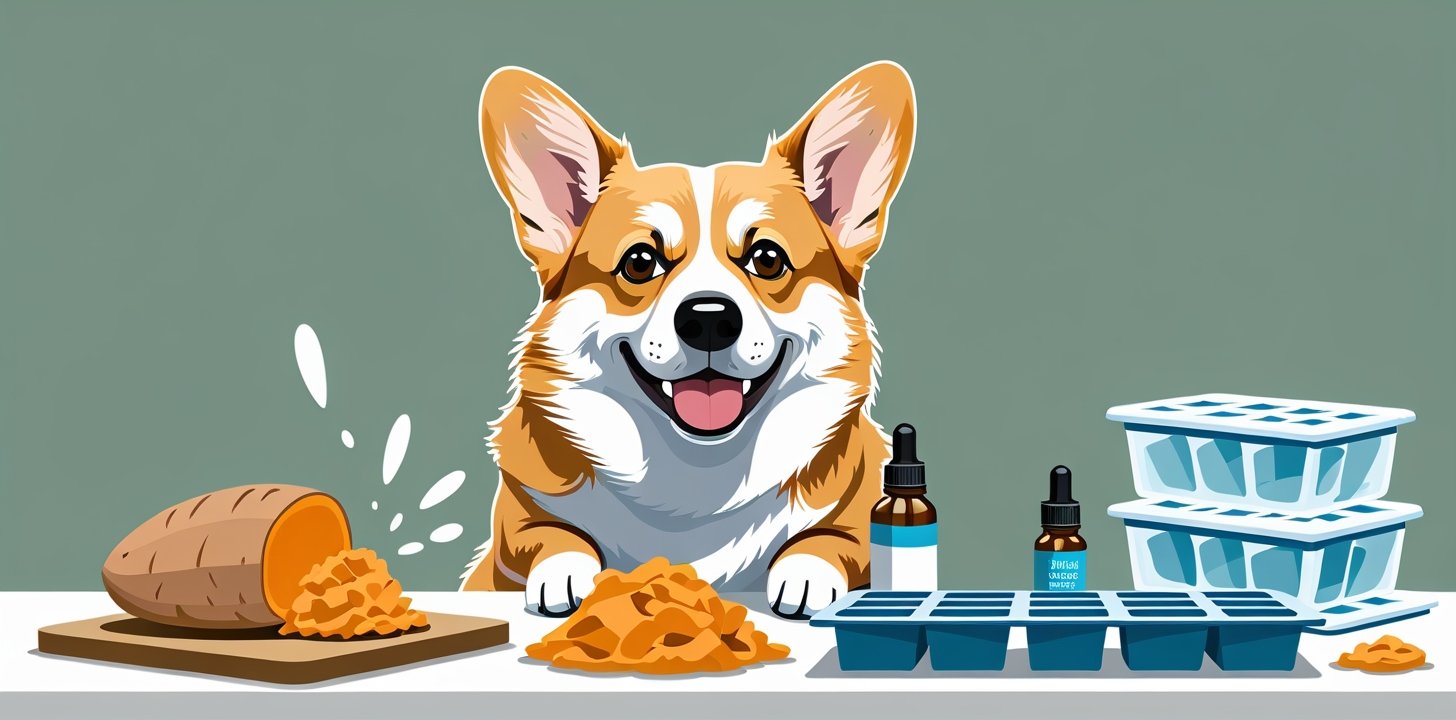
- Peel and cube one medium sweet potato.
- Boil for 20 minutes until fork-tender.
- For soft treats: mash or puree and portion into an ice cube tray. Freeze up to 3 months.
- For chews: slice into 1/4-inch rounds and dehydrate at 135 degrees F for 6 to 8 hours.
- Refrigerate fresh portions for up to 1 week.
Frozen sweet potato retains most nutrients. Vitamin C degrades approximately 10 to 15% during freezing; beta-carotene and fiber remain stable. Thaw completely before serving. Frozen chunks are a choking hazard.
Tip: Add a small amount of fish oil (approximately 1 tsp per cup of sweet potato) before serving. Fat improves beta-carotene absorption, and the omega-3s add independent benefit for skin and coat health.
The Bottom Line
Cooked sweet potato is a legitimate, research-supported addition to most dogs’ diets. It delivers fiber, antioxidants, and key minerals at low cost. It is not a superfood, not a vitamin A source, and not a substitute for a nutritionally complete diet. Keep it under 10% of daily calories, cook it plain, and introduce it gradually. That is the whole story.
What to Do Next
Start here: Boil one small sweet potato, mash it plain, and offer 1 tsp (small dog) or 1 tbsp (medium to large dog) as a standalone treat. Wait 48 hours before the next serving.
Look for this on labels: When buying commercial food, check that sweet potato appears after a named meat protein in the ingredient list. Confirm the AAFCO statement specifies feeding trials, not just “formulated to meet.” Verify added vitamin A (retinyl acetate or retinyl palmitate) is present in the supplement panel. For more guidance on reading dog food labels, check our comprehensive ingredient analysis guide.
Avoid these: Raw sweet potato in any form, any human preparation including fries or casserole, and any product claiming sweet potato alone meets vitamin A requirements.
Consult your vet before adding sweet potato if your dog has diagnosed diabetes, a history of pancreatitis, calcium oxalate kidney stones, inflammatory bowel disease, or is currently on a veterinarian-prescribed weight management plan.
This article is for informational purposes only and does not constitute veterinary medical advice. Consult a licensed veterinarian before making significant changes to your dog’s diet, particularly if your dog has an existing health condition.
FAQ
Can dogs eat sweet potato every day?
Yes, in appropriate portions, but 2 to 3 times per week is preferable to daily feeding. Daily feeding at the 10% calorie cap is not harmful for healthy dogs, but rotating carbohydrate sources (pumpkin, oats, sweet potato) provides broader fiber variety and reduces the risk of overloading any single nutrient. Keep total sweet potato contribution under 10% of daily calories regardless of frequency.
What nutrients do sweet potatoes provide for dogs?
Sweet potatoes provide 2.7g fiber per 100g, approximately 11,500 IU beta-carotene, 2.4mg vitamin C, 0.28mg B6, 337mg potassium, and 38mg calcium. Beta-carotene converts to vitamin A at only 10 to 30% efficiency in dogs, so sweet potato is not a reliable vitamin A source. Its primary value is fiber, antioxidants, and minerals.
Should sweet potatoes be cooked for dogs?
Yes. Cooking is required, not optional. Raw sweet potato is hard and fibrous, resists digestion, and can cause intestinal obstruction regardless of piece size. Cooking also improves beta-carotene bioavailability by breaking down cell walls. Boil or bake plain, no seasonings, no oil, no butter.
Are there any risks to feeding dogs sweet potatoes?
Overfeeding causes gas, bloating, and diarrhea. Raw sweet potato poses choking and blockage risk. Diabetic dogs need veterinary approval due to moderate glycemic index (54 to 63). True allergies are rare, affecting fewer than 1% of food-allergic dogs, but introduce gradually and monitor for itching, ear infections, or loose stools over the first week.
What are the best ways to prepare sweet potatoes for dogs?
Boil until soft and mash or puree. No skin, no seasonings, no added fat beyond a small amount of fish oil for beta-carotene absorption. Baking is acceptable but produces a drier result that increases constipation risk if water intake is low. Never serve raw, frozen solid, or in any human recipe preparation.
Is sweet potato better than white potato for dogs?
Sweet potato offers more beta-carotene (11,500 IU vs. approximately 10 IU per 100g) and slightly more fiber (2.7g vs. 2.2g), but both are nutritionally adequate when cooked plain. White potato has a higher glycemic index (70 to 80 vs. 54 to 63), making sweet potato marginally preferable for dogs with blood sugar concerns. Neither is toxic when cooked.
Do sweet potatoes cause heart problems in dogs?
No direct link between sweet potato and canine dilated cardiomyopathy (DCM) has been established. The FDA’s DCM investigation focused on grain-free diets high in legumes (peas, lentils, chickpeas), not sweet potato specifically. Sweet potato is a carbohydrate source, not a legume, and has not been identified as a contributing factor in any DCM case reports.