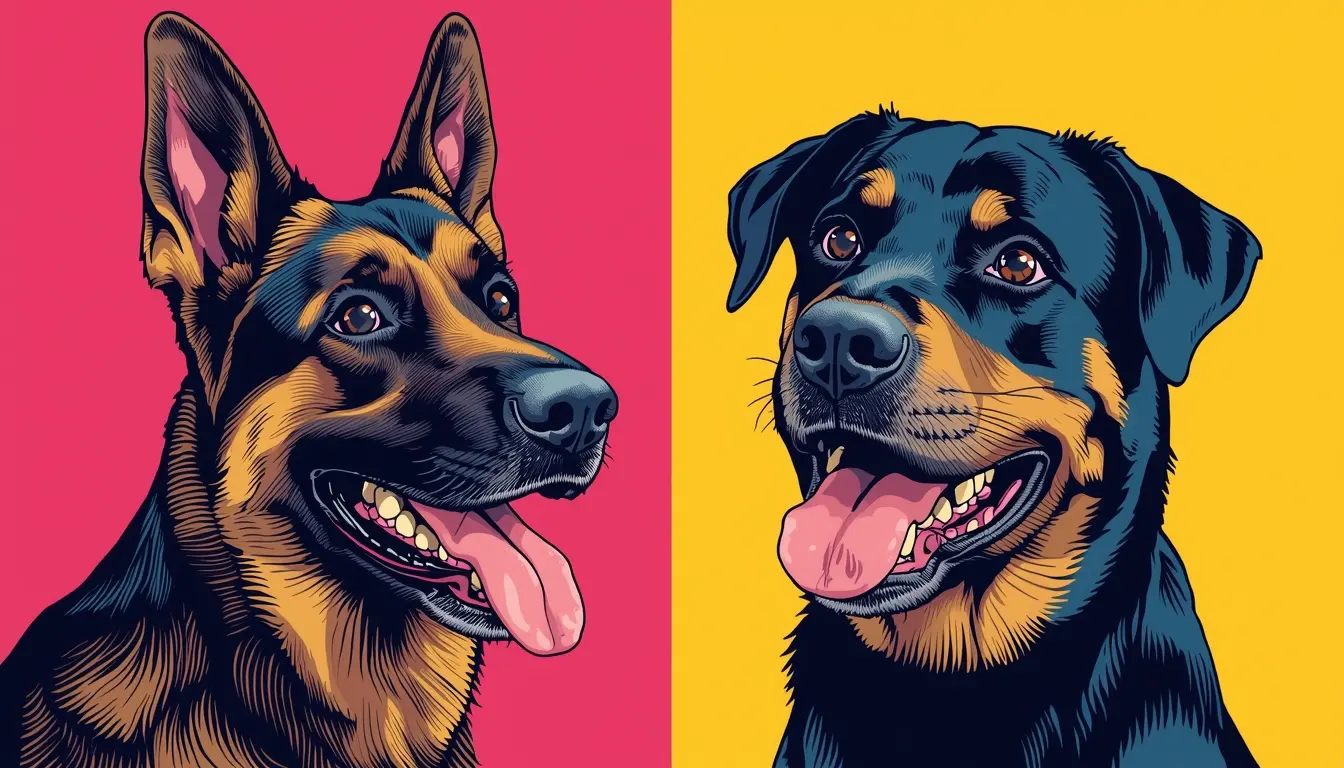
Ready to referee the ultimate battle between two dogs who think they’re lap dogs but forgot to check their size? Welcome to the German Shepherd vs Rottweiler showdown, where both competitors are convinced that your lap is the perfect throne for their 90-pound frames!
These two gentle giants have serious reputations as guard dogs, but here’s the secret: they’re both just oversized teddy bears who happen to look intimidating. Think of it as choosing between a canine cop who takes their job way too seriously and a bouncer with the heart of a marshmallow.
Let’s break down this tail-wagging competition and see which misunderstood muscleman wins your heart!
The “I’m Totally a Lap Dog” Championship
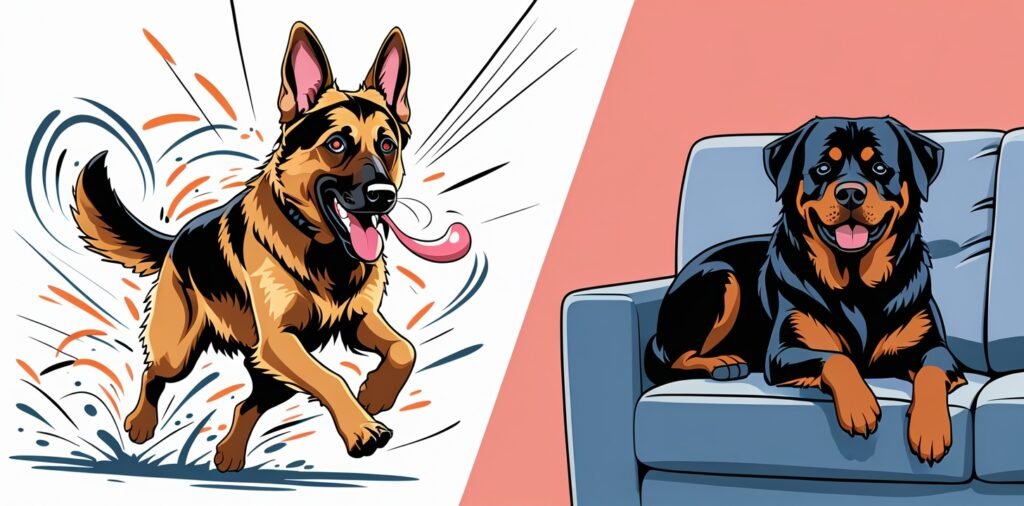
Both the German Shepherd and Rottweiler suffer from a serious case of size denial. They genuinely believe they’re pocket-sized pups who belong curled up on your lap, preferably while you’re trying to work or eat dinner.

German Shepherd: 50-90 pounds of pure “but I’m smol” energy
Rottweiler: 80-135 pounds of gentle pressure
German Shepherds will attempt to become one with your body on the couch, at least pretending to be subtle about their lap invasion. Rottweilers just plop down like they’re claiming territory, and good luck explaining to your 120-pound Rottie that physics exists.
Stranger Danger Detection Skills
German Shepherds were literally bred to be suspicious professionals. These pups can sniff out trouble from three zip codes away and will alert you to every delivery person, squirrel, and rogue leaf that dares approach your property.
Originally bred in 1899 for herding sheep, they’ve upgraded to herding your entire household with military precision. They’re the ultimate “Who goes there?” dogs, combining intelligence with a work ethic that would make overachievers jealous.
Rottweilers, descended from Roman drover dogs, take a more “let me investigate this human with my entire face” approach. They’re protective, sure, but they’re also curious goofballs who might befriend the burglar before remembering they’re supposed to be intimidating.
Family Teddy Bear Factor
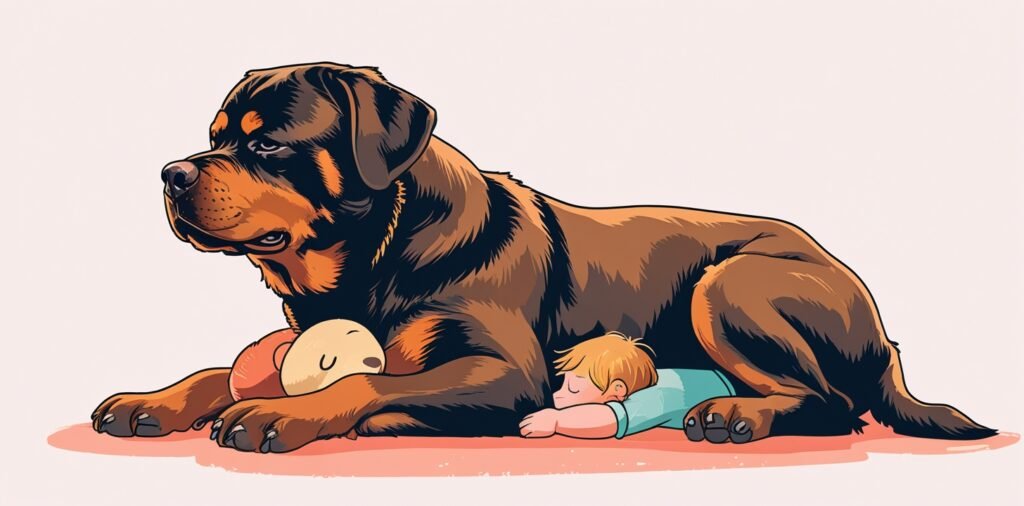
Here’s where the Rottweiler’s secret identity gets exposed. Beneath that muscular exterior beats the heart of the world’s gentlest giant, especially with kids.
Rottweilers are famously patient with children, often becoming their furry bodyguards and nap buddies. They seem to understand that tiny humans require extra gentleness, even if that “gentle” love tap could still accidentally relocate furniture.
German Shepherds are also excellent with properly socialized kids, but they approach family life with more seriousness. They’re the protective older sibling type—loving but always on duty, always watching, always ready to herd the toddler away from danger.
Both breeds are paws-itively amazing with children when raised right, but Rottweilers edge ahead with their “I’m basically a 100-pound therapy dog” energy.
Training: Teacher’s Pet Edition
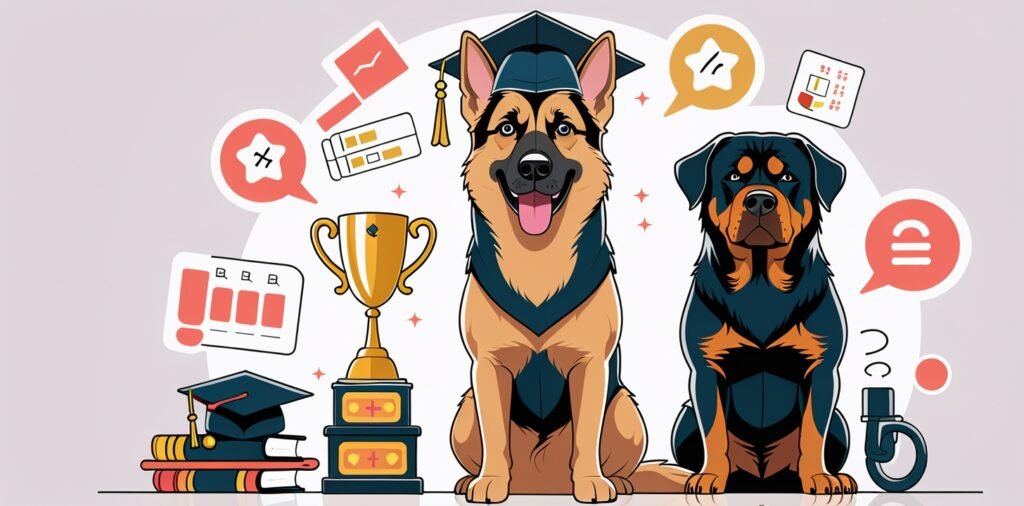
German Shepherds are the straight-A students of the dog world. They live to please, learn faster than you can say “sit,” and will probably master your entire training curriculum before you finish reading the manual.
These tail-ented overachievers need jobs to feel fulfilled. Police work, search and rescue, service dog duties—German Shepherds excel at everything because they’re basically furry honor students with separation anxiety about disappointing you.
Rottweilers are equally intelligent but approach training with a “what’s in it for me?” attitude. They’re not stubborn exactly—they just need to understand the point before committing. Think of them as the smart kids who question why they need to show their work in math class.
Exercise Needs: The Zoomies Scale
German Shepherds need jobs, hobbies, side hustles, and possibly a LinkedIn profile. These high-energy working dogs require serious mental and physical stimulation—think 1-2 hours of exercise daily, plus puzzle toys, training sessions, and maybe a part-time career.
Skip their exercise and you’ll discover what a bored German Shepherd can do to your couch. Spoiler: it’s not pretty.
Rottweilers are surprisingly moderate in the exercise department. Sure, they need daily walks and playtime (30-60 minutes), but they’re also happy to chill on the couch afterward. They’re more “work hard, nap harder” types.
Grooming: The Fur-pocalypse Factor
Let’s talk about the elephant in the room. Or should we say, the German Shepherd in the room, because these pups shed year-round like it’s their job.
German Shepherds have a double coat that explodes twice yearly during “blowing season,” but honestly, they shed constantly. You’ll find fur in your coffee, your car, your dreams. Invest in a good vacuum and accept that black clothing is now a lifestyle choice.
Rottweilers also have double coats but shed mainly during spring and fall. The rest of the year? Relatively manageable! Their shorter coat means less fur tumbleweeds rolling through your house like doggy-themed Western movies.
Health and Lifespan: The Long Game
German Shepherds typically live 9-13 years, while Rottweilers clock in at 8-10 years. Both breeds face similar large-dog health challenges, but with different specialties in the “things that might go wrong” department.
German Shepherds are prone to hip dysplasia (thanks, sloped back breeding), bloat, and degenerative myelopathy. Rottweilers battle hip and elbow dysplasia, heart conditions, and cancer risks. Their shorter lifespan is partly due to their larger size—the gentle giant curse strikes again.
The “Intimidation Factor” Reality Check
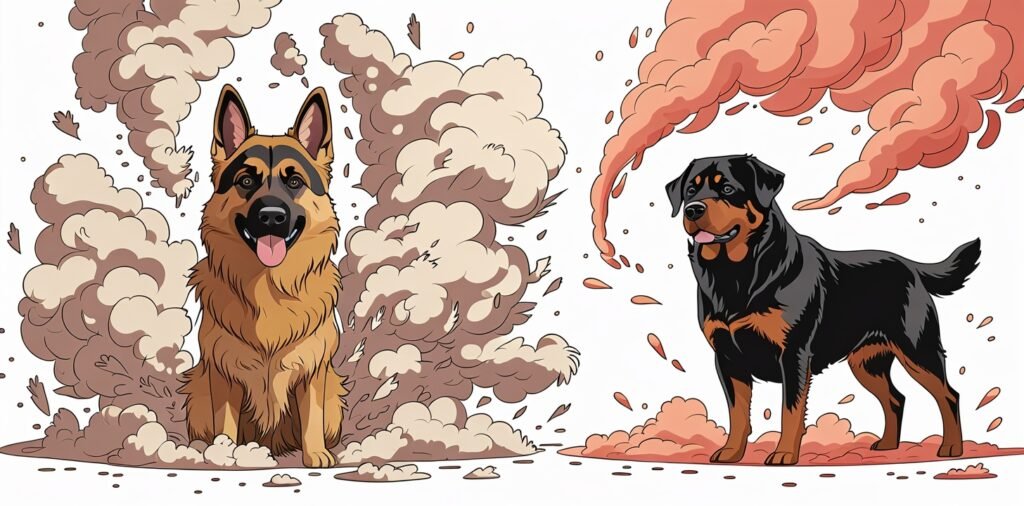
Here’s the hilarious truth: both breeds look scary to people who don’t know them, but they’re basically oversized love bugs wearing tough-guy costumes.
German Shepherds have that police dog reputation working overtime. One look at those alert ears and intense gaze, and strangers assume you’re training a furry security system. In reality, your German Shepherd is probably just intensely focused on whether you’re going to share that sandwich.
Rottweilers get the “scary movie dog” treatment thanks to their muscular build and deep bark. People cross the street, clutch their purses, and generally act like you’re walking a velociraptor. Meanwhile, your Rottie is wondering if those strangers have treats and why aren’t they petting the good dog?
Both breeds make excellent deterrents for would-be troublemakers, but the reality is they’re more likely to lick an intruder to death than actually attack. Proper socialization is key to ensuring these gentle giants don’t develop actual aggression issues.
Cost of Ownership: The Financial Fur-cast
Let’s talk money, because these big babies come with big-dog budgets.
German Shepherd: $500-$3,000 from reputable breeders
Rottweiler: $850-$4,000 depending on lineage
Monthly expenses (both): $100-$200 for food, healthcare, and destroyed toys
Vet bills can get spicy for both breeds. Hip dysplasia surgery? $1,500-$6,000 per hip. Bloat emergency? $2,000-$5,000. These aren’t worst-case scenarios—they’re real possibilities that responsible owners need to budget for.
Over their lifetime, expect to invest $15,000-$30,000+ for either breed. That’s a lot of kibble, but can you really put a price on unconditional love and free home security?
The Social Butterfly vs. One-Person Wonder Debate
German Shepherds often bond intensely with one person while remaining polite to the rest of the family. They’re not unfriendly—they just have favorites, and they’re not subtle about it. Your German Shepherd will literally follow their chosen human from room to room like a furry shadow.
Rottweilers tend to be more democratic with their affection, spreading the love across the whole family. They’re still protective and loyal, but they’re less likely to play favorites. Everyone gets Rottie snuggles, whether they want 120 pounds of dog on their lap or not!
Choose Your Champion: The Final Verdict
So which gentle giant wins this doggone competition? Plot twist: they both do, because choosing between a German Shepherd and Rottweiler is like choosing between two different flavors of awesome.
Pick a German Shepherd if you want:
- An eager-to-please overachiever who excels at training
- 24/7 alertness and intense loyalty to one person
- A high-energy partner for active lifestyles
- A dog who needs a job and loves having one
Choose a Rottweiler if you want:
- A gentle giant who’s amazing with kids
- Moderate exercise needs and serious couch potato potential
- Less aggressive shedding (relatively speaking)
- A protective but laid-back companion who loves the whole family
The real question isn’t which breed is better. It’s which gentle giant’s personality matches your lifestyle, energy level, and tolerance for being used as furniture. Either way, you’re getting a loyal, loving, hilariously size-confused best friend who’ll protect your family and steal your heart.
Just remember: whether you choose the Canine Cop or the Gentle Giant, you’re committing to a decade-plus of unconditional love, professional-grade cuddles, and explaining to strangers that yes, your “scary” dog really is that sweet. And honestly? That sounds pretty paws-itively perfect to us!