


If you’ve ever stood in the dog food aisle comparing salmon and chicken formulas, you’ve probably wondered which protein actually delivers better nutrition for your dog.
Marketing claims shout “premium omega-3s!” and “lean protein power!” but what do the ingredient labels and nutritional data actually tell us?
This guide compares salmon vs chicken for dogs based on real nutritional profiles, digestibility rates, allergy considerations, and what you’ll actually pay per gram of usable protein. You’ll learn which protein suits your specific dog and when rotation between both makes the most sense.
Salmon vs Chicken: Quick Comparison
Chicken: 25% | Salmon: 22%
Salmon costs 30-50% more
Both exceed 90%
Nutritional Profile Breakdown: Salmon vs Chicken
Both salmon and chicken qualify as complete proteins for dogs, meaning they contain all essential amino acids. According to AAFCO standards, adult dogs require a minimum of 18% protein content in their diet for maintenance, and both protein sources easily exceed this threshold when used as primary ingredients.

The actual composition of these proteins differs significantly in ways that matter for your dog’s health.
Protein Content and Amino Acid Profiles
Raw chicken delivers approximately 25% protein per 100 grams, slightly edging out salmon at around 22% protein. This difference reflects chicken’s leaner muscle tissue composition compared to salmon’s higher fat content.
Dogs require ten essential amino acids: arginine, histidine, isoleucine, leucine, lysine, methionine, phenylalanine, threonine, tryptophan, and valine.
Both proteins provide these, but in different ratios. Chicken offers particularly high levels of leucine and lysine, which support muscle protein synthesis, making it slightly superior for muscle building in active or working dogs.
Salmon provides excellent methionine and cysteine levels, sulfur-containing amino acids that support skin and coat health. The bioavailability of these amino acids in salmon approaches 90% digestibility, particularly in hydrolyzed salmon protein forms where digestibility can exceed 90% according to research published in the Journal of Animal Science.
Fat Content and Omega Fatty Acids
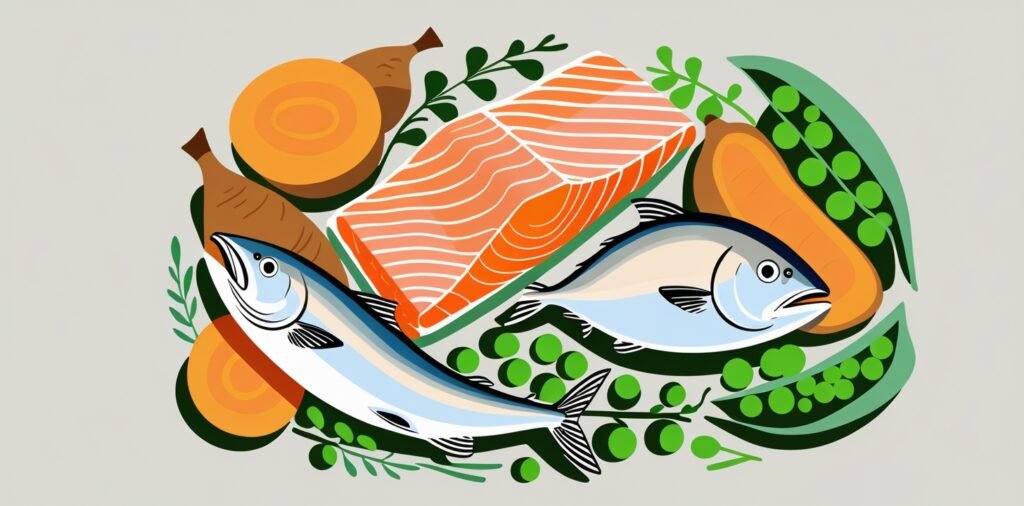
This is where salmon pulls decisively ahead. Raw salmon contains approximately 12% fat compared to chicken’s 3%, and the type of fat matters enormously.
Salmon delivers substantial omega-3 fatty acids, specifically EPA (eicosapentaenoic acid) and DHA (docosahexaenoic acid). These long-chain omega-3s provide anti-inflammatory benefits that veterinary nutritionists consistently recommend for dogs with joint issues, skin conditions, or inflammatory bowel disease. Salmon contains 25-30% more omega-3 fatty acids than chicken on average.
Chicken fat, while perfectly healthy, skews heavily toward omega-6 fatty acids. Dogs need omega-6s too, but the modern dog diet typically oversupplies them. The ideal omega-6 to omega-3 ratio for dogs falls between 5:1 and 10:1. Chicken-heavy diets can push this ratio to 20:1 or higher unless supplemented with fish oil.
The practical implication: if your dog eats primarily chicken-based food, you’re likely adding salmon oil anyway to balance fatty acids. Salmon-based foods build this balance into the protein source itself.
Digestibility and Bioavailability Comparison
Digestibility measures how much of the protein your dog’s body can actually break down and absorb. Both salmon and chicken score high here, but the details reveal important differences.
Chicken protein shows approximately 90% apparent total tract digestibility (ATTD) for crude protein in healthy adult dogs. This means your dog absorbs and utilizes 90 grams of every 100 grams of chicken protein consumed.
Salmon matches or slightly exceeds chicken’s digestibility, particularly in hydrolyzed forms. A 2024 study examining salmon protein hydrolysate in dogs found ATTD values exceeding 90%, with the added benefit of improved skin barrier function. The smaller peptide chains in hydrolyzed salmon require less digestive work, making it particularly suitable for dogs with sensitive stomachs or compromised digestion.
Processing method significantly impacts these numbers. Gently cooked or freeze-dried salmon and chicken retain more digestible protein than heavily processed meals.
When you see “chicken by-product meal” on a label, you’re looking at rendered parts that may include less digestible components like beaks and feet. “Salmon meal” from whole fish generally maintains higher digestibility than by-product meals.
Individual variation matters more than average digestibility. Some dogs simply process fish protein more efficiently than poultry, or vice versa. You’ll notice this in stool quality. Smaller, firmer stools indicate better protein absorption, while large, loose stools suggest protein passing through undigested.
Allergy Considerations: Salmon vs Chicken
Food allergies affect approximately 10% of dogs, with chicken being the most common protein allergen. This single fact drives many pet owners toward salmon-based diets.
Chicken allergies develop through repeated exposure over time. Because chicken appears in roughly 80% of commercial dog foods (and many treats), dogs encounter chicken protein constantly. This frequent exposure increases the likelihood of developing an immune response. Symptoms typically include itching, skin irritation, ear infections, and gastrointestinal upset.
Salmon allergies in dogs remain relatively rare, making salmon a common choice for elimination diets when diagnosing food sensitivities. As a “novel protein” for many dogs, salmon carries lower allergic risk simply because fewer dogs have eaten it extensively.
Hydrolyzed proteins (both salmon and chicken) offer another option for allergic dogs. The hydrolysis process breaks proteins into small peptides that the immune system may not recognize as allergens. Research shows mixed results, with some studies finding 40% of chicken-allergic dogs still reacting to hydrolyzed chicken. Hydrolyzed salmon typically performs better for true allergy cases, though it costs significantly more.
Cost Analysis: Value Per Gram of Protein

Salmon-based dry dog foods typically cost $3-5 per pound, while chicken-based foods range from $1-3 per pound. For a 20-kilogram (44-pound) dog eating roughly 300 grams of dry food daily, salmon formulas cost approximately $2-3 per day versus $1-2 for chicken formulas. Over a year, that’s a difference of $365-730.
But cost per pound doesn’t equal cost per gram of usable protein. You need to calculate based on protein percentage and digestibility:
Premium Salmon Food
$4/pound with 28% protein and 90% digestibility delivers 0.252 grams of usable protein per gram of food (0.28 × 0.90). At 300 grams daily, that’s 75.6 grams of usable protein for $2.64, or $0.035 per gram of protein.
Mid-Range Chicken Food
$2/pound with 26% protein and 90% digestibility delivers 0.234 grams of usable protein per gram of food. At 300 grams daily, that’s 70.2 grams of usable protein for $1.32, or $0.019 per gram of protein.
Chicken wins on pure protein cost-efficiency. However, this calculation ignores the omega-3 content you’d need to supplement separately with chicken-based diets. A quality fish oil supplement adds roughly $0.30-0.50 per day, narrowing the cost gap considerably.
The real value question: does your dog need what salmon offers beyond protein? For dogs with skin issues, joint problems, or chicken allergies, the premium for salmon-based food delivers tangible benefits. For healthy dogs without special needs, chicken provides excellent nutrition at lower cost.
Processing Methods and Protein Quality
The protein source matters less than you might think if processing destroys its nutritional value. Both salmon and chicken lose quality when subjected to high heat or chemical processing.
Chicken processing typically follows this path: whole chickens or parts are rendered (cooked at high temperatures to separate fat and remove moisture), then ground into chicken meal.
This concentrates protein to 60-70% by weight, making it more protein-dense than fresh chicken at 25%. However, rendering temperatures above 280°F can damage heat-sensitive amino acids like lysine and reduce overall protein quality.
Look for “chicken” or “deboned chicken” as the first ingredient rather than “chicken meal” when possible. Fresh chicken retains more amino acid integrity, though it contains 70% water, so it drops lower on the ingredient list after cooking. Many quality foods use a combination: fresh chicken for amino acid quality plus chicken meal for protein concentration.
Salmon processing varies more widely. Whole salmon can be gently cooked and included fresh, or it can be rendered into salmon meal. Some manufacturers use salmon protein hydrolysate, which enzymatically breaks down proteins into smaller peptides. This hydrolysis improves digestibility but adds cost.
One concern specific to salmon: heavy metal content. Salmon accumulates mercury and other heavy metals from ocean water, though at lower levels than large predatory fish like tuna.
Reputable dog food manufacturers test for heavy metals and source from lower-mercury salmon species (typically Pacific salmon rather than Atlantic). The FDA has not established maximum mercury levels for pet food, but quality brands voluntarily keep levels well below human food standards.
Freeze-dried and air-dried processing preserves the most nutritional value for both proteins, but dramatically increases cost. These methods remove moisture without high heat, maintaining amino acid profiles and omega-3 integrity. Expect to pay 3-4 times more for freeze-dried foods.
Which Dogs Benefit Most from Each Protein

Individual dog factors matter more than any general recommendation. Here’s how to match protein to your specific dog’s needs.
Best Candidates for Salmon-Based Diets
- Dogs with skin and coat issues: The high omega-3 content supports skin barrier function and reduces inflammatory responses that cause itching and hot spots. Veterinary dermatologists frequently recommend fish-based diets as part of treatment for atopic dermatitis.
- Dogs with joint problems: Large breeds prone to arthritis benefit from salmon’s anti-inflammatory omega-3s. While these fatty acids won’t cure arthritis, research shows they can reduce joint inflammation and improve mobility when combined with appropriate veterinary care.
- Senior dogs: Omega-3s support joint health and cognitive function. DHA supports brain health in aging dogs, though research on cognitive benefits remains limited. Lower-activity seniors may need portion control with salmon’s higher fat content to prevent weight gain.
Best Candidates for Chicken-Based Diets
- Active, high-energy dogs: Working dogs, agility competitors, and highly active breeds often perform well on chicken-based diets that deliver concentrated amino acids without the caloric density of salmon.
- Dogs with pancreatitis or fat-sensitive digestive systems: Chicken-based low-fat formulas work better than salmon’s 12% fat content, which can trigger pancreatitis flares in susceptible dogs. Lean chicken breast contains only 3% fat.
- Large-breed puppies: Some breeders prefer chicken for large-breed puppies to avoid excess calories that might promote too-rapid growth, though proper portion control matters more than protein source.
Puppies can thrive on either protein, but they need formulas specifically designed for growth (minimum 22.5% protein according to AAFCO). Both salmon and chicken provide the amino acids necessary for development when formulated appropriately.
Reading Dog Food Labels: Salmon vs Chicken
Labels hide as much as they reveal. Here’s what to actually look for when comparing salmon and chicken dog foods.
The ingredient list orders components by pre-cooking weight. “Salmon” as the first ingredient sounds impressive, but fresh salmon is 70% water. After cooking, it may contribute less protein than “salmon meal” listed third or fourth. Look for either fresh protein in the first position plus a meal in the top five, or a high-quality meal as the first ingredient.
Watch for split ingredients that disguise grain content. A label reading “chicken, peas, pea protein, pea fiber” actually contains more peas than chicken by weight. This isn’t necessarily bad, but it’s misleading if you’re buying the food primarily for chicken protein.
The guaranteed analysis shows minimum protein and fat percentages, but these numbers don’t distinguish between animal and plant protein. A food with 28% protein might get half that protein from peas or potatoes, not salmon. Look for foods where the first 3-4 ingredients are animal-based.
For salmon foods, check if the fat source is salmon oil or a cheaper alternative like canola oil. You’re paying premium prices partly for omega-3s, so the fat should come from fish sources. Chicken foods often use chicken fat, which is fine but omega-6 heavy.
AAFCO nutritional adequacy statements matter more than marketing claims. Look for “formulated to meet AAFCO Dog Food Nutrient Profiles” or better yet, “animal feeding tests using AAFCO procedures.” The feeding trial statement means the food was actually tested on dogs, not just calculated to meet minimums.
Avoid foods listing “meat by-products” or “fish by-products” without specifying the source. “Chicken by-product meal” is acceptable (it’s defined by AAFCO as rendered parts excluding feathers, heads, feet, and intestinal contents), but “meat by-products” could come from any animal and varies wildly in quality.
Veterinary Recommendations and Research
Board-certified veterinary nutritionists generally recommend choosing protein based on individual dog needs rather than declaring one universally superior.
The American College of Veterinary Nutrition (ACVN) emphasizes that both salmon and chicken provide complete, high-quality protein when sourced and processed appropriately. Their guidance focuses on matching protein to specific health conditions rather than promoting one over another.
“For food allergies, we typically recommend novel protein sources, which often means salmon for dogs who’ve eaten primarily chicken-based diets. However, proper elimination diet protocols require hydrolyzed protein or a single novel protein source for 8-12 weeks to identify triggers.” — Board-certified veterinary dermatologist
Research on omega-3 fatty acids in dogs shows consistent benefits for skin health and joint function. A 2023 study published in the Journal of Veterinary Internal Medicine found that dogs with osteoarthritis showed improved mobility scores when supplemented with EPA and DHA. This supports salmon-based diets for arthritic dogs, though the study used concentrated fish oil rather than whole salmon protein.
One common misconception: that all chicken causes allergies in dogs. In reality, food allergies affect roughly 10% of dogs, and chicken represents the most common trigger within that group. This means approximately 90% of dogs tolerate chicken perfectly well. Don’t avoid chicken preemptively unless your dog shows actual symptoms.
Veterinarians also caution against single-protein diets long-term. Protein rotation (alternating between chicken, salmon, and other sources) may reduce allergy risk and provide broader nutritional variety. The WSAVA (World Small Animal Veterinary Association) recommends choosing foods from manufacturers that employ veterinary nutritionists and conduct feeding trials.
So – Should You Choose Salmon or Chicken?
Neither salmon nor chicken wins universally. Your choice depends on your dog’s specific needs, your budget, and whether your dog has any health conditions that favor one protein over another.
Choose Salmon-Based Dog Food If:
- Your dog has skin and coat issues that might benefit from omega-3 fatty acids
- Your dog shows signs of chicken allergy (itching, digestive upset, ear infections)
- Your dog suffers from joint problems where anti-inflammatory benefits matter
- You’re willing to pay 30-50% more for potential health benefits beyond basic nutrition
Choose Chicken-Based Dog Food If:
- Your dog has no allergies or sensitivities to poultry
- You need a cost-effective protein source that still delivers complete nutrition
- Your dog requires lower-fat content due to pancreatitis or weight management
- Your dog is highly active and benefits from lean protein for muscle maintenance
Consider Rotating Between Both Proteins If:
- Your dog tolerates both well and you want to provide nutritional variety
- You’re concerned about developing allergies from repeated exposure to a single protein
- You want to balance omega-3 benefits with cost-effectiveness
The practical approach for most dogs: start with chicken-based food if your dog has no known issues. It provides excellent nutrition at reasonable cost. If you notice skin problems, excessive itching, or digestive sensitivity, trial a salmon-based food for 8-12 weeks to see if symptoms improve. Monitor stool quality, coat condition, and energy levels during any protein transition.
Remember that the best protein source for dogs depends less on salmon vs chicken debates and more on overall diet quality.
A mediocre salmon food with fillers and low-quality ingredients won’t outperform a premium chicken food with whole ingredients and proper nutrient balance. Focus on finding a food that lists a quality protein source first, meets AAFCO standards for your dog’s life stage, comes from a manufacturer with veterinary nutritionist oversight, and fits your budget sustainably.
Frequently Asked Questions
Is salmon or chicken better for dogs with allergies?
Salmon is typically better for dogs with chicken allergies, as poultry allergies are more common than fish allergies in dogs. However, salmon can also cause allergies in some dogs, so it’s not universally hypoallergenic. If your dog shows allergy symptoms on chicken, try a salmon-based elimination diet for 8-12 weeks under veterinary guidance.
Can dogs eat salmon every day?
Yes, dogs can eat salmon daily as part of a balanced, AAFCO-compliant diet. Monitor for any digestive changes and ensure the salmon source is tested for mercury and heavy metals. Some dogs may need lower-fat options if they’re prone to pancreatitis or weight gain from salmon’s higher fat content.
Which protein builds more muscle in dogs?
Both provide complete proteins for muscle building, but chicken has a slightly more complete amino acid profile for muscle synthesis, particularly higher leucine and lysine levels. For working or highly active dogs focused on muscle maintenance, chicken’s leaner protein concentration often performs better, though the difference is modest.
Is salmon dog food more expensive than chicken?
Yes, salmon-based dog foods typically cost 30-50% more than comparable chicken-based foods due to higher sourcing and processing costs. For a medium-sized dog, expect to pay an additional $1-2 per day for salmon formulas, which adds up to $365-730 annually.
Do puppies need different protein than adult dogs?
Puppies need higher protein content (minimum 22.5% according to AAFCO) regardless of source, but both salmon and chicken work well when formulated for growth. The protein source matters less than ensuring the formula meets AAFCO standards for puppy development and provides appropriate calcium-to-phosphorus ratios.
How can I tell if my dog is allergic to chicken or salmon?
Watch for symptoms like persistent itching (especially face, paws, and ears), digestive upset (vomiting or diarrhea), skin irritation or hot spots, and chronic ear infections. These symptoms typically appear within hours to days after eating the trigger protein. Consult your veterinarian for proper elimination diet protocols and allergy testing rather than self-diagnosing.
Disclaimer: This article is for informational purposes only and does not replace professional veterinary advice. Always consult with your veterinarian before making significant changes to your dog’s diet, especially if your dog has existing health conditions or suspected food allergies.