

Yes, you can fly your dog from the UK to Germany. The UK is classified as a listed non-EU country under EU Regulation 576/2013, meaning dogs do not require rabies titer testing for Germany as of 2026.
You’ll need a DEFRA Animal Health Certificate (AHC) endorsed by APHA within 10 days of travel, tapeworm treatment 1-5 days before arrival, and a valid rabies vaccination with a 21-day wait after primary doses.
Total preparation time is typically 4-6 weeks from start to departure. For Germany’s full import requirements, see our complete guide to taking your dog to Germany.
UK’s Listed Non-EU Status: What It Means for Your Timeline
The UK is classified as a listed non-EU country under EU Regulation 576/2013, meaning dogs do not require rabies titer testing for Germany as of 2026. This classification saves you approximately three months and £100-200 (€117-234) compared to unlisted countries, which face mandatory blood titer tests and three-month wait periods after vaccination.

Your dog needs a valid rabies vaccination with a 21-day wait period after the primary dose. Boosters have no wait. The microchip must be implanted before or at the same time as the rabies vaccine. UK vets use ISO 11784/11785 standard chips, so compatibility issues are rare.
The critical UK-specific constraint is the APHA endorsement window. Your Official Veterinarian (OV) can issue the AHC within 10 days of departure, but APHA must endorse it before travel. This 10-day window runs from the endorsement date stamped by APHA, not the OV signature date.
Tip: UK Timing Advantage: Because the UK is listed non-EU, a first-time traveller with a newly vaccinated dog can be ready in 4-6 weeks, not four months. This is the fastest preparation timeline for any non-EU country travelling to Germany.
DEFRA Animal Health Certificate (AHC) Process: Step-by-Step

The DEFRA AHC is the cornerstone document for UK pet export to Germany. Unlike the old EU Pet Passport system (which UK pet owners lost access to after Brexit), the AHC is a single-use health certificate valid for one outbound journey and re-entry within four months.
Step 1: Find an Official Veterinarian (OV)
Not all vets are OVs. Use the RCVS OV finder to locate one in your area. Availability varies regionally: London and the Southeast often have 2-3 week wait times during peak summer travel (June-August), while rural areas may have same-week availability. Book your OV appointment at least 3-4 weeks before travel, even if you’re scheduling it for only 10 days before departure.
Step 2: OV Appointment (Within 10 Days of Travel)
The OV will examine your dog, verify microchip and rabies vaccination records, administer or record tapeworm treatment, and complete the Animal Health Certificate (AHC) for non-commercial movement of dogs, cats and ferrets (model GB to EU). Expect this appointment to take 30-60 minutes and cost £200-400 (€234-468) depending on location and practice. London practices typically charge at the higher end.
Step 3: Submit AHC to APHA for Endorsement
APHA endorsement for EU health certificates costs £92 as of 2026. You can submit by post to APHA (Centre for International Trade, Carlisle) or through the online portal if available. APHA endorsement typically takes 3-5 working days once they receive your completed AHC from the OV. Allow 7-10 days total if submitting by post to account for mail transit time.
Contact APHA at pettravel@apha.gov.uk or +44 (0)300 303 6679 for processing status queries.
Step 4: Receive Endorsed AHC
APHA returns the endorsed certificate by post or email (depending on submission method). This endorsed document is what Germany’s border control will inspect. The 10-day validity window begins on the endorsement date stamped by APHA, not the OV signature date.
Warning: Common UK Mistake: Booking your OV appointment too early. If the OV signs the AHC 15 days before your flight, APHA’s endorsement may expire before you travel. Work backwards from your departure date: allow 3-5 days for APHA processing, then schedule the OV appointment no more than 5-7 days before that.
| Step | Action | Timing | Responsible Party | Notes |
|---|---|---|---|---|
| 1 | Microchip implantation | Before rabies vaccine | Any licensed vet | UK standard is ISO compliant |
| 2 | Rabies vaccination | 21-day wait after primary | Licensed vet | No titer required for listed non-EU |
| 3 | Book OV appointment | 3-4 weeks before travel | Pet owner via RCVS list | Availability varies regionally |
| 4 | OV examines pet, issues AHC | Within 10 days of travel | Official Veterinarian | Include tapeworm treatment record |
| 5 | Submit AHC for APHA endorsement | Immediately after OV, allow 3-5 days | Pet owner (mail/online) | 10-day validity from endorsement date |
| 6 | Tapeworm treatment | 1-5 days (24-120 hours) before arrival | Licensed vet or OV | Praziquantel, record on AHC |
Tapeworm Treatment Requirements: UK-Specific Timing

Germany requires tapeworm treatment for dogs entering from the UK, administered 24-120 hours (1-5 days) before arrival into the EU. The treatment must contain praziquantel and be recorded on the AHC by a licensed veterinarian.
This is a UK-specific timing challenge. If you’re flying directly from London to Frankfurt, “arrival into the EU” is your landing time in Frankfurt. If you’re taking the ferry from Newcastle to Amsterdam and driving to Germany, “arrival into the EU” is when you disembark in Amsterdam, not when you cross the German border. Calculate backwards from that moment.
Approved treatments: Any praziquantel-based wormer approved for dogs. Common UK brands include Drontal, Droncit, and Milbemax. The dose must be appropriate for your dog’s weight, and the OV must record the product name, batch number, date, and time of administration on the AHC.
Your OV can administer the treatment during the AHC appointment if the timing aligns with the 24-120 hour window. If not, you’ll need a separate vet visit closer to departure. Some OVs will provide a pre-signed tapeworm section for you to have filled in by another vet, but this is practice-dependent.
Warning: Ferry Travellers: If you’re taking the DFDS ferry from Newcastle to Amsterdam (17-hour crossing), your “arrival into EU” is Amsterdam, not Germany. Administer tapeworm treatment 24-120 hours before the ferry docks in Amsterdam. This catches many UK pet owners who assume the treatment window starts at the German border.
Timeline: Working Backwards from Your UK Departure Date
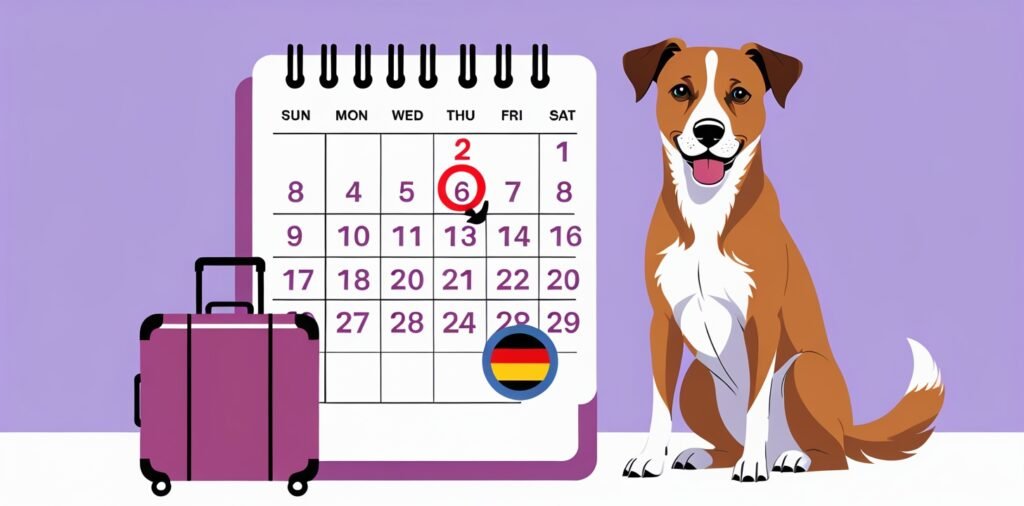
Total preparation time from first vet visit to departure is typically 4-6 weeks for a dog with current rabies vaccination, or 6-8 weeks for a dog needing a primary rabies vaccine.
Departure Day (Day 0): You fly or ferry with endorsed AHC and tapeworm treatment record.
Day -1 to -5: Tapeworm treatment window. If your OV didn’t administer it during the AHC appointment, schedule a separate vet visit during this window.
Day -3 to -7: APHA endorsement processing. Submit your OV-signed AHC immediately after the appointment. APHA typically processes in 3-5 working days, but allow 7 days during peak periods (June-August).
Day -10 to -14: OV appointment. Book this within 10 days of travel, but not so early that APHA’s endorsement expires before you fly. Aim for 5-7 days before departure to leave buffer for APHA processing.
Day -21 to -28: Book your OV appointment. OV availability varies regionally. London, Manchester, and Birmingham often require 2-3 weeks’ notice during summer. Rural areas may have same-week availability. Check the RCVS OV finder early.
Day -21 (minimum): If your dog needs a primary rabies vaccination, this is the earliest you can travel after the vaccine.
Day -28 to -42: Rabies vaccination and microchip (if needed). Schedule these at least 21 days before your OV appointment to satisfy the wait period.
Key Takeaway: UK-Germany Corridor Fact: APHA endorsement costs £92 as of 2026 and takes 3-5 working days. This is faster than some EU member states’ export endorsement processes, but slower than the old EU Pet Passport system, which required no endorsement at all.
| Weeks Before Departure | Action | Cost (GBP) | Cost (EUR) |
|---|---|---|---|
| 6-8 weeks | Microchip + rabies vaccine (if needed) | £60-130 | €70-152 |
| 3 weeks | Rabies wait period complete | – | – |
| 2-3 weeks | Book OV appointment | – | – |
| 10-14 days | OV appointment + AHC | £200-400 | €234-468 |
| 7-10 days | Submit AHC to APHA | £92 | €108 |
| 3-5 days | APHA processing | – | – |
| 1-5 days | Tapeworm treatment | £10-25 | €12-29 |
Airlines and Transport Options: UK to Germany Routes
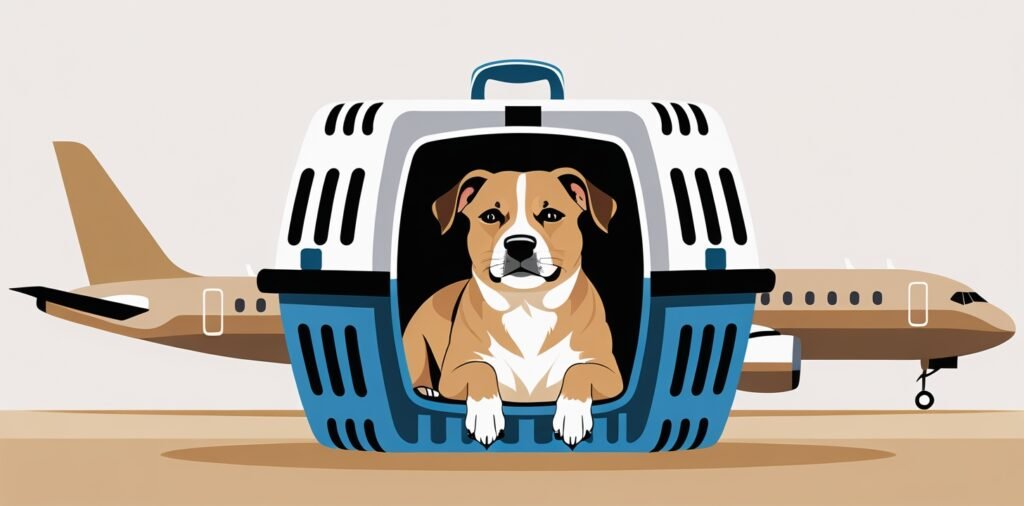
Direct flights from UK to Germany are available daily on British Airways and Lufthansa with pet cargo services. Both airlines operate from London Heathrow to Frankfurt, Munich, Berlin, and other major German airports. Pet policies differ significantly between carriers.
British Airways
No pets in British Airways cabin except assistance dogs. All pet dogs travel as cargo through IAG Cargo. IATA-compliant crate required. Pet fee ranges £400-1200 (€468-1404) depending on dog weight and route.
Temperature embargoes apply May-September if ground temperatures exceed 27°C or fall below -12°C. Book cargo space at least 7-10 days in advance, as space is limited.
Lufthansa
Small dogs under 8kg (17.6 lbs) including carrier can travel in cabin in an approved soft-sided carrier. Larger dogs travel as cargo. Cabin pet fee approximately £350-500 (€410-585). Cargo fee £600-1000 (€702-1170) for a 20kg (44 lbs) dog.
Lufthansa’s cargo service operates through Lufthansa Cargo, which requires advance booking and veterinary documentation submission 48 hours before departure.
KLM via Amsterdam
Another option for larger dogs. KLM accepts pets in cargo on the London-Amsterdam leg, then connects to Germany. This adds a transit stop but may offer more cargo space during peak periods. Expect similar pricing to Lufthansa cargo: £400-900 (€468-1053).
Ferry Alternatives from UK Ports
DFDS ferries from Newcastle to Amsterdam accept pets in designated pet-friendly cabins (book early, limited availability). The 17-hour crossing is less stressful for anxious dogs than cargo hold flying. From Amsterdam, it’s a 3-4 hour drive to western Germany. Pet cabin supplement: £50-150 (€59-176).
P&O and Eurotunnel from Dover/Folkestone to Calais are also options, with onward drive through France and Belgium to Germany. All ferry routes require the same DEFRA AHC and tapeworm treatment as flying.
Tip: UK Port Alternative: Ferry routes cost £612-1047 (€716-1225) total, saving £450-850 compared to cargo flying. If your dog is anxious or brachycephalic (flat-faced breeds like Bulldogs, Pugs), ferries avoid the temperature and stress risks of cargo holds.
| Airline/Ferry | Route | Cabin Policy | Cargo Policy | Pet Fee (GBP) | Pet Fee (EUR) |
|---|---|---|---|---|---|
| British Airways | London Heathrow → Frankfurt/Munich | No (assistance only) | Yes, IATA crate required | £400-1200 | €468-1404 |
| Lufthansa | London Heathrow → German airports | Yes, <8kg total | Yes, larger dogs | £350-1000 | €410-1170 |
| KLM | London → Amsterdam → Germany | Yes, <8kg total | Yes | £400-900 | €468-1053 |
| DFDS Ferry | Newcastle → Amsterdam (drive to Germany) | Pet cabins available | N/A | £50-150 (cabin supplement) | €59-176 |
Seasonal restrictions: All UK airlines enforce temperature embargoes during summer and winter. If your departure or arrival airport forecasts ground temperatures above 27°C or below -12°C, cargo bookings may be refused. This affects May-September departures from southern UK airports and December-February arrivals in northern Germany. Ferry travel avoids this issue entirely.
Cost Breakdown: UK to Germany Pet Travel in GBP and EUR
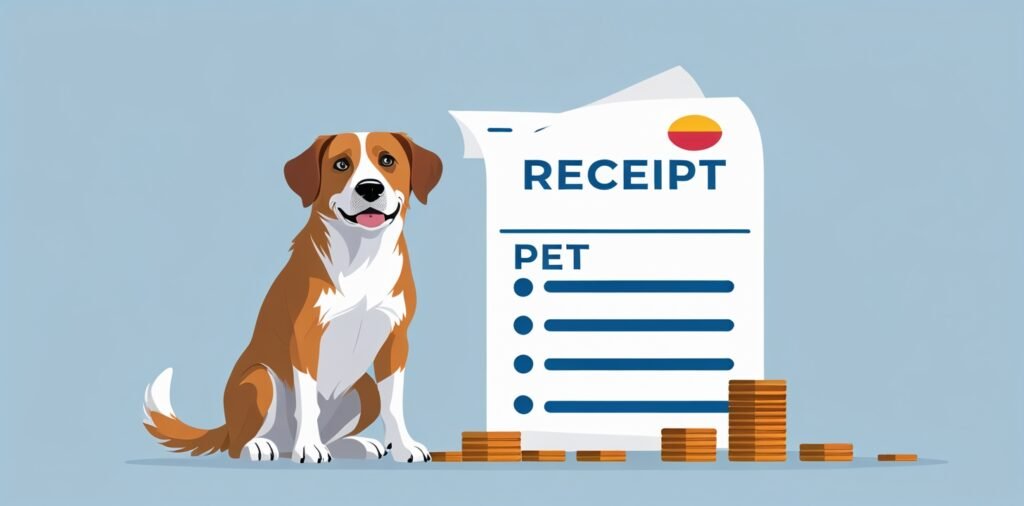
Total costs for flying a dog from the UK to Germany range £1062-1897 (€1243-2220) depending on dog size, airline choice, and whether you need initial vaccinations. Here’s the itemised breakdown using the 2026 exchange rate of 1 GBP = 1.17 EUR (as of 2026-04-02).
| Item | Cost (GBP) | Cost (EUR) | Notes |
|---|---|---|---|
| Microchip implantation | £20-50 | €23-59 | One-time, if not already chipped |
| Rabies vaccination | £40-80 | €47-94 | Primary or booster |
| OV health certificate exam + AHC | £200-400 | €234-468 | Regional variation, London higher |
| APHA endorsement | £92 | €108 | Official fee, non-negotiable |
| Tapeworm treatment | £10-25 | €12-29 | Praziquantel dose |
| Airline pet fee (cargo, 20kg dog) | £600-1000 | €702-1170 | British Airways/Lufthansa cargo |
| IATA crate (if required) | £100-250 | €117-293 | Size-dependent, reusable |
| Total (with cargo flight) | £1062-1897 | €1243-2220 | 20kg dog, direct flight |
Ferry alternative costs: If you choose the DFDS Newcastle-Amsterdam ferry, replace the airline cargo fee (£600-1000) with ferry pet cabin supplement (£50-150) plus fuel/tolls for the Amsterdam-Germany drive (approximately £100-150 / €117-176). Total ferry route cost: £612-1047 (€716-1225), saving £450-850 compared to cargo flying.
Hidden costs to budget for: Pre-travel vet check if your dog has health issues (£40-80 / €47-94), pet insurance with travel coverage (£15-40/month / €18-47), and potential re-booking fees if APHA processing delays your departure (airline-dependent, often £50-200 / €59-234).
Key Takeaway: UK-Germany Corridor Cost Reality: The APHA endorsement fee of £92 is fixed and unavoidable. The biggest variable cost is airline cargo (£400-1200), which depends on dog weight and route. Budget at the high end if travelling during peak summer season, when cargo space is limited and prices rise.
Common Mistakes UK Pet Owners Make on the Germany Route
Mistake 1: Booking the OV appointment too late. OV availability varies regionally, with London and Southeast practices often booked 2-3 weeks out during summer. If you wait until 10 days before departure to book, you may find no appointments available within the required window. Book your OV appointment at least 3-4 weeks before travel.
Mistake 2: Misreading the AHC 10-day window. The 10-day validity runs from the APHA endorsement date, not the OV signature date. If your OV signs the AHC on June 1 and APHA endorses it on June 5, your travel window is June 5-15, not June 1-11. Many pet owners book flights based on the OV appointment date and end up with expired certificates.
Mistake 3: Forgetting tapeworm treatment timing for ferry routes. If you’re taking the Newcastle-Amsterdam ferry, your “arrival into EU” is Amsterdam, not Germany. Administer tapeworm treatment 24-120 hours before the ferry docks, not before you drive into Germany.
Mistake 4: Assuming cabin pet travel on British Airways. BA does not accept pets in cabin except assistance dogs. If you’re flying BA, your dog travels cargo regardless of size. This surprises small dog owners who assume a 5kg dog can fly in cabin. Lufthansa and KLM allow cabin pets under 8kg, but BA does not.
Mistake 5: No buffer for APHA mail delays. If you submit your AHC to APHA by post, allow 7-10 days total (3-5 days processing plus 2-4 days each way for mail). Pet owners who submit 5 days before travel risk not receiving the endorsed certificate in time. Use tracked delivery and submit at least 10 days before departure.
Mistake 6: Forgetting re-entry tapeworm requirements. When you return to the UK, you need tapeworm treatment 24-120 hours before arrival back in the UK. Many pet owners pack the treatment for the outbound journey but forget to arrange it in Germany for the return leg. Confirm your German vet can provide praziquantel and record it on your AHC before you leave the UK.
Warning: DEFRA-Specific Trap: The UK requires tapeworm treatment for re-entry from Germany, and EU Regulation 576/2013 requires it for entry into Germany from the UK. Some UK pet owners mistakenly skip the outbound treatment because they’ve heard “Germany doesn’t require tapeworm treatment.” This is incorrect. You need it for both directions.
Bringing Your Dog Back to the UK from Germany

Your original DEFRA AHC remains valid for re-entry to the UK for up to four months from the date of issue, provided you meet all conditions. This is a significant advantage of the AHC system: you don’t need a separate German export certificate for the return journey.
Re-entry requirements to the UK:
- Original AHC with APHA endorsement (must be within four-month validity)
- Microchip and rabies vaccination still valid
- Tapeworm treatment administered 24-120 hours before arrival in the UK (recorded on the AHC by a licensed vet in Germany)
- Non-commercial declaration (up to five pets, travelling within five days of owner)
You must enter the UK through an approved Travellers’ Point of Control (TPC). All major UK airports and ferry ports are approved. If you’re driving back via ferry, Eurotunnel, P&O, and DFDS routes from Calais, Amsterdam, or other EU ports are all approved entry points.
If your AHC expires while you’re in Germany: You’ll need a new EU Pet Passport or health certificate issued by a German vet for re-entry. This is more complex and expensive than using the original AHC, so plan your trip duration carefully. The four-month validity gives you ample time for holidays and short relocations, but long-term stays require different documentation.
No quarantine on return if you’re compliant. If you arrive without proper documentation (expired AHC, missing tapeworm treatment, invalid rabies vaccine), your dog may be quarantined for up to four months at your expense. DEFRA enforces this strictly at UK border control.
Post-Brexit rules have been stable since 2021, with no significant changes noted in 2024-2026. For more information on UK dog travel requirements, verify current re-entry requirements at https://www.gov.uk/bring-pet-to-great-britain before your return journey.
Tip: UK Re-Entry Advantage: Because your AHC is valid for four months, you can make multiple trips to Germany within that window without needing new certificates. If you’re relocating gradually or visiting family frequently, one AHC covers multiple crossings as long as you meet the tapeworm treatment requirement for each entry.
Frequently Asked Questions: UK to Germany Dog Travel
Do I need a rabies titer test to take my dog from UK to Germany?
No, the UK is a listed non-EU country under EU Regulation 576/2013, so rabies antibody testing is not required for Germany entry. Your dog needs a valid rabies vaccination with a 21-day wait period after the primary dose (boosters have no wait), but no blood titer test. This saves approximately three months and £100-200 (€117-234) compared to unlisted countries.
How long does DEFRA endorsement take for Germany?
APHA endorsement typically takes 3-5 working days once they receive your completed AHC from the OV. Submit by post with tracked delivery or through the online portal if available. Allow 7-10 days total if submitting by post to account for mail transit time. During peak summer travel (June-August), processing may extend to 5-7 days, so submit as early as possible within the 10-day window.
Can I take my dog on the ferry from UK to Germany?
Yes, DFDS ferries from Newcastle to Amsterdam accept pets in designated pet-friendly cabins (book early, limited availability). The 17-hour crossing lands in Amsterdam, then it’s a 3-4 hour drive to western Germany. P&O and Eurotunnel from Dover/Folkestone to Calais are also options, with onward drive through France and Belgium to Germany. All ferry routes require the same DEFRA AHC and tapeworm treatment as flying.
How much does it cost to fly a dog from UK to Germany?
Total costs range £1062-1897 (€1243-2220) including OV fees (£200-400 / €234-468), APHA endorsement (£92 / €108), tapeworm treatment (£10-25 / €12-29), and airline cargo (£600-1000 / €702-1170) for a 20kg dog. Add £100-250 (€117-293) if you need to purchase an IATA crate. Ferry routes cost £612-1047 (€716-1225), saving £450-850 compared to cargo flying.
What documents do I need to bring my dog back to the UK?
Your original DEFRA AHC remains valid for four months for re-entry, plus proof of tapeworm treatment administered 24-120 hours before arrival in the UK (recorded on the AHC by a licensed vet in Germany). Your microchip and rabies vaccination must still be valid. No new export certificate from Germany is required if your AHC is within the four-month window.
Which airlines fly dogs from UK to Germany?
British Airways and Lufthansa offer cargo services on direct routes from London Heathrow to Frankfurt, Munich, Berlin, and other German airports. British Airways does not accept pets in cabin (cargo only). Lufthansa allows small dogs under 8kg (including carrier) in cabin. KLM via Amsterdam is another option for larger dogs requiring cargo transport. All require IATA-compliant crates and advance booking.
Official Resources for UK-Germany Pet Travel
- DEFRA Pet Travel Guidance: https://www.gov.uk/take-pet-abroad (UK export requirements, AHC process, OV finder)
- DEFRA Re-entry Rules: https://www.gov.uk/bring-pet-to-great-britain (UK return requirements, tapeworm treatment, quarantine rules)
- German Federal Ministry of Food and Agriculture: https://www.bmel.de/EN/topics/animals/animal-welfare/animal-transport/pets-travel-regulations.html (Germany import perspective, EU regulations)
- British Airways Pet Policy: https://www.britishairways.com/en-gb/information/baggage-essentials/pets (Cargo booking, crate requirements, temperature embargoes)
- Lufthansa Pet Transport: https://www.lufthansa.com/us/en/pets (Cabin and cargo policies, booking procedures)
- APHA Contact: pettravel@apha.gov.uk; +44 (0)300 303 6679 (AHC endorsement queries, processing status)