
Watching your dog drool, pant, and vomit all over your back seat isn’t just unpleasant—it’s heartbreaking.
Here’s the short answer: most dogs can overcome motion sickness with the right combination of medication, training, and preparation.
Puppies usually outgrow it by 12-18 months, and adult dogs respond well to progressive desensitization training that takes 3-4 weeks. Now let’s walk through exactly how to fix this.
What Causes Dog Motion Sickness (And Why Puppies Get It Worse)
Dog motion sickness happens when the inner ear structures responsible for balance send conflicting signals to the brain. The vestibular system detects movement, but the eyes see a stationary car interior. This sensory mismatch triggers nausea, drooling, and vomiting.
Puppies under 12 months get hit hardest because their inner ear structures aren’t fully developed until 6-12 months of age. According to VCA Animal Hospitals, most young dogs outgrow motion sickness naturally by 12-18 months as their vestibular system matures. If your puppy is drooling and vomiting on every car ride, there’s a 70-80% chance this will resolve on its own.

Adult-onset motion sickness tells a different story. Dogs that develop car sickness after 18 months usually have one of two issues: learned anxiety from previous negative experiences, or an underlying vestibular disorder. The distinction matters because anxiety requires behavioral modification while physical motion sickness responds to medication.
Here’s the test: put your dog in the stationary car with the engine off. If they start panting, whining, or showing stress before the car moves, you’re dealing with travel anxiety. If symptoms only appear once you’re driving, it’s true motion sickness. Many dogs have both.
Recognizing Motion Sickness Symptoms in Dogs

Most owners miss the early warning signs and only notice motion sickness when their dog vomits. By then, the nausea has been building for 10-15 minutes. Watch for these progression markers during your next drive:
Early signs (first 5 minutes): Excessive drooling, lip licking, yawning, whining or whimpering, restlessness or inability to settle.
Moderate symptoms (5-15 minutes): Heavy panting, trembling or shaking, excessive swallowing, seeking owner contact or trying to climb into front seat.
Severe symptoms (15+ minutes): Vomiting, diarrhea (less common), complete refusal to move or lie down, panic behaviors like trying to escape the vehicle.
The timeline matters because medication works best when given before symptoms escalate. If you wait until vomiting starts, you’ve missed the window for most preventive treatments.
Physical Symptoms vs Anxiety-Related Behaviors
True motion sickness produces physical symptoms that worsen with movement and improve when the car stops. Your dog may drool excessively—we’re talking soaked chest fur, not just wet lips. Vomiting typically contains undigested food or bile, and symptoms resolve within 30-60 minutes after you stop driving.
Anxiety-related behaviors start before the car moves. Dogs with travel anxiety may refuse to get in the car, start panting when they see you grab the keys, or show stress symptoms in the driveway with the engine off.
These dogs often have a history of negative car experiences: trips to the vet, a scary accident, or repeated vomiting that created a fear association.
Many dogs develop both conditions. Repeated motion sickness episodes create anxiety about car travel, which then makes the physical symptoms worse. This is why early intervention matters—you want to break the cycle before your dog associates cars with feeling terrible.
Immediate Remedies: What to Do When Your Dog Gets Carsick
When your dog starts showing symptoms mid-drive, here’s your emergency protocol:
- Pull over safely within 2-3 minutes of noticing symptoms. Motion sickness worsens with continued movement. Find a rest stop, parking lot, or safe shoulder immediately.
- Get your dog out of the vehicle and walk them on grass for 10-15 minutes. Fresh air and stable ground help the vestibular system recalibrate. This isn’t a quick bathroom break—a real walk is required.
- Offer small amounts of water only. No food for at least 2 hours after vomiting. A few laps of water prevent dehydration without triggering more nausea. If they refuse water, don’t force it.
- Clean the vehicle thoroughly before continuing. The smell of vomit can trigger more nausea. Use enzyme-based cleaner ($10-15 for a 32oz bottle) rather than masking sprays. Keep cleaning supplies, paper towels, and plastic bags in your car at all times.
- Wait 30-45 minutes before resuming travel. Most dogs need this recovery time. If symptoms persist longer than 60 minutes after stopping, you’re likely dealing with anxiety rather than pure motion sickness.
For the remainder of your trip, drive more conservatively. Sudden stops, sharp turns, and acceleration all worsen motion sickness. Take the longer route if it means fewer curves and less stop-and-go traffic.
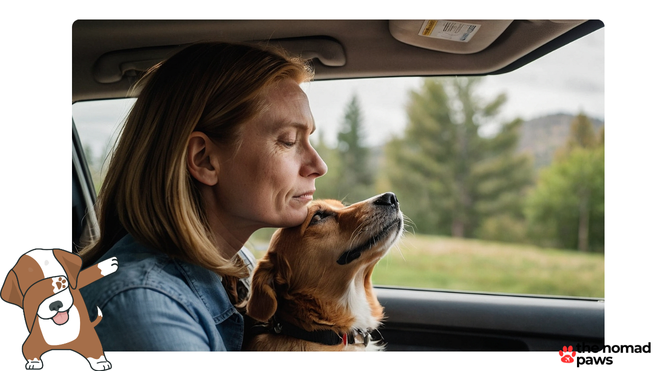
Pro tip: Position your dog so they can see out the window. Looking at the horizon helps the brain reconcile movement signals. Dogs confined to crates or lying on the floor get worse symptoms because they can’t orient themselves visually.
Medication Options: Dosages and Vet Recommendations
Medication works, but dosing matters. Here are the three most effective options with specific dosages verified by veterinary guidelines:
| Medication | Dosage | Timing | Duration | Cost |
|---|---|---|---|---|
| Cerenia (Maropitant) | 8mg/kg (3.6mg/lb) | 2 hours before travel | 24 hours | $5-10 per tablet |
| Dramamine (Dimenhydrinate) | 2-4mg/lb | 30-60 minutes before | 8 hours | $0.30-0.50 per dose |
| Benadryl (Diphenhydramine) | 1-2mg/lb | 30 minutes before | 8-12 hours | $0.08-0.12 per dose |
Cerenia is the only FDA-approved anti-nausea medication for dogs, according to the FDA Center for Veterinary Medicine. It works by blocking substance P in the vomiting center of the brain. For a 60-pound dog, you’d give approximately 110mg (usually one 60mg tablet plus one 50mg tablet) two hours before travel with a small amount of food. Cerenia requires a prescription—expect a $50-150 vet consultation for first-time users.
Dramamine (plain dimenhydrinate only—never the “Less Drowsy” or combination formulas) works well for mild to moderate cases. A 40-pound dog gets 80-160mg, which translates to 1.5-3 of the standard 50mg tablets. Give it 30-60 minutes before you leave. Some dogs get drowsy, but it’s mild compared to prescription sedatives. A 100-count bottle costs $10-15 and lasts months.
Benadryl helps with anxiety-related nausea more than true motion sickness, but it’s worth trying for dogs under 25 pounds where Cerenia tablets are harder to dose accurately. A 20-pound dog gets 20-40mg (one 25mg tablet). Expect drowsiness—that’s actually the mechanism that helps anxious dogs relax.
Over-the-Counter vs Prescription Options
Start with over-the-counter Dramamine for your first few attempts. If Dramamine doesn’t work after 2-3 properly dosed trials, move to prescription Cerenia.
Here’s the cost breakdown for a typical 50-pound dog over one month of weekly car trips:
| Treatment Option | Initial Cost | Per-Trip Cost | Monthly Total (4 trips) |
|---|---|---|---|
| Dramamine OTC | $12 (100-count bottle) | $0.50 (2 tablets) | $14 |
| Cerenia Prescription | $100 (vet visit) + $30 (4 tablets) | $7.50 | $130 first month, $30 ongoing |
| Benadryl OTC | $10 (100-count bottle) | $0.30 (2 tablets) | $11 |
Never give your dog Dramamine formulas that contain other active ingredients. “Dramamine Less Drowsy” contains meclizine instead of dimenhydrinate—different drug, different dosing. “Dramamine All Day” and combination cold formulas may contain acetaminophen, which is toxic to dogs. Read the label. You want plain dimenhydrinate only.
Important: Always consult your vet before starting any medication, especially if your dog has pre-existing health conditions, takes other medications, or is pregnant. These dosages are general guidelines from the American Veterinary Medical Association, not a substitute for professional medical advice.
Progressive Car Training Protocol (Step-by-Step)
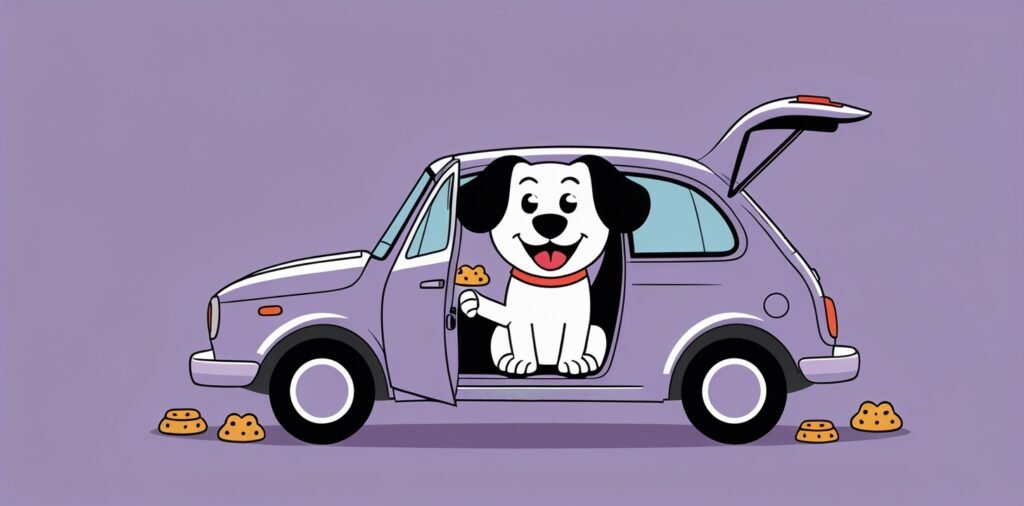
This desensitization protocol has an 85% success rate for dogs with severe motion sickness when followed consistently. It takes 3-4 weeks of daily 10-15 minute sessions. Start at least one month before any major trip.
Week 1: Stationary Car Exposure
- Sit in the parked car with your dog for 5 minutes, engine off. Bring high-value treats (small pieces of chicken, cheese, or hot dog). Feed treats continuously while sitting calmly.
- Repeat daily. Gradually increase to 10 minutes by day 7.
- Goal: Dog shows no stress signals (panting, whining, drooling) in the stationary car.
Week 2: Engine Running, No Movement
- Start the engine but don’t move. Sit for 5 minutes while feeding treats.
- Increase duration by 2 minutes every other day until you reach 15 minutes.
- If your dog shows stress, drop back to shorter sessions. This isn’t a race.
- Goal: Dog remains calm with engine running for 15 minutes.
Week 3: Short Drives
- Drive to the end of your driveway or around the block (2-3 minutes). Return home immediately and reward heavily.
- Increase distance gradually: 5 minutes by day 3, 10 minutes by day 5, 15 minutes by day 7.
- Drive to fun destinations—dog parks, friend’s houses, anywhere except the vet.
- Feed your dog 3-4 hours before these practice drives.
- Goal: Dog tolerates 15-minute drives without symptoms.
Week 4: Extended Drives
- Attempt 20-30 minute drives to enjoyable destinations.
- Introduce highway driving gradually—the sustained speed often triggers fewer symptoms than stop-and-go traffic.
- Take breaks every 15-20 minutes initially, extending to every 30 minutes as tolerance improves.
- Goal: Dog handles 30+ minute drives comfortably.
Consistency matters more than duration. Seven 10-minute sessions beat three 30-minute sessions. Miss a day and you may need to back up a step. This protocol works because it prevents the nausea response from ever triggering, gradually building positive associations instead.
Combine this training with medication during weeks 3-4. Give Dramamine or Cerenia at the proper timing before your practice drives. The medication prevents symptoms while the training builds confidence.
Natural Remedies and Supplements That Actually Work

Natural remedies have mixed evidence, but these three show the most promise based on veterinary research and owner reports:
Ginger (most effective natural option): Give 10-25mg per pound of body weight 30 minutes before travel. For a 40-pound dog, that’s 400-1000mg. Ginger snap cookies work if they contain real ginger—check the ingredients for “ginger root” not just “ginger flavor.” Two or three cookies for a medium dog. Fresh ginger root is more potent but harder to dose and most dogs won’t eat it plain.
CBD oil (requires quality products): Dosing ranges from 1-5mg per 10 pounds of body weight. A 30-pound dog gets 3-15mg of CBD, given 30-60 minutes before travel. The challenge is finding reputable products—look for third-party lab testing and certificates of analysis. Expect to pay $30-60 for a quality 1oz bottle that lasts 1-2 months. Evidence is mostly anecdotal, but many owners report reduced anxiety-related nausea.
Lavender aromatherapy (mild effect): A few drops of lavender essential oil on a bandana tied loosely around the dog’s neck may reduce anxiety. Never apply essential oils directly to skin or allow ingestion. This works for anxiety-related symptoms, not true vestibular motion sickness. Cost: $8-12 for a 0.5oz bottle that lasts indefinitely.
What doesn’t work despite internet claims: Rescue Remedy (no peer-reviewed evidence), pressure point collars (no mechanism of action), special “anti-nausea” dog treats without active ingredients (placebo for owners, not dogs).
Reality check: Natural remedies work best for mild cases or as supplements to medication and training. If your dog vomits within 10 minutes of every car ride, you need pharmaceutical intervention. Ginger isn’t going to cut it.
Pre-Travel Preparation Checklist
Here’s your preparation timeline for a major trip. Adjust dates based on your departure, but don’t skip steps:
| Timeline | Action Items | Notes |
|---|---|---|
| 4 weeks before | Start desensitization training (daily sessions) Schedule vet visit if dog is over 18 months with persistent symptoms Order crash-tested harness or travel crate | Vet visit costs $50-150 Quality harness: $30-100 (Sleepypod Clickit Sport, Kurgo Tru-Fit) IATA-approved crate: $40-200 depending on size |
| 2 weeks before | Test medication on short drives Stock car with cleaning supplies Plan route with rest stops every 2 hours | Use apps like iExit or GasBuddy to locate pet-friendly stops Enzyme cleaner: $10-15 (Nature’s Miracle, Rocco & Roxie) Disposable gloves, paper towels, plastic bags |
| 1 week before | Practice 30-minute drives with medication Confirm hotel pet policies Save emergency vet contact info | Many hotels charge $50-75 per night pet fee Save ASPCA Poison Control: (888) 426-4435 ($95 consultation fee) Download BringFido or similar app |
| 48 hours before | Verify medication supply Prepare travel kit (bowls, water, food, meds) Final practice drive | Pack 2x the medication you think you’ll need Collapsible bowls: $8-15 Cooling mat for hot weather: $20-40 |
| Day of travel | Feed last meal 3-4 hours before departure Give medication at proper timing Load car with windows cracked, AC running Start with 15-minute warm-up drive | Feeding 3-4 hours prior reduces vomiting risk by 70% Keep vehicle temperature below 75°F Plan first rest stop at 1.5-2 hours |
Feeding schedule specifics: If you’re leaving at 8 AM, feed your dog at 4-5 AM. Yes, this means setting an alarm. A partially full stomach is the sweet spot—completely empty causes bile vomiting, too full causes food vomiting. Offer water up until 30 minutes before departure, then small sips only.
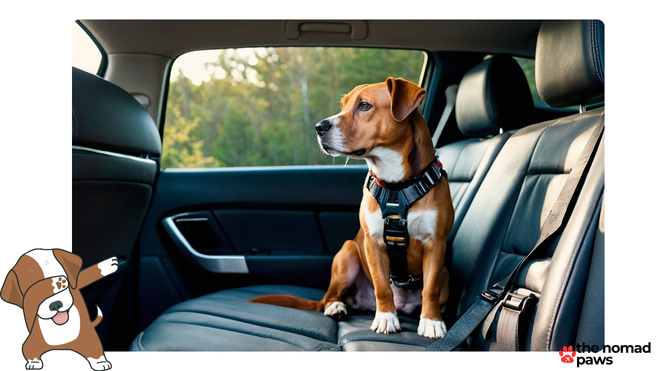
Positioning matters: Dogs should face forward in a crash-tested harness attached to the seat belt (Sleepypod Clickit Sport, Kurgo Tru-Fit Enhanced Strength), or in a secured crate. Side-facing or rear-facing positions worsen motion sickness. Window access helps—being able to see the horizon reduces sensory conflict. Never let your dog ride in the front seat or with their head out the window at highway speeds.
Temperature control: Keep the vehicle below 75°F. Brachycephalic breeds (Bulldogs, Pugs) need even cooler temperatures—aim for 70°F maximum. Heat exacerbates nausea and creates serious health risks. If you’re driving in summer, use a cooling mat ($20-40) and take breaks in shaded areas.
Breed-Specific Considerations and Risk Factors
Some breeds get motion sickness more frequently due to physical structure or genetic predisposition. If you own one of these breeds, expect to need more intensive management:
Brachycephalic breeds (Bulldogs, Pugs, Boston Terriers, Shih Tzus): These flat-faced dogs have double the motion sickness rate of other breeds according to American Kennel Club health data. Their compressed airways make breathing harder, which intensifies nausea. They also can’t cool themselves effectively through panting, so heat and motion sickness compound dangerously.
For brachy breeds: Use Cerenia rather than Dramamine (breathing difficulties make sedation risky), keep vehicle temperature at 70°F or below, take breaks every 60-90 minutes instead of every 2 hours, consider a cooling vest ($25-45) for trips over 3 hours.
Small and toy breeds (Beagles, Dachshunds, Chihuahuas): Higher rates of motion sickness due to sensitivity and, in some cases, ear structure that affects balance. These dogs often develop anxiety-related symptoms faster because negative experiences have bigger impact.
Large breeds with deep chests (Labrador Retrievers, German Shepherds, Great Danes): Prone to bloat, which can be triggered by stress and movement. Feed 4 hours before travel minimum, and avoid water immediately before driving. Watch for signs of bloat (distended abdomen, unproductive retching) which requires emergency vet care.
Herding breeds (Border Collies, Australian Shepherds): High anxiety levels can manifest as motion sickness. These dogs often do better with a job—give them a toy to hold or practice “settle” commands during drives rather than leaving them with nothing to focus on.
When Motion Sickness Signals Bigger Health Issues
Most motion sickness is benign and manageable. But persistent symptoms in adult dogs can indicate vestibular disorders or other health problems that need veterinary attention. Here’s when to stop treating it as simple car sickness and get your dog to a vet:
Red flags requiring immediate vet visit:
- Motion sickness that persists or worsens after 18 months of age
- Head tilt, circling, or loss of balance even when not in the car
- Nystagmus (rapid involuntary eye movements)
- Sudden onset of severe symptoms in a dog that previously traveled fine
- Symptoms that don’t improve within 60 minutes of stopping
- Vomiting blood or projectile vomiting
- Complete loss of appetite for more than 24 hours after travel
Vestibular disease affects the inner ear and brain structures that control balance. It can be caused by ear infections, tumors, or idiopathic (unknown) factors. Dogs with vestibular problems show motion sickness symptoms even in stationary environments. They may stumble, fall to one side, or refuse to stand. This requires diagnostic testing—expect $200-500 for initial workup including bloodwork and possibly imaging.
Ear infections cause similar symptoms and are more common in breeds with floppy ears (Cocker Spaniels, Basset Hounds) or dogs that swim frequently. If your dog’s motion sickness coincides with head shaking, ear scratching, or a foul odor from the ears, get them checked. Ear infections are treatable with antibiotics ($30-80 for medication) but can cause permanent damage if ignored.
Gastrointestinal disorders sometimes masquerade as motion sickness. If your dog vomits frequently even when not traveling, has diarrhea, or shows signs of abdominal pain (hunched posture, reluctance to move), the car might just be triggering an existing digestive issue. Diagnostic testing runs $300-800 depending on what’s needed.
Keep a symptom log if you’re unsure whether to see a vet. Document when symptoms occur, how long they last, what triggers them, and whether they’re getting better or worse. Three weeks of data gives your vet much better information than “my dog gets carsick sometimes.”
Long-Distance Travel Strategies
Multi-day road trips with a motion-sick dog require different strategies than short drives. You can’t just medicate and push through—you need a sustainable management plan.
Daily driving limits: Cap each day’s driving at 6-8 hours maximum, broken into 2-hour segments. Yes, this extends your trip. A journey that takes you 12 hours solo becomes a 2-day trip with a motion-sick dog. Plan for it. Pushing past your dog’s tolerance doesn’t build resilience—it creates worse anxiety for the next trip.
Overnight stops: Book pet-friendly hotels in advance through BringFido or PetsWelcome. Confirm the pet policy directly—”pet-friendly” sometimes means “$75 per night fee and restricted to first-floor rooms only.” Budget $50-100 per night in additional pet fees. Request ground-floor rooms near exits so you can get your dog outside quickly if they’re nauseous.
Medication scheduling for multi-day trips: Cerenia lasts 24 hours, so you can give one dose each morning and be covered for that day’s driving. Dramamine lasts 8 hours—you may need to re-dose mid-day on long driving days. Don’t exceed the maximum daily dose (check with your vet for your specific dog). For a 5-day road trip with a 50-pound dog on Cerenia, budget $35-50 for medication.
Rest day strategy: If you’re driving more than 3 consecutive days, build in a rest day with no driving. Book a hotel with a dog park or near hiking trails. Let your dog’s system reset. This dramatically improves tolerance for the remaining travel days.
Route planning: Choose highways over scenic routes. Sustained highway speeds cause less motion sickness than winding mountain roads or constant stop-and-go traffic. Use Google Maps to identify routes with fewer elevation changes. Yes, you’ll miss some views. Your dog’s comfort matters more.
Emergency vet preparation: Before you leave, download a vet finder app (VEG, Vetster, or Pawp) and identify 24-hour emergency clinics along your route. Save the ASPCA Animal Poison Control number ((888) 426-4435, $95 consultation fee) in your phone. If your dog has a severe reaction to medication or develops symptoms that won’t resolve, you need to know where to go immediately.
| Trip Length | Medication Cost | Hotel Pet Fees | Extra Fuel (frequent stops) | Total Additional Cost |
|---|---|---|---|---|
| 2-day trip (12 hours driving) | $15-20 | $50-75 (1 night) | $15-25 | $80-120 |
| 5-day trip (30 hours driving) | $35-50 | $200-300 (4 nights) | $40-60 | $275-410 |
| Cross-country (7+ days) | $50-70 | $350-525 (6+ nights) | $60-100 | $460-695 |
Common Mistakes That Make Motion Sickness Worse

These are the failures I see repeatedly from owners who mean well but don’t understand the mechanics of motion sickness:
Mistake #1: Starting with a long trip. Your dog has never been in a car without vomiting, so you decide to “get it over with” on your 8-hour drive to the beach. By hour 2, your dog has vomited three times and developed a lasting fear of vehicles. Start with 5-minute trips around the block. Build tolerance gradually. There are no shortcuts.
Mistake #2: Feeding right before travel. “I don’t want my dog to be hungry” leads to feeding 30 minutes before departure. A full stomach plus motion equals vomit. The 3-4 hour rule isn’t a suggestion—it’s based on canine digestion rates. Set your alarm early if you have to.
Mistake #3: Using sedatives instead of anti-nausea medication. Sedation doesn’t prevent nausea—it just makes your dog too drowsy to show symptoms clearly. They still feel terrible. They just can’t tell you. Acepromazine, a common veterinary sedative, actually lowers the seizure threshold and can make motion sickness worse. Use Cerenia or Dramamine, not sedatives.
Mistake #4: Inconsistent training. You do the desensitization protocol for a week, see improvement, then stop. Two weeks later you attempt a long drive and the symptoms return. Training builds tolerance through repetition. You need 3-4 weeks of consistent daily sessions, then periodic maintenance drives to preserve the progress.
Mistake #5: Ignoring anxiety components. Your dog shows stress before the car moves, but you focus only on motion sickness medication. Anxiety and physical nausea feed each other. Address both. Combine anti-nausea meds with desensitization training and, if needed, short-term anti-anxiety medication prescribed by your vet.
Mistake #6: Wrong Dramamine formula. You grab “Dramamine Less Drowsy” because it sounds better. That contains meclizine, not dimenhydrinate—different drug, different dosing, less effective for dogs. Or worse, you grab a combination formula with acetaminophen, which is toxic to dogs. Read labels. Plain dimenhydrinate only.
Mistake #7: Giving up on adult dogs. “He’s 5 years old, he’ll never get better.” Adult dogs respond well to the combination of medication and training. The 85% success rate applies to dogs of all ages. Older dogs may take longer to recondition, but improvement is absolutely possible.
Frequently Asked Questions
Can I give my dog human Dramamine?
Yes, but only plain Dramamine containing dimenhydrinate as the sole active ingredient. Dose at 2-4mg per pound of body weight, given 30-60 minutes before travel. Never use formulas labeled “Less Drowsy” (contains meclizine instead), “All Day” (different drug), or any combination cold/flu formulas that may contain acetaminophen, which is toxic to dogs. Read the ingredient list every time—manufacturers change formulations. When in doubt, ask your vet to verify the product is safe.
How long does dog motion sickness last after the car ride?
Symptoms typically resolve within 30-60 minutes after the vehicle stops and your dog gets fresh air and stable ground. If symptoms persist longer than 60 minutes, you’re likely dealing with travel anxiety rather than pure motion sickness, or your dog may have an underlying health issue. Dogs with vestibular problems may take several hours to recover. If recovery consistently takes more than 90 minutes, schedule a vet exam.
Do dogs outgrow motion sickness?
Most puppies outgrow motion sickness by 12-18 months as their inner ear structures fully develop. The vestibular system matures between 6-12 months, and symptoms often improve dramatically during this period without intervention. However, adult-onset motion sickness (developing after 18 months) rarely resolves on its own and typically requires medication, training, or both. If your adult dog develops new motion sickness symptoms, consult your vet to rule out underlying health issues.
Is it safe to travel with a dog that gets severely carsick?
Yes, with proper preparation and medication. Cerenia, the FDA-approved anti-nausea medication for dogs, combined with progressive desensitization training, has an 85% success rate even for severe cases. Start training 3-4 weeks before travel, use medication as prescribed, and plan for frequent breaks every 2 hours. Avoid sedatives—they don’t prevent nausea and can create additional risks. For dogs that don’t respond to standard treatment, consult a veterinary behaviorist about intensive conditioning protocols.
Can motion sickness cause long-term anxiety about car travel?
Absolutely. Repeated negative experiences create powerful associations. If your dog vomits on 2-3 consecutive car rides, they begin to anticipate feeling sick whenever they see the car. This learned anxiety then makes physical symptoms worse, creating a cycle that’s harder to break. Early intervention prevents this pattern from forming. If your puppy shows motion sickness, address it immediately rather than hoping they’ll outgrow it. Once anxiety sets in, you’re treating two problems instead of one.
What’s the difference between motion sickness and travel anxiety in dogs?
Motion sickness produces physical symptoms (drooling, vomiting, nausea) that begin or worsen once the vehicle is moving. Travel anxiety shows behavioral signs (panting, whining, pacing, refusal to enter the car) that start before movement begins. Test this by putting your dog in the parked car with the engine off. If they show stress in the stationary vehicle, anxiety is the primary issue. If they’re calm until you start driving, it’s true motion sickness. Many dogs have both conditions—the motion sickness creates anxiety about future car rides.
You’ve Got This
Motion sickness feels like a permanent problem when you’re cleaning vomit out of your back seat for the third time this month. It’s not. The combination of proper medication timing, progressive desensitization training, and smart trip planning works for the vast majority of dogs. Yes, it takes effort: 3-4 weeks of daily training sessions, careful medication dosing, and route planning that prioritizes your dog’s comfort over your convenience.
Start with the basics: get plain Dramamine, begin the Week 1 stationary car training today, and schedule a vet visit if your dog is over 18 months with persistent symptoms. Build from there. Most owners see improvement within 10-14 days of consistent work. By week 4, you’ll have a dog that can handle car travel without the stress and mess that’s been defining your trips.
The dogs that seem hopeless—the ones that start drooling before you even open the car door—those are often the ones that respond best to systematic training. They’re not broken. They just need someone to show them that car rides don’t have to feel terrible. That someone is you. Get started today.