
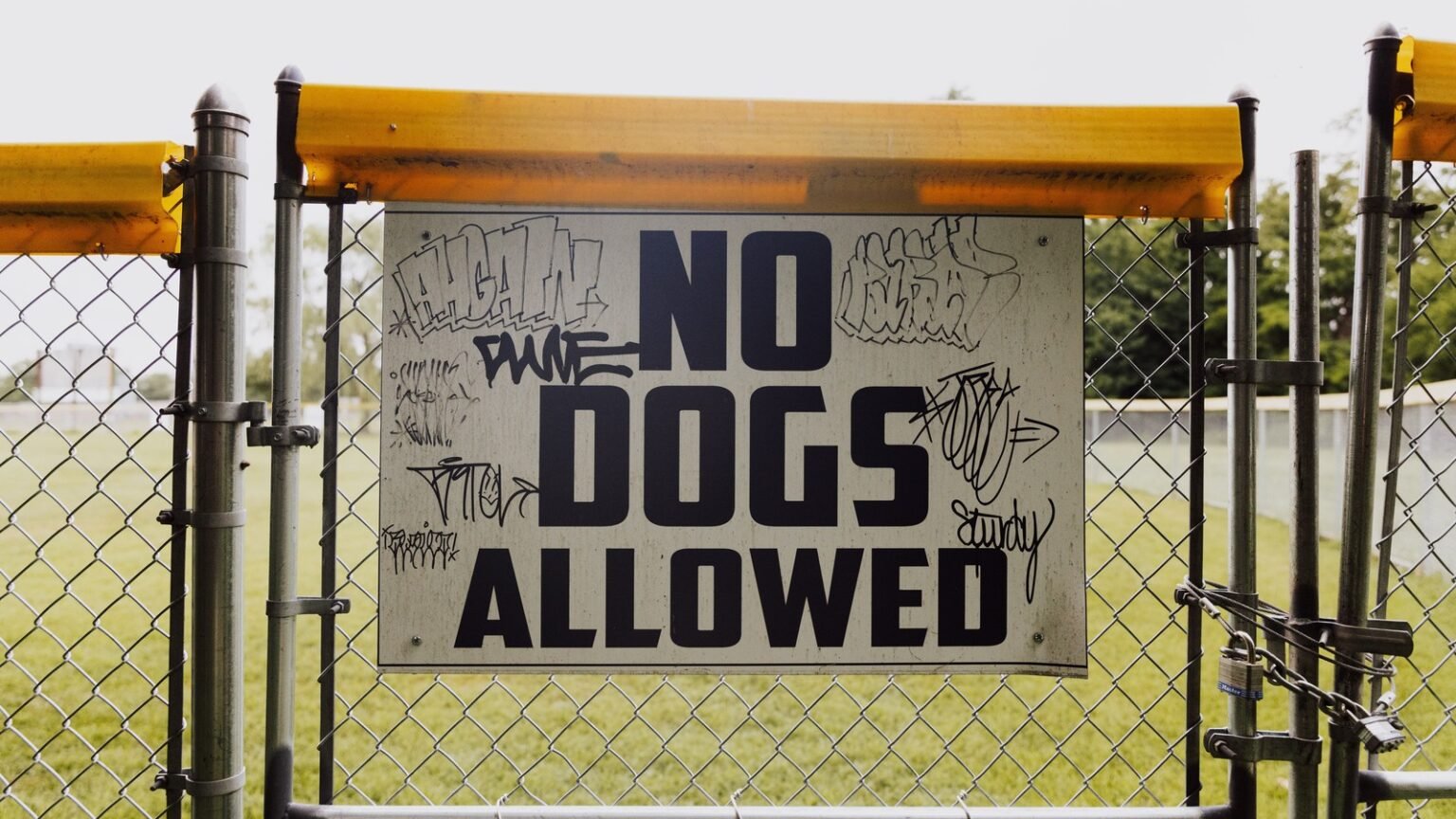
A sign has gone up at your local park gate. Somewhere online, a headline is telling you that 2026 brings sweeping new dog rules for every owner in the UK.
Here’s the calmer, more useful version: there is no single new UK dog law this year.
What’s actually happening is that a large batch of local dog control orders all reach their expiry point around the same time, so councils across the country are consulting and renewing at once.
This affects some parks and not others, entirely depending on which council runs the land. This piece explains why it’s happening, plus a five-minute way to check your own park with confidence.
Why so many dog rules are changing in 2026
The rules that govern dogs in most English and Welsh parks aren’t permanent fixtures. They’re Public Space Protection Orders (PSPOs), and by law they have to be reviewed and re-consulted on every three years before they can be renewed.

Here’s the bit nobody explains clearly: a PSPO doesn’t quietly roll on by default. If a council doesn’t actively re-make it, the powers simply lapse and enforcement stops.
Flintshire spells this out plainly. Legislation requires all PSPOs to be reviewed every three years, and without renewal, its two existing orders will expire on 29 October 2026.
Because a big wave of orders was made or last renewed around 2020 to 2023, they’re hitting that three-year wall together now. That’s why so many councils are consulting at the same moment, not because of any coordinated national policy.
A few examples currently in the cycle (always confirm on the council’s own page, since consultation dates and outcomes can shift):
- Dorset Council: the current dog PSPO runs until 31 December 2026, with a replacement proposed to run 2027 to 2029.
- Stafford Borough Council: the current order expires on 6 December 2026.
- Hammersmith & Fulham: its Responsible Dog Ownership PSPO ends on 17 May 2026 unless extended.
- Basingstoke and Deane: a dog fouling PSPO renewal consultation ran through the summer of 2026.
Tip: A consultation is your chance to have a say. If your council is reviewing its dog PSPO this year, look for the online survey while it’s open. Dog owners who stay quiet often find the strictest voices shape the final order.
What a PSPO actually controls
A PSPO is the legal tool most councils use to set local dog rules, made under Part 4 of the Anti-social Behaviour, Crime and Policing Act 2014. GOV.UK publishes official guidance on how these orders work, and the full legal text sits on legislation.gov.uk if you want to check the primary source yourself.
In practice, a dog PSPO typically covers things like:
- Requiring dogs on leads in specific areas
- Excluding dogs from certain land entirely (play areas, sports pitches, some beaches)
- Setting how many dogs one person can walk at once
That last one surprises people. Bromley caps the number of dogs any one person can walk at four, and Surrey Heath’s draft renewal proposes the same limit.
If a PSPO isn’t complied with, the person in breach can typically be fined on the spot, with a higher maximum fine if the case goes to court. Figures around £100 on the spot and up to £1,000 on prosecution show up often, but the exact amount is set locally and does vary (more on that below).
The kinds of changes showing up this year
A “new PSPO” story in your local paper could mean three very different things. Knowing which one you’re looking at saves a lot of worry.
Lead-required zones
Some councils are adding new areas where dogs must be on a lead, often near play areas, sports pitches or busy paths.
Redcar & Cleveland’s renewal went further than a simple extension. The council made it an offence to allow dogs into 16 council-managed enclosed sports and games facilities, including MUGAs, skate parks and tennis courts, and added a new play area to the exclusion list.
It also introduced lead-length rules: fixed leads no longer than two metres, and extendable leads not stretched beyond four metres.
Seasonal bans
Beach bans are the classic seasonal restriction, keeping dogs off the busiest sands in summer.
- Redcar & Saltburn beaches: dogs excluded from certain areas between 1 May and 30 September.
- Roker & Seaburn beaches (Sunderland): an exclusion zone applies from 1 May to 30 September, with dogs welcome outside it.
These bans are usually zoned, not total, so there’s often a dog-friendly stretch nearby. The signage will show you exactly where.
Dog number limits
As noted, orders like Bromley’s cap walkers at four dogs. This mostly affects professional dog walkers, but it’s worth knowing if you ever help out a friend with their pack.
The contrast: free-to-roam vs. locked-down
Not every 2026 change is a tightening. Some councils are loosening rules, and the gap between the most relaxed and the strictest orders is huge.
Most relaxed: At Burnham Beeches (run by the City of London Corporation), dogs are welcome across roughly 220 hectares. Off-lead walking under effective control is the default, all year, with no seasonal ban. The only real exclusion is a small area by the café. The one proposed 2026 change is simply to update and clarify the wording.
Loosening elsewhere: Hastings’ review proposes *allowing* leashed dogs into a previously dog-free area, with a consultee arguing that well-behaved dogs on leads could attract more visitors and encourage longer stays.
Strictest: Redcar & Cleveland stacks it all together: seasonal beach bans, a year-round ban from nine cemeteries, exclusion from 16 sports facilities, and lead-length limits, backed by on-the-spot fines and a higher maximum on prosecution.
So “new 2026 rules” genuinely cuts both ways. Some parks are opening up. Some are tightening. Most are simply renewing what already existed.
Penalties: check the number, don’t assume
A pattern shows up again and again in council enforcement pages: a modest fixed penalty for a first offence, and a much larger maximum fine reserved for prosecution.
- Doncaster: a £100 fixed penalty for breaching the order.
- Medway: £100, reduced to £70 if paid within 21 days, up to £1,000 on prosecution.
- West Oxfordshire (proposed): up to £100 as a fixed penalty, or up to £1,000 on prosecution.
But don’t treat that as universal. Richmond upon Thames runs a different model entirely: a fine of up to £80, cut to £50 if paid within 10 days, and up to £1,000 on prosecution.
Richmond also publishes something reassuring. Since 2023 it has issued 1,286 warnings, against just 388 fines and six prosecutions. In other words, most first breaches get a warning, not an instant penalty.
Warning: Never assume £100 is the figure everywhere, and never quote £1,000 as though it’s the standard on-the-spot fine. It isn’t, it’s usually the court maximum. Always confirm the current amount on your own council’s PSPO or Fixed Penalty Notice page.
Assistance dogs are usually exempt
This is one of the biggest reader worries, and the news is largely good. Exemptions for assistance dogs are written into the vast majority of dog PSPOs.
- Dorset: exemptions enable those with assistance dogs to access dog-excluded areas.
- Doncaster: dog-number and lead requirements don’t apply where exemptions for disabled people, assistance dogs and working dogs are met.
- Wyre: a disabled person in charge of an assistance dog is exempt from the requirement to pick up after their dog.
The exact wording differs between orders, including whether the exemption covers lead rules, dog-limit rules, exclusion zones, or all three. So do a quick check of your own council’s document rather than assuming blanket coverage.
How to check if your local park is affected
Forget national roundups, they go stale the moment another consultation closes. This three-step check takes most people under five minutes.
- Search your council’s website for “[Your Council] PSPO dogs” or “[Your Council] dog control order.”
- Open the specific PSPO page. It lists current restrictions, exclusion zones, exemptions and the exact review or expiry date.
- Read the signage at the park gate. New restrictions are usually posted at entrances before or as they take effect, and the sign confirms what applies *right now*, not just what’s proposed.
Once you know your local lead and off-lead rules, Mikke helps you find and log confident, rule-friendly walks nearby.
Get Mikke free → Community-built dog walking routes · free on iOS and AndroidWhat happens if you get it wrong
Councils don’t usually flip a switch and start fining people the instant an order is signed. Many build in a lead-in period.
Hounslow’s newest PSPO started on 30 September 2025 but wasn’t enforced until 1 March 2026. Reigate & Banstead ran a two-month awareness period with no enforcement of changes.
That said, this is enforcement practice, not a guaranteed legal right. We couldn’t confirm any universal statutory “grace period,” or a formal legal defence of simply not knowing.
In reality, teams tend to use judgement, and an obviously accidental first breach is more likely to earn a warning, as Richmond’s own figures suggest. But once a sign is up and the order is live, “I didn’t know” is not a reliable defence. When in doubt, read the gate.
Key Takeaway: There’s no single 2026 dog law. There’s a three-year review cycle that has bunched a lot of renewals into this one year, some tightening, some loosening, most unchanged. Assistance dogs are broadly protected, exact fines vary by council, and the only certain answer for your park is your council’s own PSPO page plus the signage at the gate.
Editorial note: This article was checked against GOV.UK’s guidance on Public Space Protection Orders and Part 4 of the Anti-social Behaviour, Crime and Policing Act 2014, plus each named council’s own PSPO page where cited. Councils update these pages regularly, so treat any date or fine here as a starting point, not the final word, and confirm it directly before you rely on it.
FAQs
Are dog rules changing everywhere in the UK in 2026, or just some places?
Just some places. There’s no nationwide law change. A large batch of local PSPOs happen to reach their three-year review point in 2026, so many councils are consulting and renewing at once. Some are tightening, some loosening, many simply renewing unchanged.
What is a PSPO and who decides what it covers?
A Public Space Protection Order is a local rule made by a council under Part 4 of the Anti-social Behaviour, Crime and Policing Act 2014. Each council decides its own content, so lead rules, exclusion zones, dog limits and fines vary from area to area. GOV.UK publishes general guidance on how the power works.
Can I be fined for not knowing about a new dog rule?
Possibly. Many councils run an awareness period before enforcing, as Hounslow and Reigate & Banstead have both done. But once an order is active and signposted, not knowing about it isn’t a guaranteed defence. A clearly accidental first breach often gets a warning rather than a fine.
Are assistance dogs exempt from these restrictions?
In most orders, yes. Councils including Dorset, Doncaster and Wyre write in exemptions for assistance dogs, covering things like access to excluded areas or the duty to pick up. The exact wording varies, so confirm it on your specific council’s PSPO.
How often do councils actually update their dog control orders?
By law, PSPOs must be reviewed at least every three years before they can be renewed. If a council doesn’t re-make the order, the powers lapse. That three-year cycle is exactly why 2026 is seeing a cluster of renewals.
Where do I find my council’s current PSPO for dogs?
Search “[Your Council] PSPO dogs” or “[Your Council] dog control order.” Open the dedicated page for current restrictions and review dates, then cross-check with the signage at your park entrance, which is the definitive up-to-date source.
Do these rules apply to private land or just council-owned parks?
PSPOs are made by councils and typically cover public land they’re responsible for. Private land is governed by the landowner’s own rules. If you’re unsure whether a green space is council-run, the on-site signage usually makes it clear.