

Yes, you can bring your dog to Germany if it meets the requirements of the EU Pet Travel Scheme, enforced by the Bundesamt für Verbraucherschutz und Lebensmittelsicherheit (BVL), Germany’s Federal Office of Consumer Protection and Food Safety.
Germany is classified as a Part 1 country under the EU Pet Travel Scheme, meaning dogs from other Part 1 countries and approved listed Part 2 countries enter without quarantine. Dogs from the US, Canada, and other listed non-EU countries face a streamlined process.
Dogs from unlisted countries face additional steps, including a rabies titer test and a longer preparation window of up to seven months.
Last verified: March 2026. Regulations change frequently. Verify current requirements with the BVL (www.bvl.bund.de) or your nearest German embassy before booking travel.
Germany’s Pet Import Rules
Germany governs non-commercial pet movements under EU Regulation (EU) No 576/2013, administered by the BVL. The BVL’s official pet import guidance is available in English at www.bvl.bund.de/EN/Animals/pet_exportation_node_en.html.


No import permit is required for non-commercial travel with up to five dogs. Commercial shipments require TRACES pre-registration through the EU’s trade notification system.
Key Takeaway: Dogs, cats, and ferrets are permitted for non-commercial entry. Other species, including birds, rodents, rabbits, reptiles, and amphibians, are limited to five animals per person and require a health certificate.
Banned breeds (national): Pitbull Terrier, American Staffordshire Terrier, Staffordshire Bull Terrier, and Bull Terrier. Individual German states impose additional restrictions. Bavaria, for example, bans Rottweiler and Tosa Inu. Contact the relevant state authority to confirm local rules before booking.
Minimum age: Dogs must be at least 12 weeks old before receiving a recognized rabies vaccination. Dogs from unlisted countries must be at least 7 months old at the time of entry, accounting for the titer test waiting period.
Warning: Check your dog’s breed against both national and state-level ban lists before booking. Entry can be denied at the border, and the consequences are immediate. Contact the BVL or the relevant German state authority for a definitive ruling on your dog’s breed.
Microchip Requirements
An ISO 11784/11785-compliant, 15-digit non-encrypted microchip is mandatory for all dogs entering Germany. The microchip must be implanted before the rabies vaccination is administered. If the vaccination is given first, the entire vaccination sequence is invalid and must be restarted after chipping.
Tattoos applied before July 3, 2011, are acceptable as an alternative identifier, provided the tattoo is clearly legible and linked to a valid post-tattoo rabies vaccination record.
Book the microchip appointment first, separately from the rabies vaccination if needed. Vets sometimes offer to do both in one visit, but confirm the chip is scanned and recorded before the vaccine is drawn.
Vaccination Requirements
Rabies vaccination is the only vaccine required for non-commercial entry. The vaccination must be administered after microchipping and after the dog is at least 12 weeks old.

From EU countries and listed non-EU countries (including the US): Dogs must wait a minimum of 21 days after a primary rabies vaccination before entering Germany. This waiting period cannot be shortened. Booster vaccinations given before the previous dose expires maintain continuous validity without restarting the 21-day wait.
From unlisted non-EU countries: A rabies antibody titer test is required, with a result of at least 0.5 IU/ml. The blood sample must be drawn at least 30 days after vaccination. Entry is permitted no sooner than 3 months after the date the blood sample was taken. A passing titer result is valid for the life of the pet, provided booster vaccinations are kept current.
No additional vaccines (distemper, parvovirus, etc.) are required for non-commercial entry. Commercial shipments require distemper vaccination.
Key Takeaway: From a listed country like the US: allow a minimum of 3 to 4 weeks (21-day rabies wait plus document preparation). From an unlisted country: allow a minimum of 6 to 7 months (30-day post-vaccination wait before blood draw, plus 3-month entry wait after the sample, plus document preparation).
Quarantine
Germany does not require quarantine for dogs that meet all EU Pet Travel Scheme requirements. There is no mandatory quarantine facility or standard quarantine period for compliant animals.

Non-compliant dogs may be quarantined at the owner’s expense, returned to the country of origin at the owner’s expense, or, in serious cases, euthanized. No standard quarantine fee is published by the BVL. Avoid this outcome entirely through full documentation compliance before departure.
Required Documents
Prepare the following documents before travel. Missing or incorrect paperwork is the most common cause of entry problems.
For non-EU residents (including US citizens):
- Animal Health Certificate (EU format, as per EU Regulation 576/2013), issued by an accredited official veterinarian no more than 10 days before entry into Germany
- Government endorsement of the health certificate (for US dogs: USDA APHIS endorsement, not an apostille; use the current 2025 EU-format form available at www.aphis.usda.gov/pet-travel)
- Proof of ISO-compliant microchip implantation
- Proof of valid rabies vaccination
- Rabies titer test results (unlisted countries only)
- Proof of tapeworm treatment (non-EU dogs only; see below)
- Non-commercial movement declaration
- CITES permit (exotic species only)
For EU residents:
- EU Pet Passport (replaces the health certificate)
| Document | Timing | Who Needs It |
|---|---|---|
| Animal Health Certificate | Issued ≤10 days before entry | Non-EU residents |
| USDA APHIS Endorsement | Before certificate is issued | US residents |
| Rabies Titer Test | Blood drawn ≥30 days post-vaccination; entry ≥3 months post-sample | Unlisted country residents |
| Tapeworm Treatment Record | Administered 24 to 120 hours before entry | Non-EU dogs |
| Non-Commercial Declaration | At time of entry | All non-EU travelers |
Tip: US residents: Download the current EU-format health certificate template directly from USDA APHIS at www.aphis.usda.gov/pet-travel/us-to-another-country-export/pet-travel-us-germany. USDA endorsement (not an apostille) is required for the certificate to be accepted at German customs. Allow extra time for USDA processing, which can take several business days.
Tapeworm Treatment
Dogs arriving from non-EU countries must receive a tapeworm treatment targeting Echinococcus multilocularis. The treatment must contain praziquantel, administered by a licensed veterinarian no sooner than 24 hours and no later than 120 hours before the scheduled time of entry into Germany. The treating vet must record the treatment in the dog’s health certificate or travel documentation.

This requirement applies regardless of whether the dog has been treated previously. Each entry requires a fresh, timed treatment within the specified window.
Travel Logistics
In-cabin travel: Dogs weighing under 8 kg (17.6 lbs) including the carrier may travel in the cabin on most airlines. Policies vary by carrier; confirm directly with your airline before booking.
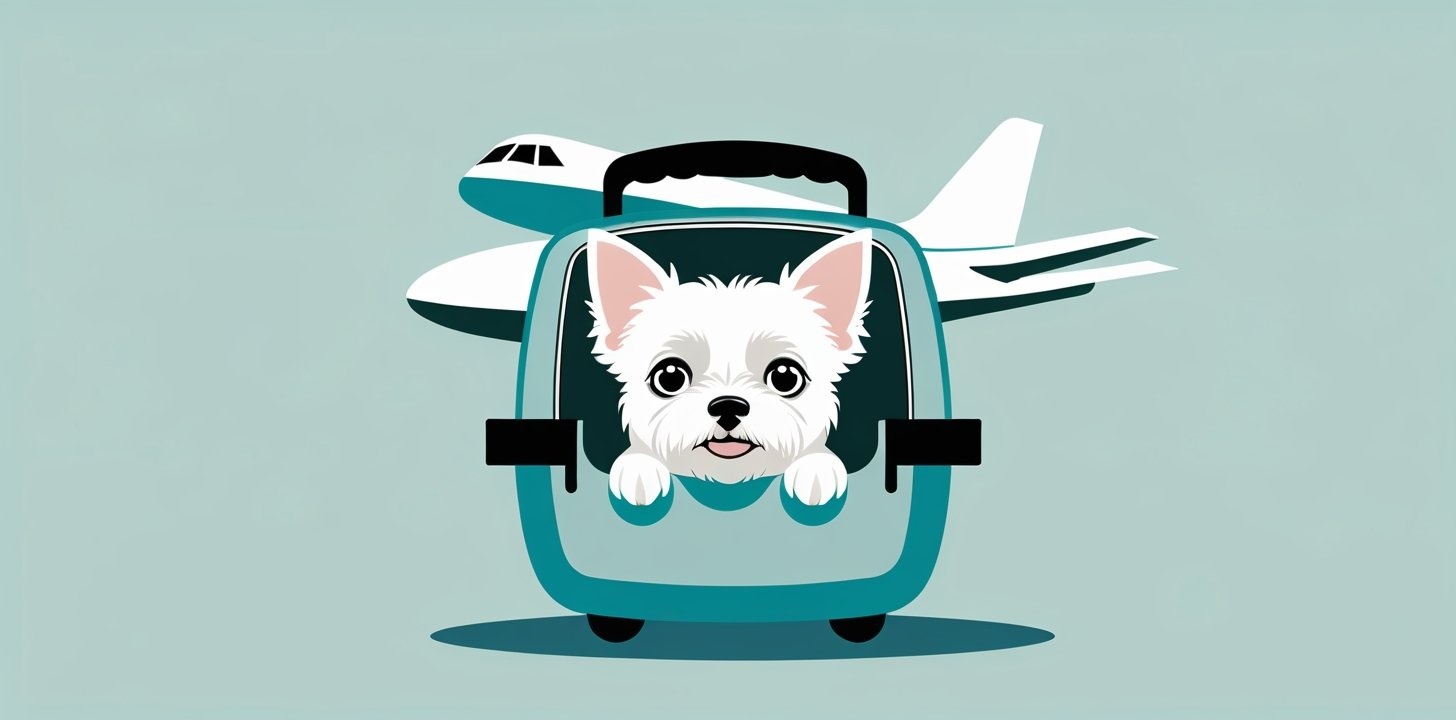
Cargo and checked baggage: Dogs over 8 kg must travel as cargo or checked baggage in an IATA-approved crate. Crate dimensions and ventilation requirements are set by IATA; confirm the specific size requirements with your airline, as they vary.
Border Inspection Posts (BIPs): Non-EU dogs must enter Germany through a designated BIP. Approved entry points are: Frankfurt, Munich, Berlin, Hamburg, Hannover, Köln, Hahn, and Leipzig-Halle airports.
Advance notice: Non-EU arrivals must notify the BIP at least 1 day in advance of arrival. Contact the BIP at your entry airport directly to confirm their notification process.
Non-stop flights are strongly preferred. Connections in non-EU countries can complicate documentation requirements and create additional inspection points.
No seasonal travel embargoes for dogs have been noted in current guidance, but confirm current airline-specific temperature and breed restrictions before booking, as these change independently of government regulations.
Costs
No import permit fee applies to non-commercial pet travel. The following are estimated costs based on available data; actual costs vary by provider, location, and whether titer testing is required. Verify current fees with your vet and relevant authorities before travel.
| Item | Estimated Cost (EUR) | Estimated Cost (USD) |
|---|---|---|
| Microchip | €50 to €100 | $54 to $107 |
| Rabies Vaccination | €50 to €80 | $54 to $86 |
| Rabies Titer Test (if required) | €200 to €300 | $214 to $321 |
| Health Certificate (vet fee) | €100 to €200 | $107 to $214 |
| USDA APHIS Endorsement (US) | $38 to $150 | $38 to $150 |
| Tapeworm Treatment | €20 to €50 | $21 to $54 |
| Total (without titer) | €220 to €430 | $236 to $461 |
| Total (with titer) | €420 to €730 | $451 to $782 |
USD equivalents calculated at €1 = $1.07. Exchange rates fluctuate; verify current rates before budgeting.
Arrival inspections are free for compliant dogs. If documentation issues arise at the border, additional veterinary examination costs apply and are paid by the owner. Quarantine costs, if triggered, are also owner-paid; no standard fee is published by the BVL.
Warning: If your dog is denied entry due to incomplete documentation, all costs, including return transport, quarantine if applicable, and any veterinary fees, are your responsibility. There is no appeals process at the border. Verify every document against current BVL and EU requirements before departure.
Arrival Process
- Land at a BIP-approved airport (Frankfurt, Munich, Berlin, Hamburg, Hannover, Köln, Hahn, or Leipzig-Halle).
- Proceed to the red customs channel (Goods to Declare). Do not use the green channel with a dog.
- Present all documents to the customs officer. Officials will scan the microchip and verify it matches the documentation.
- Tapeworm treatment records will be checked for timing compliance (24 to 120 hours before entry).
- Dogs must show no signs of communicable disease at inspection.
Non-EU arrivals must have notified the BIP at least 1 day in advance. Failure to do so can result in delays or refusal of inspection.
Settling In Germany
German vets are widely available. The Bundesverband Praktizierender Tierärzte (Federal Association of Practicing Veterinarians) maintains a searchable directory at www.bpt.de. Register your dog with a local vet promptly after arrival, particularly if ongoing medications or vaccinations are due.

Pet-friendly rentals are common in German cities, but confirm the policy in writing before signing a lease. The phrase to look for in listings is “Haustiere erlaubt” (pets allowed). Some landlords permit small dogs but restrict larger breeds; clarify this before committing.
Official Resources
- Bundesamt für Verbraucherschutz und Lebensmittelsicherheit (BVL): www.bvl.bund.de/EN/Animals/pet_exportation_node_en.html
- EU Pet Travel Scheme official portal: food.ec.europa.eu/animals/pets_en
- EU Regulation (EU) No 576/2013 (full text): www.legislation.gov.uk/eur/2013/576
- USDA APHIS Pet Travel (US to Germany): www.aphis.usda.gov/pet-travel/us-to-another-country-export/pet-travel-us-germany
- German Customs (Zoll): www.zoll.de/EN/Private-individuals/Travel/Entering-Germany/Restrictions/Animals-and-plants-products-containing-animal-or
Frequently Asked Questions
Can I take my dog to Germany without quarantine?
Yes. Germany does not require quarantine for dogs from EU member states or approved non-EU countries that meet all entry requirements under the EU Pet Travel Scheme. Non-compliant dogs may be quarantined at the owner’s expense or returned to the country of origin.
What documents do I need to bring my dog to Germany?
Non-EU residents need an Animal Health Certificate (EU format, as per EU Regulation 576/2013) issued by an official vet within 10 days of entry, plus proof of microchip, rabies vaccination, tapeworm treatment, and a non-commercial movement declaration. US residents also need USDA APHIS endorsement of the health certificate. EU residents use an EU Pet Passport instead. Dogs from unlisted countries additionally need a rabies titer test result of at least 0.5 IU/ml.
How long does it take to prepare my dog for Germany?
Allow at least 3 to 4 weeks from a listed country (21-day rabies wait plus document preparation). Allow at least 6 to 7 months from an unlisted country: 30 days post-vaccination before the blood draw, then 3 months after the sample before entry is permitted, plus time for document preparation.
How much does it cost to bring a dog to Germany?
Total costs range from approximately €300 to €700 (approximately $320 to $750 USD) depending on origin country and whether a rabies titer test is required. This includes microchipping, vaccinations, health certificate fees, and tapeworm treatment. US residents should also budget $38 to $150 for USDA APHIS endorsement. Verify current fees with your vet and the relevant authorities before travel.
Can I bring my dog to Germany in the cabin?
Dogs under 8 kg (17.6 lbs) including the carrier may travel in-cabin on most airlines. Dogs over this weight must travel as cargo or checked baggage in an IATA-approved crate. Policies vary by airline; confirm directly before booking. For specific airline policies, check our guides on lufthansa pet policy or other carriers serving Germany.
Does my dog need a rabies titer test for Germany?
Only if traveling from a non-EU, non-listed country. Dogs from EU countries or listed non-EU countries, including the US, Canada, and Australia, do not require a titer test. For unlisted countries, the test must show a result of at least 0.5 IU/ml, with the blood sample drawn at least 30 days after vaccination. Entry is permitted no sooner than 3 months after the sample date.
What happens if my dog doesn’t meet Germany’s entry requirements?
Your dog may be denied entry, quarantined at your expense, or returned to the country of origin at your expense. In serious cases, euthanasia is a legal outcome under EU regulations. All costs are the owner’s responsibility. Verify all requirements with the BVL before travel.
Start preparing 4 to 7 months before departure if a rabies titer test is required, or a minimum of 3 to 4 weeks if traveling from a listed country like the US. The first step is always the same: microchip first, then rabies vaccination. Contact an accredited official vet and the BVL (www.bvl.bund.de) to confirm the current requirements for your specific country of origin before booking anything. For comprehensive preparation guidance, consider our dog travel essentials checklist to ensure you have everything needed for the journey.
If you’re planning to travel with specific breeds that may face restrictions, research which countries ban pit bulls or other breed-specific regulations before making travel arrangements. Additionally, if you’re considering other European destinations, our uk dog travel guide provides similar comprehensive information for UK entry requirements.
For those planning to relocate permanently, understanding dog relocation costs guide can help you budget appropriately for the entire process. Remember that proper preparation is key to avoiding pet relocation mistakes that could complicate your journey.
Consider also reviewing new cdc regulations for dogs if you’re traveling from the United States, as these may affect your departure requirements. For air travel specifically, learn about keeping dogs calm on flights to ensure your pet’s comfort during the journey.
If you’re traveling with a brachycephalic breed, be sure to understand the specific considerations for french bulldogs flying on planes or similar flat-faced breeds, as they may face additional airline restrictions.
Finally, ensure you have the right travel gear by reviewing our guide on best dog crates for travel to select appropriate carriers that meet both airline and German entry requirements.
Last verified: February 2026. Requirements under EU Regulation (EU) No 576/2013 are subject to change. Verify all current requirements with the Bundesamt für Verbraucherschutz und Lebensmittelsicherheit (BVL) at www.bvl.bund.de or your nearest German embassy before travel.
This article is for informational purposes only and does not constitute veterinary or legal advice. Always verify current entry requirements with official authorities before travel.